Cashier: job description, interview questions, and screening workflow
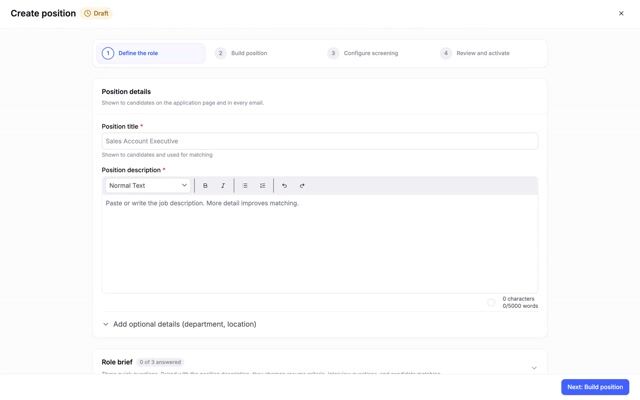
Cashier is one of the highest-volume, highest-turnover roles you'll ever hire, and the trait that actually costs you money, honesty and accuracy at the register, is nearly impossible to verify in a 20-minute conversation. A friendly interview tells you someone can hold a conversation while ringing up a purchase. It doesn't tell you whether their drawer will balance at close, whether they'll check ID on a busy night, or whether they'll tell you the truth about a mistake instead of hoping nobody notices. If you're posting this role yourself, maybe for the third or fourth time this year, you already know the real risk isn't finding nobody. It's hiring the person who looks fine in the interview and quietly costs you at the register for months before you catch it.
What a cashier actually does at a small business
At a big chain, a cashier works inside a system: a loss prevention team watching for shrink, a dedicated trainer, a manager on the floor who can step in when a line gets long or a customer gets upset. Mistakes get caught by the layers built around the register.
At an independent shop, a convenience store, or a small restaurant, there usually isn't a layer. There's the cashier, and there's you. You're often the one training this person personally, standing next to the register for their first shift or two before handing them your drawer and your customers on their own. Whatever they ring up right or wrong, whoever they card or don't, however the drawer counts out at close, it's on them, and you find out after the fact, usually the next morning while reconciling the till.
That's what makes this hire heavier than the job title suggests. It looks like an entry-level role, and a lot of the daily work genuinely is simple. But it comes with direct financial exposure (cash, discounts, refunds) in a way that few other entry-level roles at a small business do, and it's a role you'll likely be filling again soon, since cashier turnover runs higher than almost any other position on your floor.
The core responsibilities, in practice:
- Ringing up transactions accurately, at speed, especially once a line starts building
- Handling cash and card payments, counting back change correctly, and closing out a drawer that actually reconciles
- Staying friendly and efficient with every customer, even the fifteenth one in an hour
- Restocking front-of-store items and doing light merchandising near the register between customers
- Handling returns and price checks without needing you to step in on every one
- Checking ID for age-restricted purchases, consistently, not just when it feels necessary
- Staying alert and accurate during a real rush, when a line is building and the temptation is to move fast and stop double-checking
If you're hiring a broader floor role instead of a register-focused one, our retail sales associate hiring guide covers that job in the same depth. A cashier's job centers on the register: accurate transactions and a fast, honest checkout. A sales associate does that too, but spends more of the shift on the floor, greeting, recommending product, and closing a sale before it reaches the register. If the role you're filling is register-only, screen for that specifically. This page is built around exactly that job.
Job description you can post today
Copy this, then adjust the specifics (your hours, your register system, your pay) to match your business.
Cashier
[Company name] is looking for a cashier to run our front register with speed, accuracy, and real honesty. You'll be handling our customers' money and, for a lot of them, you'll be the last interaction they have with our store, so we're looking for someone we can trust with both.What you'll do
Ring up transactions accurately, including during a genuine rush, not just a quiet stretch. Handle cash and card payments, count back change correctly, and close out your drawer accurately at the end of every shift. Check ID for every age-restricted sale, with no exceptions. Handle returns and price disputes calmly, escalating only when it's genuinely outside what you can resolve on your own. Restock and straighten front-of-store displays between customers. Stay friendly and attentive with every customer, whether it's your first hour or your eighth.What we're looking for
Comfort with basic math and counting change without relying entirely on the register screen. A track record of handling cash honestly, with no shortcuts. The ability to stay accurate and polite through a real rush, not just a slow shift. Prior cashier or POS experience is a plus, not a requirement. We'll train you on our specific system.Schedule
[Insert hours, e.g. evenings and weekends required, X shifts per week][Insert pay, per your local wage requirements]
10 interview questions, and what a good answer sounds like
1. Tell me about a time your drawer didn't balance at the end of a shift. What did you do?
This is the core honesty question for this role. A strong answer names a specific amount, describes recounting before assuming the worst, and shows they reported it rather than hoping it went unnoticed. "That's never happened to me" is a weak answer from anyone with real register experience, since a drawer being off by a little at some point is close to universal. What matters is whether they'd tell you.
2. A customer wants to return an item with no receipt and says the price on the tag is wrong. Walk me through what you do.
You're testing judgment under a situation with no clean answer. A strong response explains the policy calmly, checks what they can actually verify, and looks for a fair resolution within your rules rather than caving to end the friction or getting rigid with a paying customer. A weak answer either bends every rule to avoid conflict or refuses to budge with no attempt to help.
3. Three customers are in line, the one you're ringing up is fumbling with coupons, and someone near the back is getting impatient. Walk me through it.
Listen for a real sequence, not a general "I stay calm." A strong answer describes acknowledging the people waiting, keeping a normal pace on the current transaction instead of rushing the count, and asking a coworker for help if needed. A weak answer describes speeding through scans and change-counting to clear the line faster, exactly how accuracy slips when it matters most.
4. Tell me about a time a customer was rude or hostile to you. How did you handle it?
This is a composure question, not a conflict-resolution trivia question. A strong answer stays calm in the retelling, describes staying polite without matching the customer's tone, and knows when to bring in a manager rather than absorbing everything alone. A candidate who gets visibly defensive just describing the story, or who escalated the situation themselves, is showing you how they'll handle the next one too.
5. A customer hands you a large bill that feels off, or a card that's been declined twice in a row. What do you actually do?
You want a real process, not a shrug. A strong answer for the bill names something concrete, checking it against your store's method, calling over a manager if unsure, even with a line building. For the card, a strong answer describes handling it quietly, offering another payment option rather than announcing the decline to the whole line. A weak answer either guesses and moves on or makes the moment more public than it needs to be.
6. Tell me about a mistake you made at a register before, wrong change, a missed price, anything, and how it got caught.
Every cashier with real experience has a story here. A strong answer owns the mistake specifically, explains how it surfaced, and names what changed afterward. A candidate who claims a perfect record, or immediately blames the register or a coworker, is either inexperienced or not being fully honest, and neither is reassuring for a role built on trust with your cash.
7. How comfortable are you learning a new point-of-sale system, and what have you used before?
Most cashier roles run on some flavor of POS software, and yours will feel new to almost everyone regardless of experience. A strong answer names a specific past system and a real story of picking one up quickly, not just "I'm good with technology." This matters more than whether they've used your exact software, since you're checking how fast they get comfortable, not testing brand familiarity.
8. Be honest with me. Has there been a time you couldn't make a scheduled shift, or almost couldn't? What happened?
Ask this directly instead of hoping it doesn't come up. A strong answer describes a real situation, how much notice they gave, and what they did to make it right, like finding coverage themselves. A candidate who insists it's never happened at all, with no example whatsoever, is either very new to hourly work or not being straight with you, and either way you're not learning what you actually need to know.
9. Walk me through the tail end of an eight-hour shift where the day dragged. How do you stay accurate and polite in hour seven?
This tests fatigue management, which matters more for register work than it sounds like it should, since most costly mistakes happen late in a shift, not early. A strong answer names something concrete: a short break to reset, deliberately slowing down on change when tired, or double-checking totals more, not less, as the shift wears on. A weak answer assumes tiredness just isn't a factor for them.
10. Why do you want this specific job, knowing this is a role a lot of people don't stick around in?
This isn't a throwaway closer. Given how often this role turns over, you're listening for whether they're describing a job they'd actually want to keep for a while, not just the next stop on a string of short stints. A strong answer names something specific about your store, the hours, the team, the neighborhood, rather than a generic "I need a job" with nothing else attached.
A scorecard you can score candidates against
Ten questions only help if everyone interviewing is listening for the same signals. Use this instead of comparing gut feelings about who seemed most likeable. Copy this into a doc and fill in a row per candidate.
| What you're scoring | Strong signal | Weak signal |
|---|---|---|
| Register accuracy | Describes a real method for counting change and catching errors, even under time pressure | "I just trust the register to tell me," with no independent check described |
| Honesty about mistakes | Owns a real discrepancy or error, explains how it surfaced, names what changed afterward | Claims a perfect record, or gets evasive when asked a natural follow-up |
| Composure with difficult customers | Retells a hard interaction calmly, stays polite without matching hostility, knows when to get a manager | Gets visibly defensive in the retelling, or describes escalating the conflict themselves |
| Rush and pressure handling | Describes acknowledging the line while keeping normal pace and accuracy on the current transaction | Describes speeding through counts and scans to clear the line faster |
| ID and policy discipline | Names a consistent, no-exceptions practice for checking ID and following store policy | "I can usually just tell," or describes making exceptions depending on the customer |
| Reliability | Gives a real, specific answer about a near-miss and what they did to make it right | Insists it's never happened at all, with no example, or gives a vague reassurance |
How to screen cashier candidates without losing a week to it
Truffle is an AI screening platform that combines resume screening, one-way video interviews, and talent assessments, which matters here because cashier openings pull one of the highest volumes of applicants of any small-business hire. Sourcing skews toward Indeed, walk-ins, and word of mouth rather than LinkedIn, so a single posting can bring in 40 or 50 applicants for one opening, most of whom you'll never meet before deciding who's worth a shift.
A workflow sized for that reality, without burning your week:
- Resume and application review first, for the basics. Look for availability, proximity, and any register or cash-handling experience, as a first pass rather than a hard filter. Retail hiring software is built around exactly this kind of volume, so you're not reading every application by hand.
- A one-way video interview before you schedule anyone live. Ask 2-3 of the scenario questions above on video, especially the drawer-discrepancy question and the rush question. A one-way interview shows you how someone actually explains a judgment call, on their own time, before you spend an evening on a live conversation. For a role that pulls this much volume, high-volume recruiting software keeps that first pass fast without losing the signal.
- An attention-to-detail assessment to check accuracy under real conditions. A resume can list register experience. It can't show you how someone actually handles a rule, a discrepancy, or a small but costly error under time pressure. Our attention to detail skill assessment gives every candidate the same scenario-based test, scored the same way.
- A direct question, plus a reference check, on reliability. No-shows and last-minute flakes are one of the most common ways a cashier hire falls apart. Ask about it directly in the interview, then confirm with a past manager if you can reach one.
- A short paid trial shift for finalists, ideally scheduled during a real rush, not a slow weekday morning where anyone looks capable. This is where everything you saw on video and in the assessment gets confirmed against an actual register and an actual line.
AI surfaces the resume matches, video responses, and assessment scores side by side, so you're not piecing together who's worth a trial shift from memory. It doesn't decide who gets the job. You watch the responses that matter and make the call. For the fuller argument on the honesty problem interviews alone can't solve, see our 12 cashier interview questions and a skills checklist.
3 questions from the skills check we'd actually run for this role
A skills check for a cashier only means something if it tests real accuracy and honesty under realistic pressure, not trivia about a register model. These three are adapted from Truffle's attention to detail skill assessment, scaled to the kind of situations a cashier actually runs into on a busy shift. Try them yourself before you decide what "qualified" looks like for your opening.
1. It's near the end of a long shift. You count your drawer and it's $18 over. No customer has come back to complain about short change. What do you do? Reveal answer
Best answer: report the overage the same way you'd report a shortage, regardless of whether anyone's complained. A strong response recounts to rule out a simple counting error, then flags it to a manager and notes it honestly rather than pocketing it or just letting it slide because nobody's asking. An unreported pattern of overages is often paired with unreported shortages elsewhere, and the store needs an accurate record more than it needs the appearance of a perfect shift.
2. A customer hands you a $50 bill for a $12 purchase. The texture feels slightly off, and there's a line of three people building behind them. What do you do? Reveal answer
Best answer: pause and check it, even with a line waiting. A strong answer uses whatever your store's actual method is (a marker, a light check, a second look) and calls a manager over if anything still feels wrong, rather than guessing and hoping it's fine to keep the line moving. Accepting one bad bill costs the store the entire value of that transaction, while the check itself costs a few extra seconds most customers won't even notice.
3. You realize, one transaction later, that you gave the previous customer $10 too much in change and they've already walked out. What do you do? Reveal answer
Best answer: flag it to a manager right away and note exactly what happened. A strong response doesn't try to quietly absorb the loss or hope the drawer count won't get examined closely. Reporting it immediately, even though the money's already gone, is what separates an honest mistake from a mistake nobody ever finds out about until a pattern shows up in the numbers weeks later.
The point isn't these three scenarios specifically. It's that a structured skills check like this surfaces real accuracy and honesty under pressure, which is a far harder thing to fake in an interview than a resume line about years at a register. Truffle's AI scores and surfaces the results against the bar you set for the role. You still make the call on who clears it.
Common hiring mistakes for this role
Skipping the honesty and accuracy questions because the resume says "cashier experience." Years at a register tells you someone has rung up transactions before. It doesn't tell you they'll report a drawer discrepancy honestly or catch an error under a real rush. Those are specific behaviors, and they deserve a specific question, not an assumption based on a job title.
Not asking directly about reliability and no-shows. Last-minute cancellations and no-call no-shows are a constant reality in hourly, high-turnover retail and hospitality roles, and hoping it won't happen to you isn't a plan. Ask about it directly instead of finding out on a Saturday you're already short-staffed.
Treating a trial shift as a formality instead of a real test. Scheduling the trial on a quiet weekday morning tells you almost nothing, since nearly anyone looks capable when the store is empty. If you're going to run one, put it during a real rush and watch how they handle the register with a line building, not just whether they show up on time.
Starting from scratch every time this role turns over. Because this is one of the roles you'll refill constantly, running a different, unscored interview each time means re-learning what "good" looks like from zero every round. A repeatable job description, question set, and scorecard turns a role you dread reposting into one you can fill quickly and consistently, even the fifth time this year.
What should your screening process look like?
Answer six quick questions about how you hire. We'll point you to the screening steps that fit, so you spend your time on the candidates worth a conversation.
What each result looks like
Start with resume screening
You're working through real volume, and the resume still carries signal. Score every resume against your criteria first, so a shortlist surfaces before you spend time on anyone.
- Resume screeningScore every resume against your criteria and surface your strongest matches first.
- One-way interviewsHear how candidates think on a recorded prompt, on their schedule and yours.
7-day free trial. No credit card required.
Lead with one-way interviews
Resumes look interchangeable and phone screens are eating your week. Let candidates answer a recorded prompt on their own time. You watch the moments that matter and decide who's worth a live round.
- One-way interviewsHear how candidates think on a recorded prompt, on their schedule and yours.
- Resume screeningScore every resume against your criteria and surface your strongest matches first.
7-day free trial. No credit card required.
Anchor on talent assessments
For these roles the work matters more than the paper. Put a role-calibrated assessment up front, so you see real, comparable evidence before you book a calendar slot.
- Talent assessmentsSee role-calibrated work before you spend a calendar slot on a live round.
- One-way interviewsHear how candidates think on a recorded prompt, on their schedule and yours.
7-day free trial. No credit card required.
Layer all three signals
Your hiring spans high volume and high stakes, so no single step covers it. Layer all three: score resumes first, hear candidates on a one-way interview, then confirm with an assessment. Each step narrows the field, and you make the call at every stage.
- Resume screeningScore every resume against your criteria and surface your strongest matches first.
- One-way interviewsHear how candidates think on a recorded prompt, on their schedule and yours.
- Talent assessmentsSee role-calibrated work before you spend a calendar slot on a live round.
7-day free trial. No credit card required.