Call center representative: job description, interview questions, and screening workflow
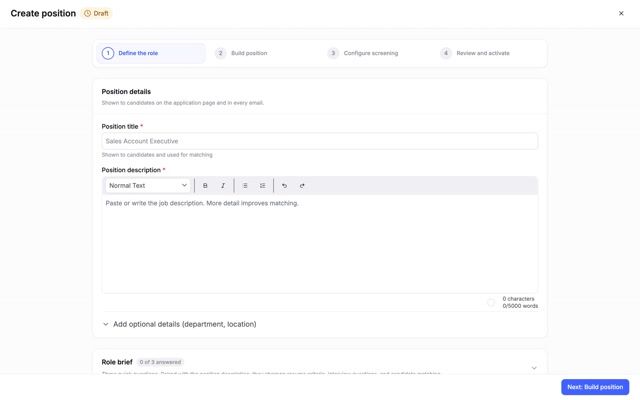
Screen this role on resume quality and you'll pass over your best hires. The resume is the weakest signal you have for a phone job. A clear voice, patience with repetition, and staying steady on the fortieth angry call of the day don't show up in a document, and a lot of strong candidates come through a walk-in or a referral without a polished profile at all. What sinks a call center hire at a small business is almost never a thin resume. It's someone who goes defensive, overpromises, or goes blank the moment a caller is already upset when they pick up. This guide is built to get people talking before you rule them out on paper, because how someone sounds and thinks on a live call is the one thing that decides this hire and the one thing a resume can't show.
What a call center representative actually does at a small business
At a large contact center, the job is split into narrow lanes: someone routes calls, someone does QA, someone builds the scripts, someone else coaches. At a small business, one person answers the phone, looks up the account, solves the problem or books the appointment, logs the call, and picks up the next line, often without a queue system telling them who's waiting.
This might be the only person answering the phone for a five-location insurance agency, the booking line for a home service company, or the customer service desk backing up a small retailer's online orders. The volume is real even without enterprise scale: a busy Monday morning can mean back-to-back calls for two hours straight, no supervisor floating nearby, no script that covers every situation.
The core responsibilities, in practice:
- Answering inbound calls (and sometimes chat or email) and resolving what the customer needs on that first contact when possible
- Looking up accounts, orders, or appointments accurately while staying on the call
- Explaining policies, pricing, or next steps clearly to someone who can't see a screen
- Staying calm and professional with a frustrated or confused caller
- Logging notes correctly so the next person who touches that account isn't starting from zero
- Knowing when to escalate instead of guessing or overpromising
If you're a small team, this person is often also your unofficial first impression: the first human voice a new customer hears, and the deciding factor in whether that customer trusts you enough to come back. That's worth naming in the posting, because "answer the phones" undersells what the job actually asks of someone.
Job description you can post today
Copy this, then adjust the specifics (your hours, your call volume, your systems) to match your business.
Call center representative
[Company name] is hiring a call center representative to handle inbound calls from our customers. You'll be one of the first voices customers hear from us, so we need someone who stays clear and steady even when the phones don't stop.What you'll do
Answer inbound calls, look up customer accounts or orders, answer questions, resolve issues, and book or update appointments. Log accurate notes on every call. Recognize when something needs to go to a manager instead of being handled solo.What we're looking for
A clear, patient phone manner. Comfort with repetitive work that still requires full attention on every call. Basic computer skills and the ability to learn our systems within the first couple of weeks. Someone who stays professional with a frustrated caller instead of getting defensive.Schedule
[Insert hours, e.g. Monday-Friday, 9am-6pm, with rotating Saturday coverage][Insert pay range, per your state's salary transparency requirements if applicable]
10 interview questions, and what a good answer sounds like
1. Walk me through the last call you took that didn't go the way you expected.
You're checking whether they can actually describe a real call, not a generic customer service story. A strong answer names specifics: what the customer wanted, what went sideways, what they said or did next. A vague answer ("I just stay positive and it works out") usually means they're reaching for a story they don't really have.
2. I'm going to play the customer for a minute. Pretend I called in upset because a delivery is three days late. Go.
This is the single most useful question for this role, because it's the only one that actually tests the thing you're hiring for: how someone sounds and thinks on a live call. A strong candidate acknowledges the frustration, doesn't get defensive, and moves toward a next step within a few sentences. A weak candidate either goes silent, over-apologizes without offering anything concrete, or starts arguing about whose fault the delay was.
3. Tell me about a time you had to tell a customer no. How did you handle it?
You want to hear how they deliver bad news, not whether they've memorized a script. Good answers show they explained the reason and offered whatever alternative existed. Answers that jump straight to "I just told them company policy" without any softening are worth a follow-up. This role says no a lot. You need to know how.
4. What do you do when a customer asks you something you don't know the answer to?
Listen for a version of "I tell them I need to check and I get back to them" rather than guessing. Candidates who imply they'd wing it or make something up sound confident in the interview and cause real problems on the phone.
5. This job involves answering a lot of similar questions, over and over, all day. What keeps you focused on call 80 the way you were on call 5?
You're testing self-awareness about the actual nature of the job, not just enthusiasm. Strong candidates have thought about this and can name something concrete: pacing themselves, taking pride in small wins, treating each caller as new even if the question isn't. A candidate who's never considered that the job is repetitive may be picturing something more varied than what you're hiring for.
6. Tell me about a time you made a mistake on a call or logged something wrong. What happened after?
You want ownership, not a perfect record. A strong answer names the mistake plainly and what they did to fix it. A candidate who claims they've never made one is either not being honest or hasn't been on the phones long enough to have hit a hard day yet.
7. How do you feel about typing or looking things up while you're still talking to someone?
Multitasking under a live conversation is a real skill gap for people who haven't done phone work before. A strong answer describes actually doing it (typing notes, pulling up an account, checking a policy) while keeping the conversation going. Someone who's only worked in-person customer service may not have tested this yet, which isn't disqualifying, but it's useful to know going in.
8. If call volume spikes and there are ten people waiting, does your pace change? How?
You're checking whether they understand the tradeoff between speed and getting it right. A strong answer says they move faster on the parts that can move faster (typing, navigation) without cutting corners on listening or accuracy. A candidate who says they'd just "work faster" across the board, including with the customer, is a flag for rushed, sloppy calls under pressure.
9. What does a fair amount of notice look like to you if you needed to miss a shift or leave the job?
This role has real turnover, and a direct, low-pressure question about reliability surfaces more than you'd think. You're not looking for a perfect answer. You're looking for whether they engage with the question honestly instead of giving you what they think you want to hear.
10. Why this role, specifically, and not just "a job right now"?
This surfaces whether someone understands what they're signing up for versus applying to anything that's hiring. Candidates who can connect the role to something specific (they like problem-solving on the phone, they've done it before and were good at it, the schedule fits) tend to stick around longer than candidates who give you a generic answer about needing work.
A scorecard you can score candidates against
Ten questions only help if everyone on your side is listening for the same things. Score every candidate on the same six signals, so you're comparing evidence instead of six different gut feelings from six conversations. Copy this into a doc and fill in a row per candidate.
| What you're scoring | Strong signal | Weak signal |
|---|---|---|
| Live de-escalation | On the role-play, acknowledges the frustration, doesn't get defensive, moves toward a next step within a few sentences | Goes silent, over-apologizes with nothing concrete, or argues about whose fault it is |
| Delivering bad news | Explains the reason a "no" is a no and offers whatever alternative exists | Jumps straight to "that's company policy" with no softening or option |
| Honesty about not knowing | "I'd tell them I need to check and get back to them," rather than guessing | Implies they'd wing it or make something up to sound confident |
| Consistency across repetition | Has thought about staying sharp on call 80: pacing, small wins, treating each caller as new | Has never considered the job is repetitive, so may be picturing more variety than it has |
| Ownership of mistakes | Names a real mistake plainly and what they did to fix it | Claims a perfect record, which usually means not honest or not enough time on the phones |
| Speed vs accuracy under volume | Moves faster on typing and navigation without cutting corners on listening or accuracy | Says they'd just "work faster" across the board, including with the customer |
How to screen call center representative candidates without losing a week to it
Truffle is an AI screening platform that combines resume screening, one-way video interviews, and talent assessments, and for this role the order matters more than usual. The resume is the weakest signal you have. A lot of strong phone candidates come through Indeed, a walk-in, or a referral, not a polished profile, and the thing that actually matters most (how they sound and think on a live call) doesn't show up on paper at all.
A workflow that fits a small business hiring this role on repeat:
- Light resume screening first, just to filter obvious mismatches. You're checking for basic work history and reliability signals, not a perfect match. Don't spend more than a minute per resume here.
- A one-way video or audio interview next, before any live conversation. Ask 2-3 of the scenario questions above, especially the upset-customer role-play. This is where you actually hear pace, tone, and how someone thinks under a little pressure, without burning a live interview slot on someone whose phone voice doesn't work for the role. Our one-way video interview tool lets you set this up once and run every applicant through it.
- A structured assessment for your shortlist. Our free call center assessment gives you a repeatable way to score candidates on de-escalation, communication, and judgment under realistic scenarios, before you commit to a live interview.
If you're working through a real applicant pool for this role, our resume screening and one-way video tools handle the first two steps in one place. AI surfaces your strongest matches against the criteria you set and shows you why each candidate ranked where they did. You still review the calls and make the call on who to hire.
3 sample questions to try for this role
A skills check only helps if it tests the judgment the job needs, not trivia. These three come from our free call center assessment question bank. They separate someone who interviews well from someone who holds up on a live, messy call. Try them yourself before you decide what "job-ready" means for your phone line.
1. A caller says: "You people stole my money. I'm canceling today and I'm reporting this." They were charged after a trial ended. What do you say and do in the first 60 seconds? Reveal answer
Best answer: acknowledge the emotion, take ownership without admitting fault prematurely, and move to a resolution path. Something like "I can hear how frustrating that is," then verify the account, briefly explain the trial terms, and offer real options. The tells of a weak answer are blaming the caller ("you should have canceled"), promising a full refund before checking policy, or skipping verification. This is the one question that tests the thing you're actually hiring for: how someone sounds under a live, angry caller.
2. Your queue is spiking. A caller has two issues: a quick password reset and an unexpected fee that will take research. What do you do? (A) Fix the password, tell them to call back for the fee. (B) Fix the password, then investigate the fee; if it runs long, set an expectation and offer a scheduled callback while documenting fully. (C) Transfer to billing to protect your handle time. (D) Apologize and waive the fee without checking. Reveal answer
Best answer: B. It resolves what can be resolved now, sets a clear expectation on what can't, and keeps the workflow correct. A punts the customer, C protects a metric at the customer's expense, and D gives away money without checking policy. This surfaces whether a candidate can hold quality and efficiency at the same time instead of trading one for the other.
3. A caller requests account changes but fails verification. They insist: "I'm the spouse. I know all the details." What do you do? Reveal answer
Best answer: politely explain the verification requirement and offer compliant alternatives, with no PII disclosed. Point them to becoming an authorized user, calling back from the registered number, or a documentation process, and hold the boundary. This is exactly where a helpful instinct turns into a privacy breach. You want someone who stays kind and firm at the same time, not someone who bends the rule to be nice.
The point isn't these three questions. It's that a short, job-relevant check like this tells you in under an hour what a calm interview room can hide: whether someone actually reaches for the right move when a caller is upset and the queue is stacking up. Inside Truffle, the same idea runs as a Situational Judgment assessment: you rank how you'd want each scenario handled, every applicant answers the same ones, and you see where each lands next to their resume and interview. You still decide who clears it.
Common hiring mistakes for this role
Screening on resume quality when resume quality barely correlates with phone skill. The traits that make someone good on the phone, clear voice, patience, comfort with repetition, don't show up in a document. A thin resume with a great phone manner will outperform a polished resume with a flat, hard-to-follow voice every time. Get people talking before you rule them out on paper.
Posting once and refilling the same seat forever without changing the process. This role has real turnover, and reposting the same listing with the same screening process each time doesn't fix that. If a seat keeps opening up, that's a signal to look at the process itself, not just the next batch of applicants.
Letting the process drag. Candidates for this role are often applying to several openings at once and aren't waiting around. A four-round process with a week between each step loses good candidates to whoever calls back first. Move fast, especially between the first screen and the offer.
Skipping a live-sounding test of the actual skill. A quiet, calm interview room doesn't tell you how someone handles a caller who's already upset when they pick up. If nothing in your process asks a candidate to actually talk through a real scenario out loud, you're hiring on how they present in an interview, not on how they'll perform on the phone.
Not being upfront about the repetitive, high-volume reality of the job. Candidates who take the role expecting something more varied tend to burn out or leave within the first few months, which just puts you back where you started. Say plainly in the posting and the interview what a normal day actually looks like.
What should your screening process look like?
Answer six quick questions about how you hire. We'll point you to the screening steps that fit, so you spend your time on the candidates worth a conversation.
What each result looks like
Start with resume screening
You're working through real volume, and the resume still carries signal. Score every resume against your criteria first, so a shortlist surfaces before you spend time on anyone.
- Resume screeningScore every resume against your criteria and surface your strongest matches first.
- One-way interviewsHear how candidates think on a recorded prompt, on their schedule and yours.
7-day free trial. No credit card required.
Lead with one-way interviews
Resumes look interchangeable and phone screens are eating your week. Let candidates answer a recorded prompt on their own time. You watch the moments that matter and decide who's worth a live round.
- One-way interviewsHear how candidates think on a recorded prompt, on their schedule and yours.
- Resume screeningScore every resume against your criteria and surface your strongest matches first.
7-day free trial. No credit card required.
Anchor on talent assessments
For these roles the work matters more than the paper. Put a role-calibrated assessment up front, so you see real, comparable evidence before you book a calendar slot.
- Talent assessmentsSee role-calibrated work before you spend a calendar slot on a live round.
- One-way interviewsHear how candidates think on a recorded prompt, on their schedule and yours.
7-day free trial. No credit card required.
Layer all three signals
Your hiring spans high volume and high stakes, so no single step covers it. Layer all three: score resumes first, hear candidates on a one-way interview, then confirm with an assessment. Each step narrows the field, and you make the call at every stage.
- Resume screeningScore every resume against your criteria and surface your strongest matches first.
- One-way interviewsHear how candidates think on a recorded prompt, on their schedule and yours.
- Talent assessmentsSee role-calibrated work before you spend a calendar slot on a live round.
7-day free trial. No credit card required.