Dental hygienist: job description, interview questions, and screening workflow
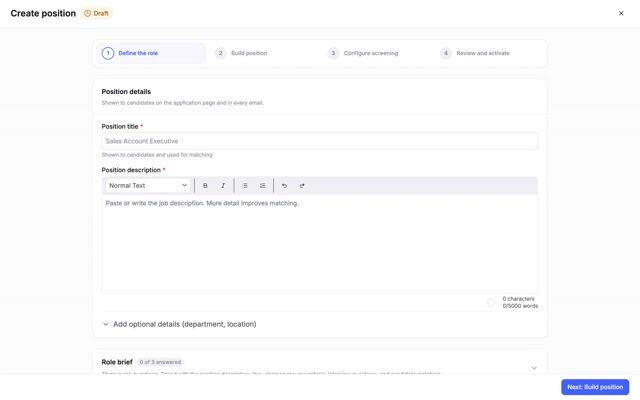
The license is the easiest thing to verify and the least predictive thing about this hire. A hygienist who doesn't work out at a small practice almost never fails on clinical skill. They fail on the thing a resume can't show: whether patients leave the chair feeling cared for instead of processed, and whether their pace fits how your practice actually runs. That is what decides whether patients come back, and you usually don't hear why when they don't. This guide verifies the license fast, then spends its real attention on chairside manner and fit, because that is where this role is won or lost.
What a dental hygienist actually does at a small practice
At a large group practice or a DSO, a hygienist works a tightly scheduled column, with a coordinator managing recall lists and someone else handling scheduling. At a solo or two-dentist practice, the hygienist is often the recall system. They notice when a patient is overdue, they build the relationship that brings that patient back, and they're frequently the person a nervous patient talks to more than they talk to the dentist.
The clinical core of the job doesn't change with practice size. This is a licensed role: cleanings, periodontal assessments, x-rays, and charting, done largely independently and within your state's scope-of-practice rules. What changes at a small practice is how much the hygienist's manner and consistency matter to the business. A patient who likes their hygienist keeps coming back. A patient who feels rushed or unheard often doesn't, and you don't always hear why.
The core responsibilities, in practice:
- Performing cleanings, scaling, and periodontal assessments within their license
- Taking and reviewing x-rays and keeping patient charts accurate and current
- Educating patients on homecare in a way they'll actually follow
- Following sterilization and infection-control protocols between every single patient
- Flagging anything unusual (decay, periodontal changes, oral health concerns) for the dentist to review
- Building rapport with patients who often see them more regularly than they see the dentist
If you're a solo or small-group practice, your hygienist is usually your steadiest chair and one of your biggest drivers of patient retention and referrals. That's worth naming out loud when you post the role, because it's a different pitch than "join our dental team."
Job description you can post today
Copy this, then adjust the specifics (your hours, your patient volume, your software) to match your practice.
Dental hygienist
[Practice name] is looking for a licensed dental hygienist to join our team. You'll see your own patients, build relationships that keep them coming back, and work closely with our dentist on every diagnosis.What you'll do
Perform cleanings, scaling, and periodontal assessments. Take x-rays and keep patient charts accurate and current. Educate patients on homecare in a way they'll actually follow. Flag anything unusual for the dentist to review. Follow sterilization and infection-control protocols on every patient, every time.What we're looking for
A current dental hygiene license in good standing in [state], and current certifications (CPR and any others your practice requires). Strong chairside manner: patients should leave your chair feeling cared for, not rushed. Comfort working closely with a small clinical team where communication happens in real time, not through layers of management.Schedule
[Insert hours, e.g. Tuesday-Friday, 8am-5pm, with a rotating Saturday][Insert pay range, per your practice's policy and any applicable state salary transparency requirements]
10 interview questions, and what a good answer sounds like
1. Walk me through how you'd handle a routine cleaning appointment from start to finish.
You're checking for a real, ordered process, not a textbook definition. A strong answer moves through reviewing the chart and medical history, the actual cleaning and assessment steps, what they check for and document, and how they hand off to the dentist. A candidate who can only describe the cleaning itself, without mentioning the chart review or the handoff, may be missing pieces of the workflow you'll need them to own independently.
2. A patient is visibly anxious and gripping the chair before you've even started. What do you do?
Listen for specifics: slowing down, narrating what's about to happen, checking in mid-procedure, offering breaks. A strong answer treats this as routine, something they've handled many times. A weak answer is vague ("I'd try to make them comfortable") or skips straight to just getting through the appointment faster.
3. Walk me through your sterilization and infection-control routine between patients.
This should come out fast and specific, because it's muscle memory for anyone who's actually done the job: instrument processing, surface disinfection, PPE changes, barrier protocols. Hesitation or vagueness here is a real flag, not a minor one. This is one area where "close enough" isn't acceptable, and a candidate who treats the question casually is telling you something.
4. Tell me about a time you noticed something during a cleaning or exam that the dentist needed to know about.
You want a specific story: a suspicious spot, a periodontal change, something in the x-rays. Listen for how they escalated it, not just that they noticed it. A candidate who can't produce an example, or who says they'd "just let the dentist figure it out," may not yet trust their own clinical judgment enough to flag things proactively.
5. How do you communicate with the dentist during a patient visit, especially when something unexpected comes up?
Good hygienists have a rhythm with the dentist: when to interrupt, when to make a note for later, how to summarize a finding quickly. A strong answer shows they've thought about this as a two-way relationship, not just following instructions. Watch for candidates who describe the dentist relationship as purely top-down, since that can be a fit problem in a small practice where communication has to go both ways.
6. A patient tells you their gums have been bleeding for weeks but insists it's "probably nothing." How do you handle that conversation?
This tests clinical judgment and communication together. A strong answer takes the concern seriously, explains what bleeding gums can indicate in plain language, and gets the dentist involved without alarming the patient unnecessarily. A weak answer either brushes past the patient's comment or lectures them in a way that would make most patients defensive.
7. Tell me about a time a patient was difficult or uncooperative during an appointment. What did you do?
Every hygienist has this story. Listen for whether they stayed patient-centered (adjusting pace, explaining more, involving the dentist if needed) versus getting frustrated or rushing through it. How they talk about the patient afterward matters too. Empathy under pressure is the signal you're looking for.
8. How do you explain a procedure or homecare instructions to a patient who seems confused or overwhelmed?
A strong answer includes plain language, checking for understanding, and adjusting based on the patient's reaction, not just repeating the same explanation louder or slower. This is a good moment to ask them to actually demonstrate: have them explain flossing technique to you like you're the patient, and see how naturally it comes out.
9. What's your experience working with different patient populations, like kids, elderly patients, or people with dental anxiety?
You're checking range. A small practice usually can't route every nervous patient or every child to a "hygienist who's good with that," so versatility matters more than it would at a larger practice with more staff to spread patients across. Specific examples beat general claims of being "good with everyone."
10. Why are you interested in this role at a small practice specifically, rather than a larger group practice or DSO?
This surfaces whether they understand what they're signing up for. A strong answer names something real about small-practice work: closer patient relationships, more autonomy, a tighter team. A candidate who can't articulate a reason beyond "it was available" may be treating this as a placeholder while they look for something else.
A scorecard you can score candidates against
Ten questions only help if everyone interviewing is listening for the same thing, so score every candidate on the same six signals instead of comparing gut feelings from six different conversations.
| What you're scoring | Strong signal | Weak signal |
|---|---|---|
| Clinical workflow | Moves through chart and history review, the cleaning and assessment, what they document, and the handoff to the dentist | Can only describe the cleaning itself, skips the chart review or the handoff |
| Manner under anxiety | Slows down, narrates what's happening, offers breaks, treats an anxious patient as routine | Vague ("I'd make them comfortable") or just gets through the appointment faster |
| Infection control | A fast, specific, muscle-memory routine: instrument processing, surfaces, PPE, barriers | Hesitates or stays general, treats the question as not worth explaining |
| Proactive flagging | Real story of catching a finding and escalating it clearly to the dentist | No example, or says they'd "just let the dentist figure it out" |
| Two-way communication | Describes a real rhythm with the dentist: when to interrupt, when to note it for later | Describes the dentist relationship as purely top-down instruction-following |
| Patient education | Plain language, checks for understanding, can demonstrate a homecare instruction on the spot | Repeats the same explanation louder or slower, no check for understanding |
How to screen dental hygienist candidates without losing a week to it
Truffle is a candidate screening platform that combines resume screening, one-way video interviews, and talent assessments, so you can build a workflow around what actually matters for a licensed clinical role like this one.
For a dental hygienist, license verification has to be the first filter, not a step you get to eventually. Here's a workflow that fits a small practice:
- Verify the license and certifications before anything else. A quick check against your state dental board's license lookup, before you schedule an interview, filters out applicants who aren't actually eligible to work the chair. It's common for unqualified applicants to apply to licensed clinical roles anyway, and catching that early is the difference between a five-minute check and a wasted interview slot.
- Resume screening next. Once you know a candidate is actually licensed, screen for practice type, patient volume, and how recently they've worked chairside, so you're not guessing at fit from a list of past employers alone.
- A short one-way video interview before you commit an in-person slot. Ask 2-3 of the scenario questions above, like the anxious-patient question or the difficult-patient question, so you can see how someone actually communicates before you use up a clinical trial day on them. Chairside manner is hard to read from a resume and easy to read on video.
- An in-person interview with real chair time. Once someone's cleared license verification, resume, and video, bring them in to actually meet the team and, if your state and insurance allow it, shadow or run a short trial appointment. This is where you confirm what the video interview only hinted at.
If you're screening a real applicant pool for this role, our resume screening and one-way video interview tools handle the first two steps in one place, with AI that surfaces your strongest matches against the criteria you set. You review and decide. It doesn't pick for you.
Common hiring mistakes for this role
Waiting for a "perfect" candidate while a good one is still on the market. Competition for licensed clinical staff is intense, and small practices are often competing against larger practices and DSOs for the same thin pool of candidates. If you pass on a solid hygienist while hoping someone slightly better applies next week, you may lose both. Decide fast on candidates who clear your bar instead of holding out.
Skipping license verification until late in the process. Because this is a licensed role, some applicants who don't actually hold the license (or whose certifications have lapsed) apply anyway. Verifying credentials before you schedule an interview, not after, saves real time and keeps you from building rapport with someone who isn't eligible for the job.
Judging chairside manner from a resume instead of hearing it. A candidate can look strong on paper (right license, right experience) and still come across as rushed or cold with patients. Since patients notice this immediately and it affects retention, find a way to hear how a candidate communicates before you commit a full in-person clinical trial to them.
Leaving compensation expectations vague until the final offer stage. Pay is often the single biggest factor for candidates considering licensed clinical roles, and mismatched expectations that only surface at the offer stage waste everyone's time. Get clear on what your practice can offer and be upfront about it early in the process, rather than late.
Writing a job posting that blurs this role with front-desk or assistant roles. A generic "join our dental team" posting undersells the clinical judgment this role requires and can pull in applicants who are looking for administrative work instead. Be specific about the license requirement and the clinical responsibilities from the first line of the post.
Hiring the chairside support role at the same time? A dental assistant is a different, unlicensed role from a hygienist. See our dental assistant hiring guide for the job description, interview questions, and screening workflow for that role specifically. And if you're also hiring the dentist who diagnoses and builds the treatment plan a hygienist works inside of, see our dentist hiring guide.
What should your screening process look like?
Answer six quick questions about how you hire. We'll point you to the screening steps that fit, so you spend your time on the candidates worth a conversation.
What each result looks like
Start with resume screening
You're working through real volume, and the resume still carries signal. Score every resume against your criteria first, so a shortlist surfaces before you spend time on anyone.
- Resume screeningScore every resume against your criteria and surface your strongest matches first.
- One-way interviewsHear how candidates think on a recorded prompt, on their schedule and yours.
7-day free trial. No credit card required.
Lead with one-way interviews
Resumes look interchangeable and phone screens are eating your week. Let candidates answer a recorded prompt on their own time. You watch the moments that matter and decide who's worth a live round.
- One-way interviewsHear how candidates think on a recorded prompt, on their schedule and yours.
- Resume screeningScore every resume against your criteria and surface your strongest matches first.
7-day free trial. No credit card required.
Anchor on talent assessments
For these roles the work matters more than the paper. Put a role-calibrated assessment up front, so you see real, comparable evidence before you book a calendar slot.
- Talent assessmentsSee role-calibrated work before you spend a calendar slot on a live round.
- One-way interviewsHear how candidates think on a recorded prompt, on their schedule and yours.
7-day free trial. No credit card required.
Layer all three signals
Your hiring spans high volume and high stakes, so no single step covers it. Layer all three: score resumes first, hear candidates on a one-way interview, then confirm with an assessment. Each step narrows the field, and you make the call at every stage.
- Resume screeningScore every resume against your criteria and surface your strongest matches first.
- One-way interviewsHear how candidates think on a recorded prompt, on their schedule and yours.
- Talent assessmentsSee role-calibrated work before you spend a calendar slot on a live round.
7-day free trial. No credit card required.