Best high volume hiring software in 2026
Learn how AI transforms high-volume hiring into a streamlined process. Discover strategies to efficiently manage high-volume recruitment.


AI summary
- Applications per vacancy have surged 239% since late 2022 and 79% of job seekers now use AI to write applications, creating a signal-quality crisis that traditional ATS workflows can't handle.
- High volume hiring software differs from a standard ATS by answering a harder question: "How do we screen thousands of candidates without burning out recruiters or lowering hiring quality?"
- The best platforms for 2026 combine AI-powered screening, structured assessments, bulk communication, and automated scheduling rather than trying to do everything.
What is high-volume hiring?
High-volume hiring is the practice of recruiting, screening, and onboarding a large number of employees (typically 50 or more) within a compressed timeframe. It’s the use case most AI candidate screening software is built around. It’s common in industries like retail, hospitality, healthcare, logistics, and manufacturing where seasonal demand, rapid growth, or high turnover create the need to fill many roles simultaneously.
I’ve spent the last several weeks demoing and testing high-volume hiring platforms, and I need you to understand what that does to a person. You start out genuinely curious, filling out “request a demo” forms, color-coding a comparison spreadsheet. By week two you’ve developed opinions about which sales engineers have the best screen-share setups. By week three you’re explaining candidate routing logic at dinner and nobody’s asking follow-up questions.
The reason this category is so annoying to research is that every vendor’s homepage promises roughly the same thing, and the differences that actually matter, whether automation holds up past 500 candidates, how the ATS integration behaves under pressure, what “AI-powered screening” means once you’re past the marketing page, only show up once you’re inside the product.
So we got inside them. Here’s what’s actually worth your time.
- Truffle is best for the owner, GM, or lean team running high-volume hiring without adding headcount, screening candidates through resume review, one-way video interviews, and assessments without stitching together multiple tools.
- Fountain is best for organizations hiring hundreds of frontline or hourly workers per month where speed and mobile accessibility matter more than deep skills evaluation.
- Greenhouse is best for teams that need structured, consistent evaluation across multiple hiring managers making parallel decisions at scale.
- iCIMS is best for large enterprises hiring across multiple regions, languages, and role types who need an all-in-one talent acquisition suite with deep integrations.
- HireVue is best for organizations that rely heavily on video-based assessment for high volume screening, particularly in campus recruiting and financial services.
- Paradox is best for teams that need to automate candidate communication and scheduling at massive scale through conversational AI, especially in retail and hospitality.
- SmartRecruiters is best for mid-market to enterprise companies that want a flexible, extensible ATS with a marketplace of third-party integrations.
- Phenom is best for enterprises seeking end-to-end AI automation across the full talent lifecycle, from employer brand to onboarding.
- Lever is best for growth-stage companies (50 to 500 employees) that need to build candidate pipelines while scaling hiring volume.
- Avature is best for large enterprises with complex, distributed hiring operations that need extreme workflow configurability across multiple brands and regions.
Why your ATS can’t handle high volume hiring
A standard applicant tracking system answers one question: “Where is this candidate in the process?” That’s fine when you’re filling five roles with a manageable number of applicants. But when you’re processing 500 applications per role across 30 open positions, you need a platform that answers a different question: “How do we screen, rank, and engage thousands of candidates without the process collapsing?”
Traditional ATS workflows were built for record-keeping and pipeline tracking. High volume hiring demands speed, automation, and decision consistency at a scale where manual resume review becomes physically impossible. An ATS that surfaces all of them in a flat list, sorted by date received, creates more work rather than less.
Purpose-built high volume hiring software automates the mechanical parts of screening so your team’s judgment gets applied only to candidates who’ve already cleared objective gates. The global median time to hire sits at 38 days, and 90% of companies missed their hiring goals in 2025. The teams hitting their numbers are the ones who’ve stopped treating their ATS as a screening tool and started investing in platforms designed for volume.
That’s especially true for lean teams. See our take on the best ATS for high-volume startup hiring when you’re a founder or a two-person team drowning in applicants.
What to look for in high volume hiring software
Not every platform built for hiring at scale solves the same problem. The right tool depends on whether you’re screening frontline workers, assessing technical candidates, or managing a seasonal surge across multiple locations. But a few capabilities separate genuine high volume hiring solutions, and the AI candidate screening software that sits in front of them, from an ATS with a fresh coat of paint.
- Automated candidate screening. At high volumes, manual resume review is the first thing that breaks. The strongest platforms use AI-powered screening, knockout questions, structured assessments, or some combination to filter applicants based on role requirements before a recruiter ever opens a profile. Automated candidate screening tools that go beyond keyword matching (async video, skills-based assessments, situational judgment tests) are especially valuable for roles where resumes alone don’t tell you much.
- Bulk communication. High volume hiring depends on fast, consistent candidate communication. Look for tools that support email, SMS, and chat-based outreach with automated updates and reminders. 48% of candidates say waiting to hear back is “highly frustrating.” At scale, slow communication directly causes drop-off.
- Interview scheduling automation. Self-serve booking, calendar integrations, and automated reminders reduce coordination overhead and no-shows. Async video interviewing further compresses the timeline by eliminating phone screen scheduling entirely. Video interviewing solutions for high volume screening let candidates respond on their own time while giving you a consistent evaluation format.
- AI-powered matching and ranking. Advanced platforms score candidates against your defined criteria and surface the strongest matches at the top of the list. The key distinction: tools that let you define what “good” looks like for each role versus tools that apply a generic algorithm. AI should surface evidence, not make decisions.
- Analytics and funnel visibility. You can’t fix what you can’t measure. Track time-to-hire, cost-per-hire, source effectiveness, pipeline conversion rates, and candidate drop-off by stage. The average cost per hire in the US is $4,700. Knowing where that money goes (and where it’s wasted) requires real-time funnel data.
- Workflow automation. Customizable pipelines, trigger-based actions, and approval workflows keep high volume hiring organized across distributed teams. If your process requires a recruiter to manually advance every candidate through every stage, it will collapse under volume.
10 best high volume hiring platforms in 2026 at a glance
| Platform | Best for | Key strength | Pricing |
|---|---|---|---|
| Truffle | Candidate screening at scale (resume + video + assessments) | Three screening layers in one platform with AI match scoring | From $49/mo, credit-based |
| Fountain | Frontline and hourly workforce hiring | Mobile-first automation purpose-built for high-turnover roles | Contact for pricing |
| Greenhouse | Structured, data-driven hiring programs | Structured interviews with scorecards and consistent evaluation | Contact for pricing |
| iCIMS | Enterprise-scale, multi-region hiring | Deep integration ecosystem with 800+ third-party tools | Contact for pricing |
| HireVue | Video assessment and async interviewing | Multi-format video interviews with structured evaluation | Contact for pricing |
| Paradox (Workday) | Conversational AI candidate engagement | AI assistant automates screening, scheduling, and messaging | Contact for pricing |
| SmartRecruiters (SAP) | Mid-market to enterprise all-purpose recruiting | Flexible ATS with marketplace for sourcing, assessments, and checks | Contact for pricing |
| Phenom | AI-driven talent experience and personalization | End-to-end automation from job matching to onboarding | Contact for pricing |
| Lever | Growth-stage companies scaling hiring | CRM + ATS combination with strong pipeline nurturing | Contact for pricing |
| Avature | Highly configurable enterprise workflows | Extreme customization for distributed, multi-brand hiring | Contact for pricing |
Here’s a closer look at each platform, what they do well, and where they fall short.
Truffle
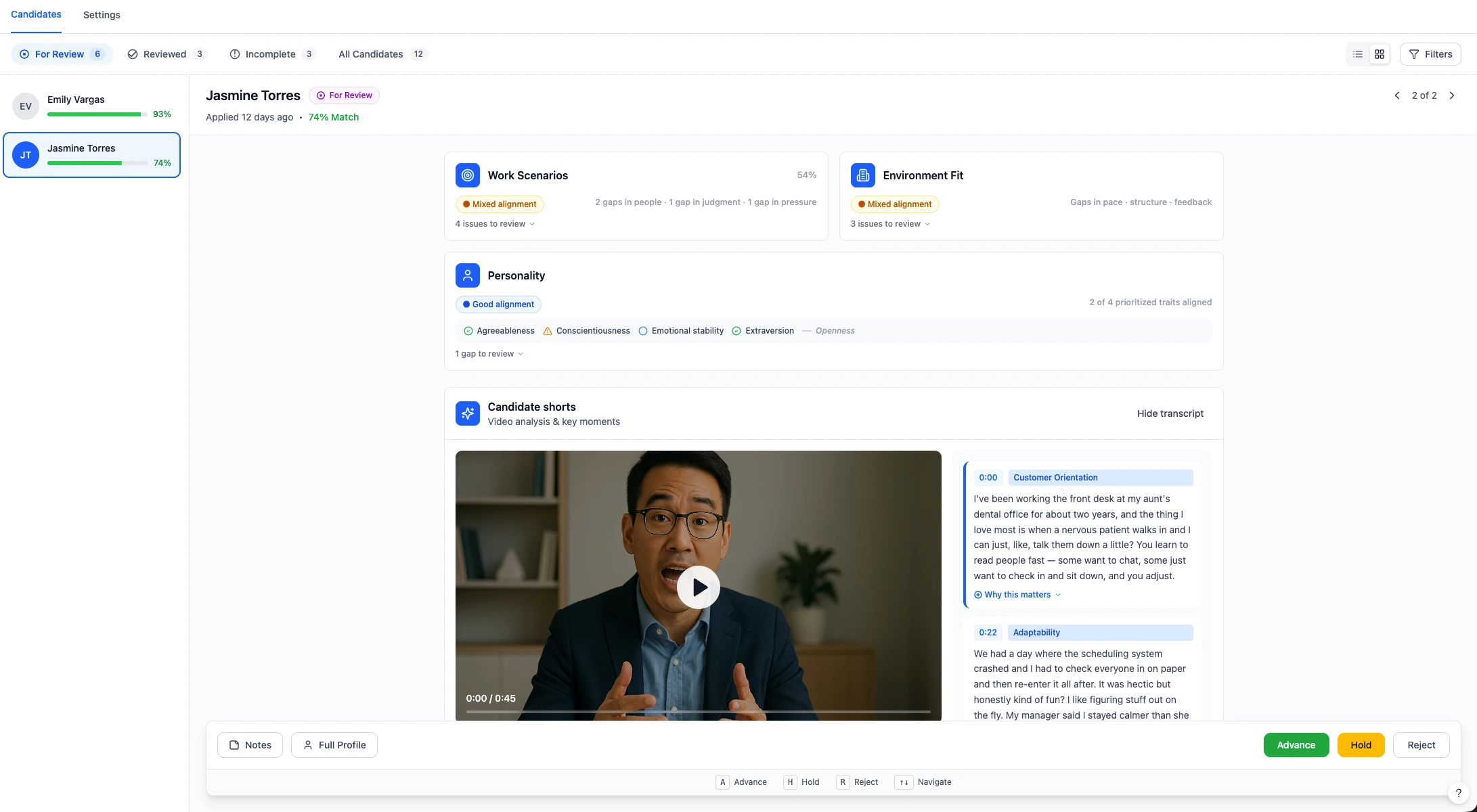
Truffle is an AI screening platform that combines resume screening, one-way video interviews, and talent assessments in a single workflow. You design the screening process (resumes only, video and assessments, all three) and AI scores each candidate against your criteria, generating match percentages, summaries, and 30-second Candidate Shorts so you can review a candidate in seconds rather than scheduling a phone screen.
For high volume hiring specifically, the value is in the screening compression. Instead of manually reviewing hundreds of applications, you send candidates a single Position Link where they complete whatever screening steps you’ve configured. AI analyzes every response and ranks the pool by alignment with your requirements. Magic Review lets you advance, hold, or reject candidates with keyboard shortcuts, moving through a full list in minutes.
Strengths: Three screening signals (resumes, video, assessments) in one platform rather than bolting together separate tools. Transparent, credit-based pricing from $49/mo with no enterprise-only features locked behind sales calls. 7-day free trial with 30 credits, no credit card required. AI surfaces evidence for your decisions rather than making them for you.
Limitations: Truffle is a screening tool, not a full ATS. You’ll still need an applicant tracking system for pipeline management, offer letters, and onboarding. Best suited for teams that need to triage large applicant pools quickly rather than manage the entire recruiting lifecycle in one platform.
Best for: The owner-operator or lean team managing high-volume, low-resume-signal roles with nobody to hand them to, where phone screens are eating the calendar.
Pricing: Plans from $49/month, billed on a credit model. Custom plans available for higher volume.
Fountain
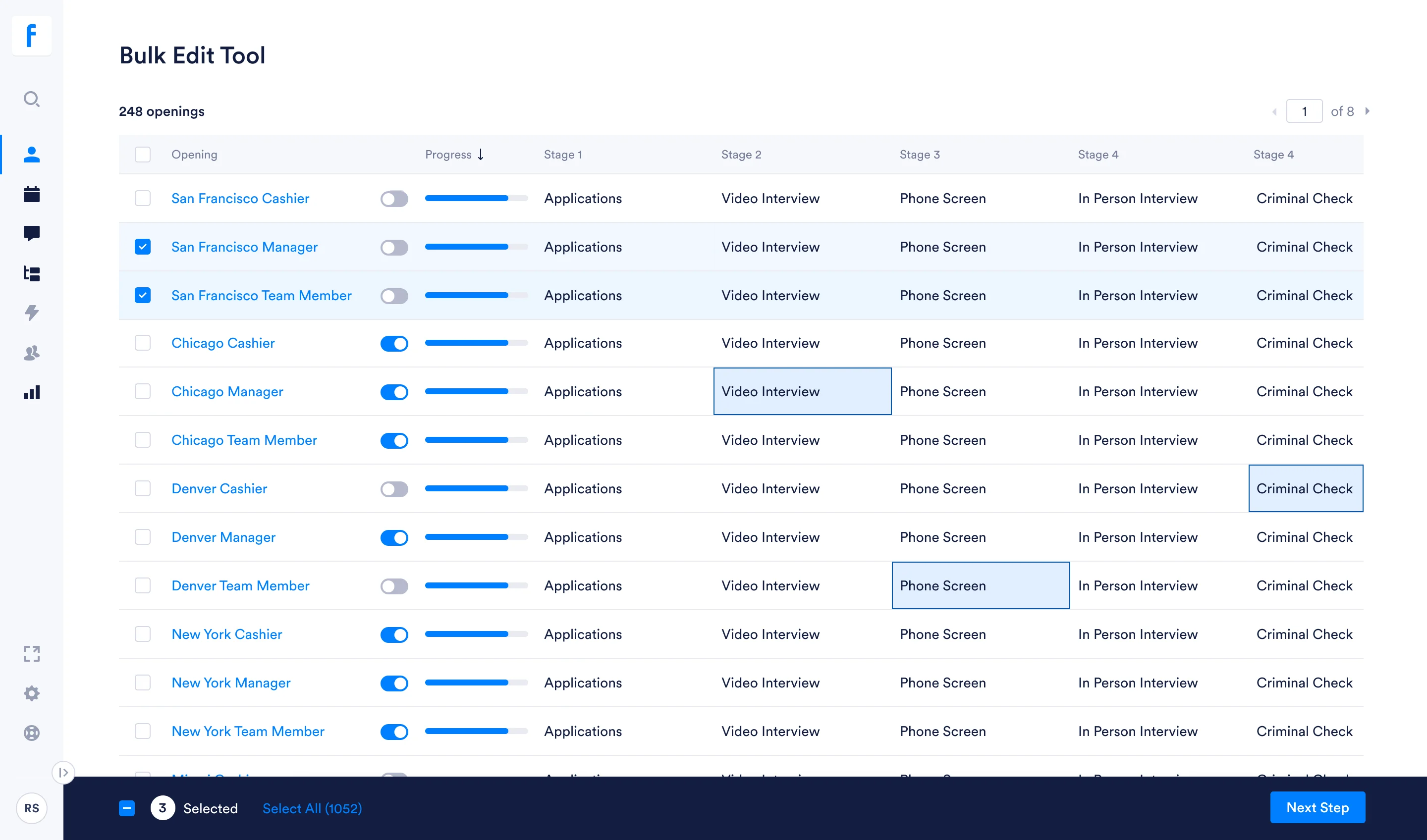
Fountain built its platform specifically for frontline, hourly, and seasonal hiring where speed and mobile accessibility matter more than evaluating a polished resume. The platform automates candidate qualification, supports bulk SMS and WhatsApp messaging, and moves candidates from application to onboarding through configurable workflow stages.
Strengths: Purpose-built for high-turnover industries (retail, logistics, hospitality, gig economy). Strong mobile experience for candidates who apply from their phones. Automated follow-ups keep candidates engaged through multi-stage processes.
Limitations: Not designed for roles requiring deep skills evaluation or structured assessment. Less capable as a standalone ATS compared to enterprise platforms.
Best for: Organizations hiring hundreds of frontline or hourly workers per month where application speed and candidate communication are the primary bottlenecks.
Pricing: Contact for pricing.
Greenhouse
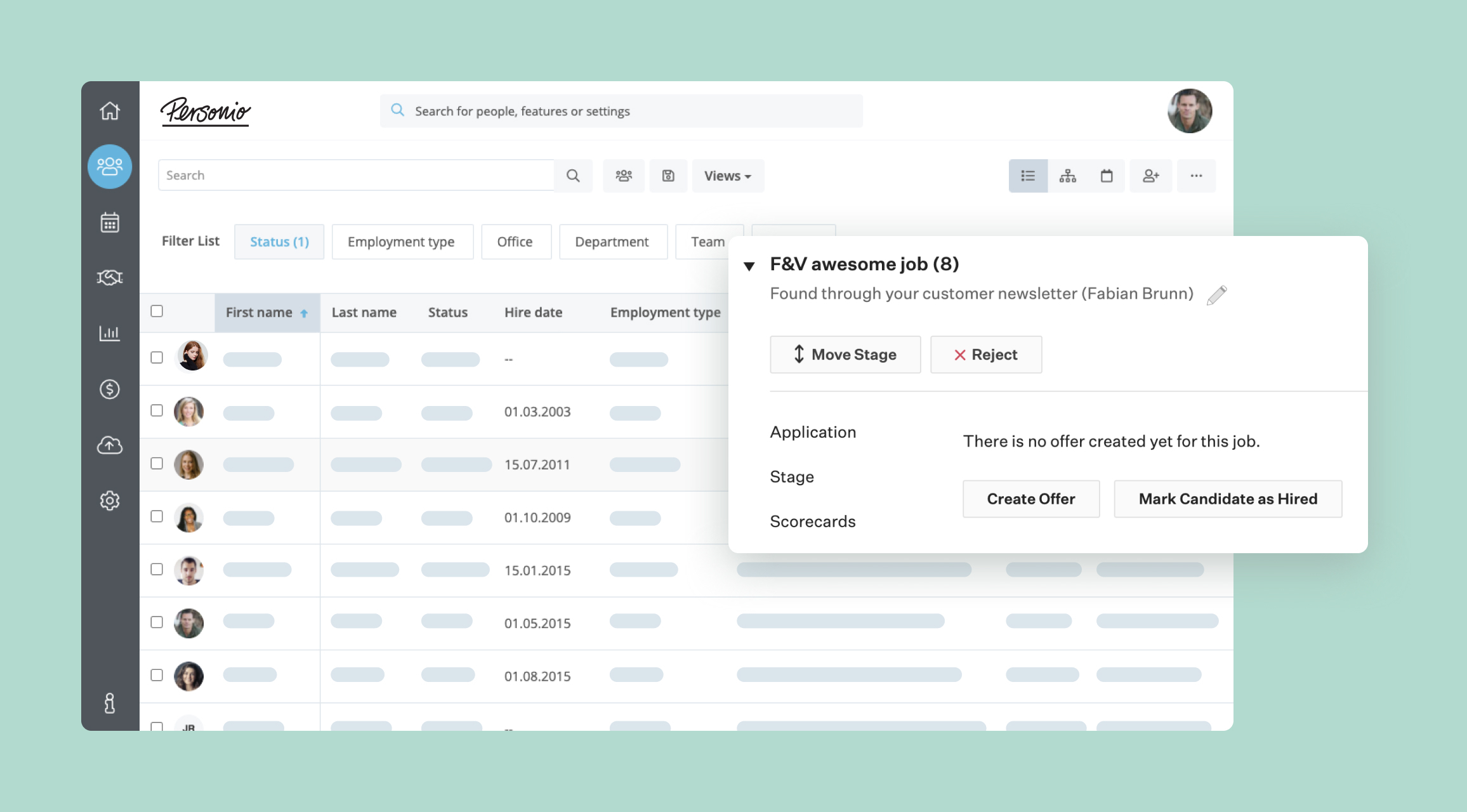
Greenhouse is a structured hiring platform that brings consistency to high volume programs through standardized scorecards, interview kits, and data-driven evaluation. The platform’s strength is its approach to decision quality: every interviewer evaluates candidates against the same rubric, and hiring decisions are backed by structured data rather than gut feel.
Strengths: Strong structured interviewing framework that reduces decision inconsistency across hiring managers. Good analytics and reporting for tracking pipeline health. Large integration ecosystem.
Limitations: Steeper learning curve and higher pricing than mid-market alternatives. More focused on evaluation quality than on the screening speed that high volume hiring demands. Doesn’t include built-in video interviewing or assessments without third-party integrations.
Best for: Organizations that need hiring consistency and data rigor at scale, particularly those with multiple hiring managers making parallel decisions.
Pricing: Contact for pricing.
iCIMS
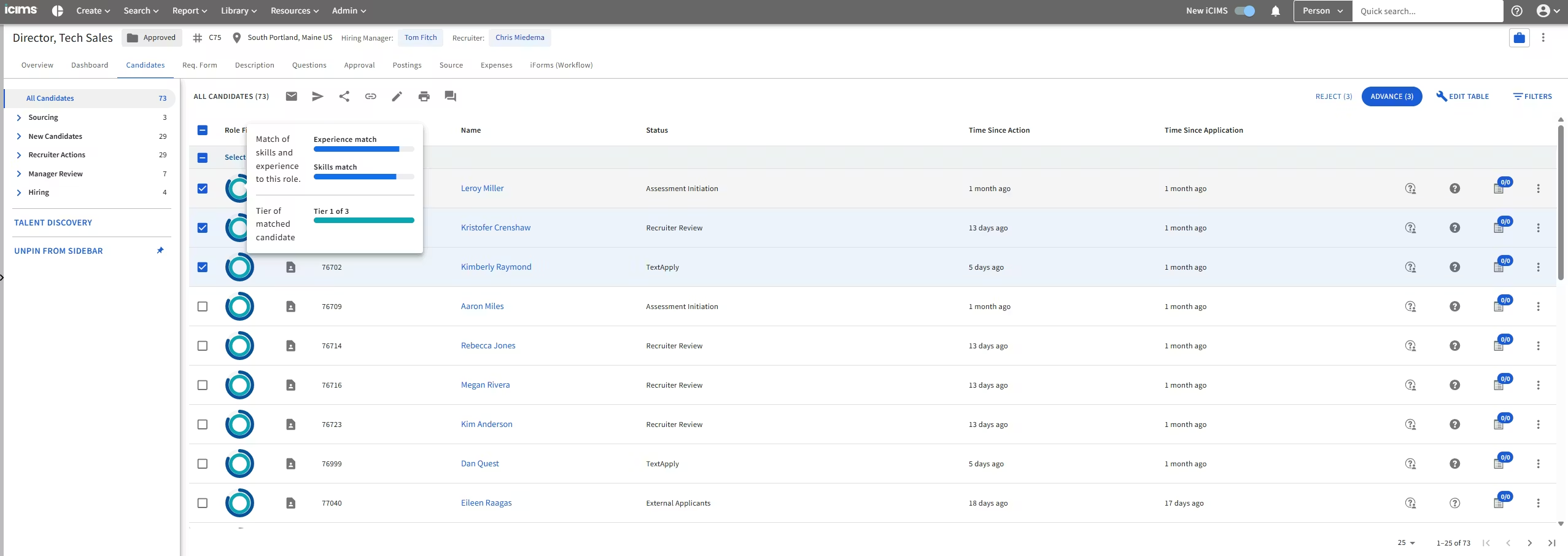
iCIMS Talent Cloud is an enterprise-grade platform that handles high volume hiring through bulk candidate communication, talent pool nurturing, automated workflows, and global compliance features. The platform’s integration ecosystem (800+ third-party tools) means you can connect virtually any screening, assessment, or background check provider into a unified pipeline.
Strengths: Deep enterprise capabilities including multi-language support, global compliance, and virtual career events. Strong CRM features for building and nurturing talent pipelines over time.
Limitations: Complex implementation. The platform’s breadth means there’s a steeper learning curve, and the UI can feel less intuitive than purpose-built tools. Enterprise pricing may be prohibitive for mid-market teams.
Best for: Large enterprises hiring across multiple regions, languages, and role types who need an all-in-one talent acquisition suite.
Pricing: Contact for pricing.
HireVue
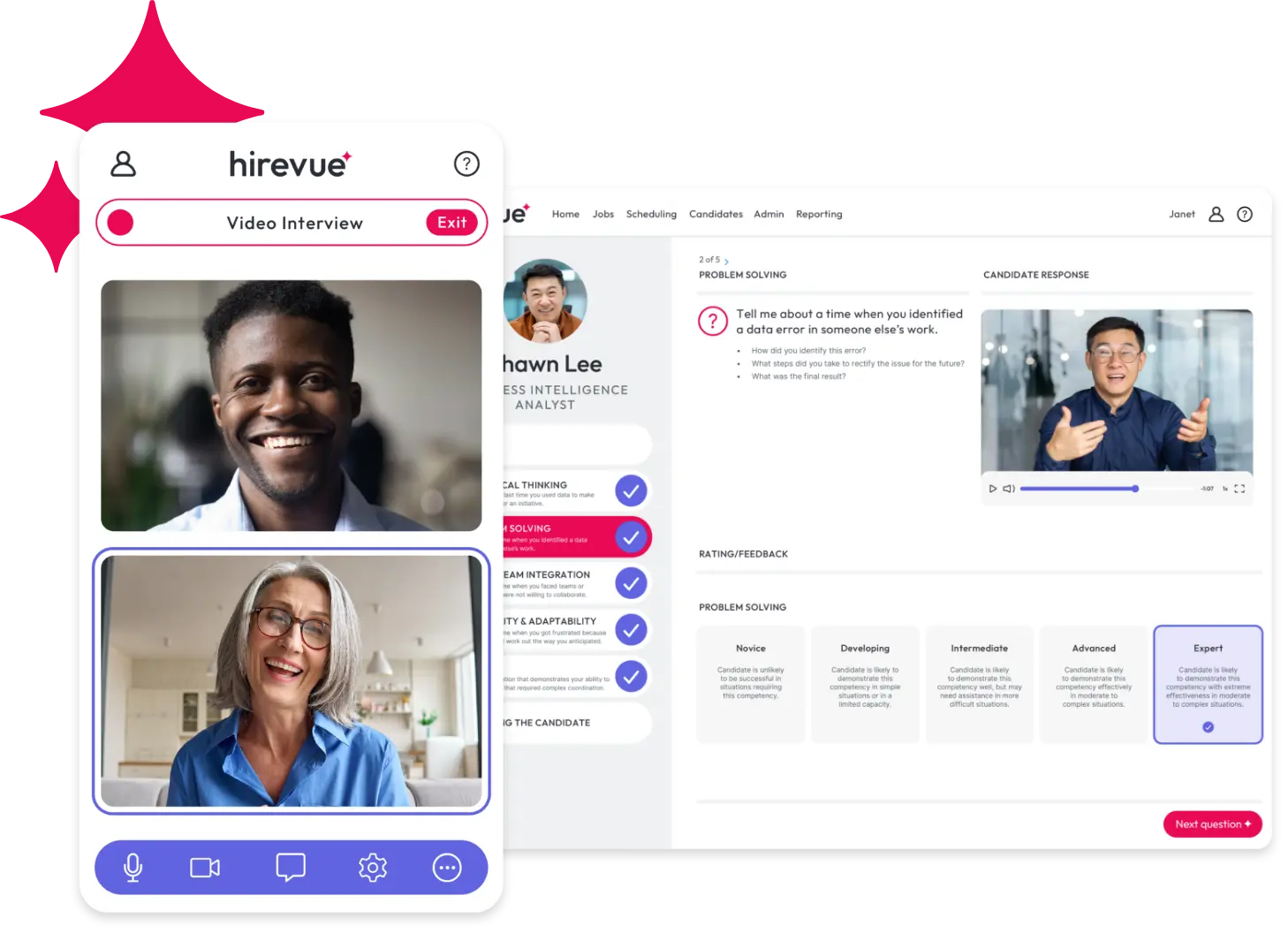
HireVue focuses on video interviewing and AI-powered assessment for high volume screening. Candidates record video responses on their own schedule, and the platform provides structured evaluation tools for reviewers. The platform also offers game-based and coding assessments for technical roles.
Strengths: Strong video interviewing experience with bulk invite capabilities. Structured evaluation tools help maintain consistency across large reviewer pools. Good candidate experience for async video.
Limitations: More interview-focused than a full recruiting suite. Resume screening and candidate pipeline management require a separate ATS. Enterprise pricing without published rates makes cost comparison difficult.
Best for: Organizations that rely heavily on video interviews for high volume screening, particularly in campus recruiting, financial services, and consulting.
Pricing: Contact for pricing.
Paradox (now Workday)
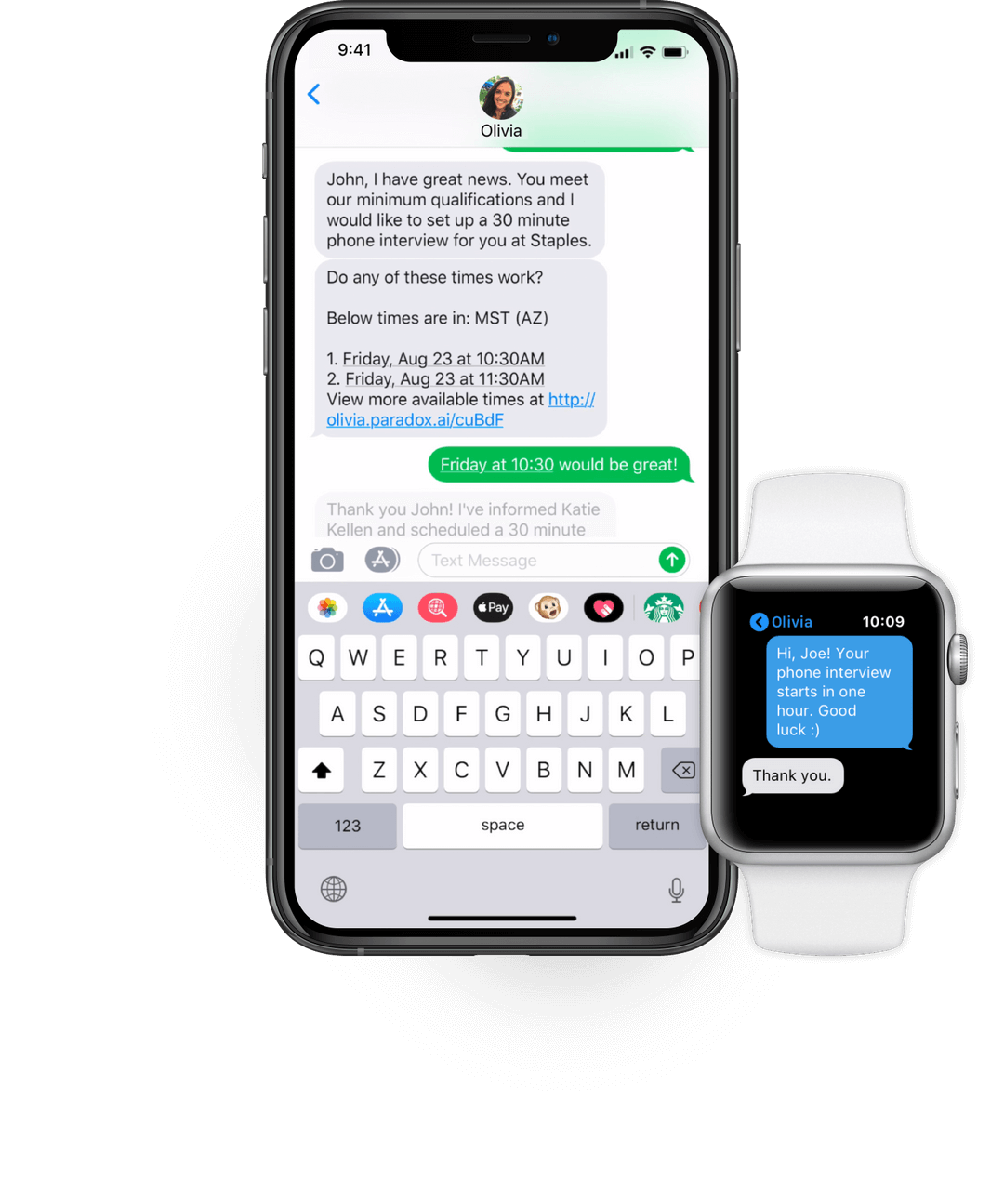
Paradox’s conversational AI assistant, Olivia, automates early-stage candidate engagement through chat and text. The platform handles screening questions, interview scheduling, candidate prep, and follow-ups through natural conversation rather than traditional application forms. Workday acquired Paradox in August 2025, which means the platform is moving into the Workday enterprise ecosystem.
Strengths: Conversational AI dramatically reduces time spent on scheduling and initial screening. Strong for frontline and hourly roles where candidates prefer text-based interaction. Scales candidate engagement without adding recruiter headcount.
Limitations: Not a full ATS. Best used alongside existing systems rather than as a standalone platform. The Workday acquisition raises questions about future standalone availability and pricing for non-Workday customers.
Best for: Organizations that need to automate candidate communication and scheduling at massive scale, particularly in retail, hospitality, and quick-service restaurants.
Pricing: Contact for pricing.
SmartRecruiters (now SAP)
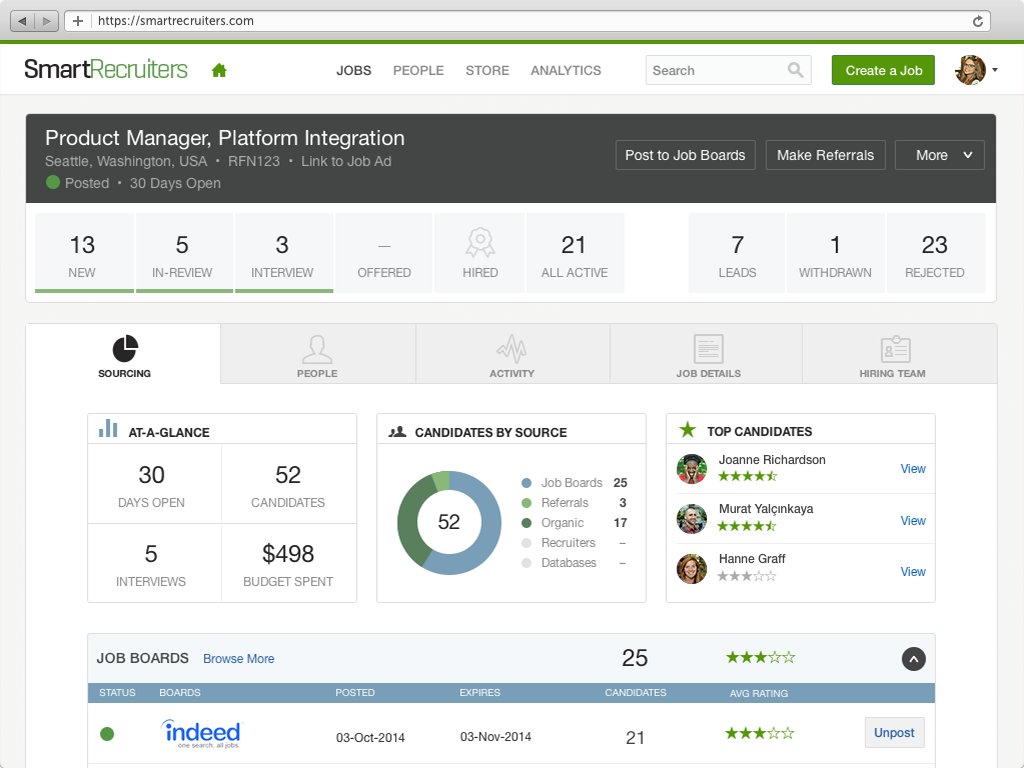
SmartRecruiters provides a cloud-based ATS with recruitment marketing, candidate engagement, and a marketplace of third-party integrations for sourcing, assessments, and background checks. SAP acquired SmartRecruiters in August 2025, signaling a move toward deeper enterprise integration.
Strengths: Flexible platform that serves both mid-market and enterprise needs. AI-powered candidate matching and ranking. The marketplace model lets teams add capabilities without switching platforms.
Limitations: The SAP acquisition introduces uncertainty about the platform’s future direction and pricing model. Some users report performance issues at very high candidate volumes. Customization options can be limited without enterprise-tier access.
Best for: Mid-market to enterprise companies that want a flexible, extensible ATS capable of handling volume through integrations rather than built-in screening.
Pricing: Contact for pricing.
Phenom
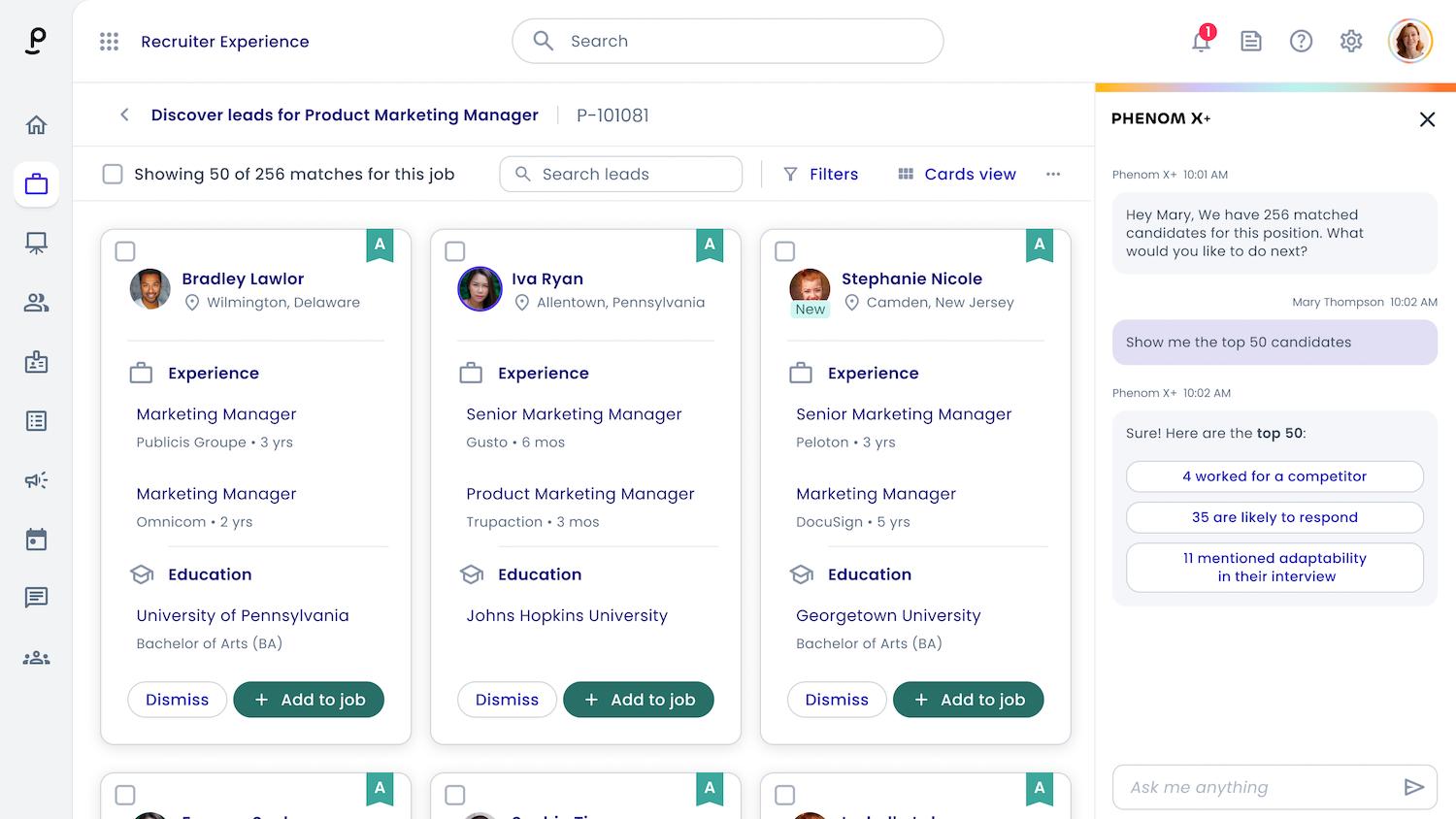
Phenom is an AI-driven talent experience platform that covers the full hiring lifecycle from job matching to onboarding. The platform uses AI to personalize candidate experiences, surface relevant roles, automate campaigns, and track candidate movement through pipeline stages.
Strengths: End-to-end automation with strong personalization. AI job matching shows candidates roles they’re qualified for, reducing irrelevant applications at the top of the funnel. Good analytics for tracking pipeline health and recruiter productivity.
Limitations: Complex implementation with enterprise pricing. The platform’s breadth can be overwhelming for teams that need to solve a specific screening or assessment problem rather than overhaul their entire talent experience.
Best for: Enterprises seeking end-to-end AI automation across the full talent lifecycle, from employer brand to offer and onboarding.
Pricing: Contact for pricing.
Lever
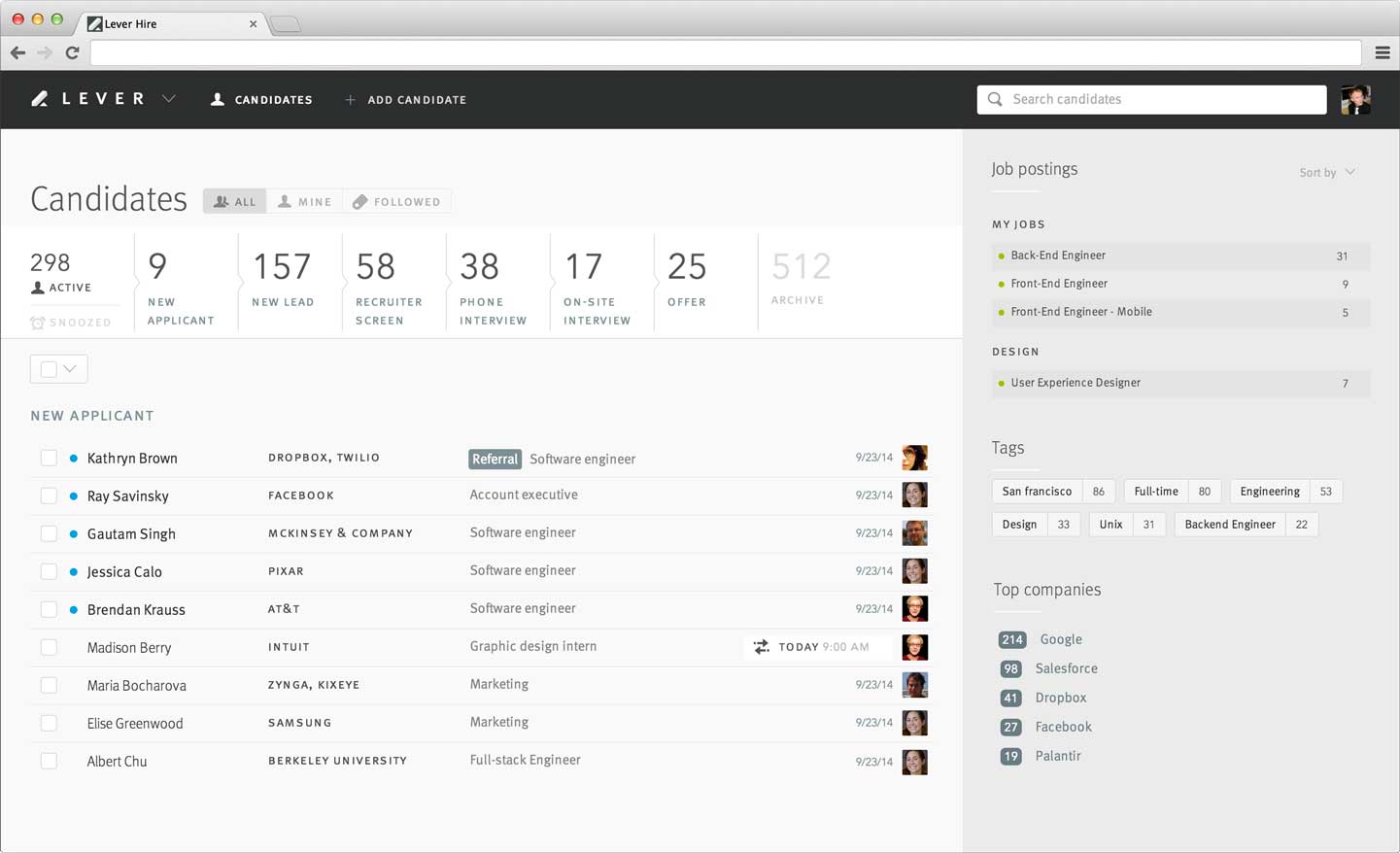
Lever combines ATS and CRM capabilities in a single platform, making it a strong option for growth-stage companies scaling from moderate to high volume hiring. The platform’s nurture campaigns and pipeline management tools help maintain candidate relationships over time, which is valuable for organizations building talent pipelines ahead of seasonal or growth-driven surges.
Strengths: Intuitive CRM features for candidate nurturing. Strong integrations and collaboration tools for distributed teams. AI-powered resume review and talent fit scoring.
Limitations: Less granular reporting at enterprise scale. Mobile experience is less developed than desktop. Advanced features and dedicated support may require higher-tier plans.
Best for: Growth-stage companies (50 to 500 employees) that need to build and maintain candidate pipelines while scaling hiring volume.
Pricing: Contact for pricing.
Avature
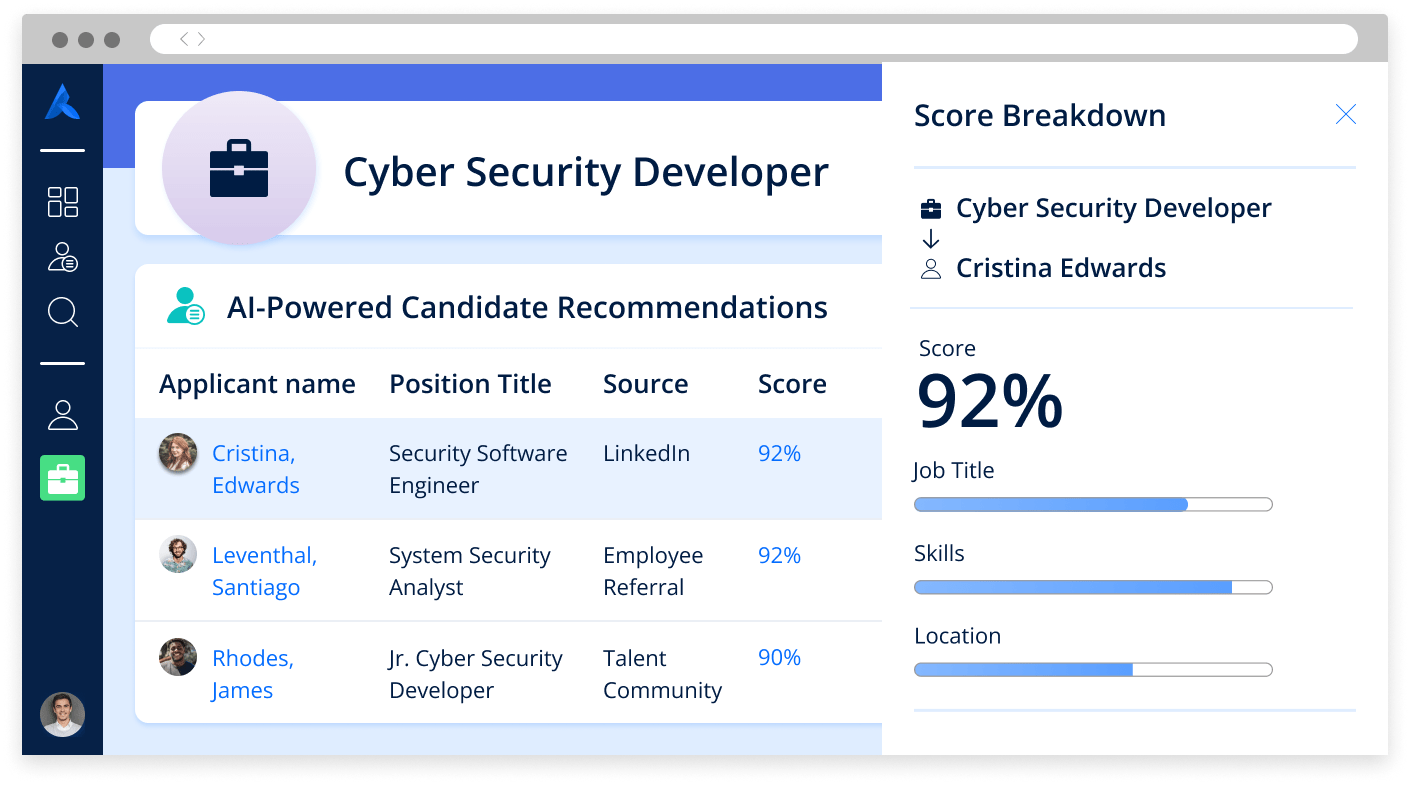
Avature is a highly configurable enterprise recruiting platform built for organizations that need custom workflows, multi-brand career sites, and global talent pool management. The platform’s strength is flexibility: virtually every workflow, form, and automation can be tailored to specific hiring programs.
Strengths: Extreme configurability for complex enterprise hiring needs. Strong CRM and talent pool management for long-term pipeline building. Supports multi-brand, multi-region hiring programs.
Limitations: Configuration complexity means longer implementation timelines and higher ongoing maintenance. Reporting can be difficult to set up without dedicated admin support.
Best for: Large enterprises (1,000+ employees) with complex, distributed hiring operations that need a platform flexible enough to support multiple hiring models simultaneously.
Pricing: Contact for pricing.
How to choose the right platform
The right high volume hiring software depends on the type of roles you’re filling, your team’s size, and where your current process is breaking.
- By role type. Frontline and hourly hiring prioritizes speed, mobile access, and candidate communication (Fountain, Paradox, Phenom). Roles that require skills evaluation or screening beyond resumes benefit from assessment-integrated platforms (Truffle, HireVue, Greenhouse). Enterprise and mixed-role hiring needs flexible ATS infrastructure (iCIMS, SmartRecruiters, Avature).
- By company size. Growth-stage teams (100 to 500 employees) need tools that are fast to implement and transparent on pricing (Truffle, Lever, Greenhouse). Mid-market (500 to 2,000) benefits from extensible platforms that grow with complexity (SmartRecruiters, Greenhouse, Phenom). Enterprise (2,000+) requires deep configurability, global compliance, and integration depth (iCIMS, Avature, Phenom).
- By where your process is breaking. If screening is the bottleneck (you’re drowning in unqualified applications), prioritize AI recruiting software with built-in assessments and scoring. If scheduling is the bottleneck, look at conversational AI and self-serve booking. If consistency is the problem (different managers making different decisions), invest in structured evaluation frameworks. If your problem is all three, you likely need recruiting automation software that covers the full screening workflow rather than bolting together point solutions.
One principle worth keeping in mind: tool selection should follow process design. Decide what your high volume hiring process needs to look like first, then find the platform that supports it. The teams that buy software before designing their process end up working around the tool rather than with it.
If warehouse or fulfillment roles are the specific volume problem, our guide to hiring a warehouse associate covers a screening approach built around how this workforce actually applies, phone-first and mostly off LinkedIn, rather than around resumes. If it’s a flooded customer service or support req, our guide to hiring a customer service representative has a ready-to-post job description and a screening workflow sized for the same volume problem. Running a small manufacturing floor instead? Our guide to hiring a press operator covers the job description, the safety-judgment interview questions that matter more than machine hours, and a screening workflow built for the same Indeed-and-walk-in sourcing pattern. Staffing a food or beverage plant’s off-shift crew? Our guide to hiring a sanitation worker covers the same volume problem for a role where the screening question that matters most is honesty under time pressure, not resume polish. Scaling up a logistics operation’s book of business instead? Our guide to hiring a freight broker covers the phone-heavy negotiation screening that actually predicts who closes, and if the volume problem is really in the back office keeping all that inventory accurate, our guide to hiring an inventory control specialist covers that accuracy-focused screen instead.
Frequently asked questions about high volume hiring software
These are the questions that come up most often when teams start evaluating platforms.
What is high volume hiring software?
High volume hiring software is a category of recruiting platforms designed to manage large-scale hiring operations, typically 50+ hires per month or 1,000+ applications per role, within compressed timelines. These platforms differ from traditional ATS by automating screening, assessment, and candidate communication at a scale where manual processes collapse. Most include some combination of AI-powered screening, bulk messaging, automated scheduling, and pipeline analytics.
How is high volume hiring software different from a traditional ATS?
A traditional ATS tracks candidates through a pipeline. High volume hiring software actively screens, scores, and ranks them. The distinction matters at scale: when you have 500 applicants for a single role, knowing where each one sits in your pipeline is less useful than knowing which 20 are worth reviewing. High volume platforms automate the screening, communication, and scheduling work that would otherwise require a proportional increase in recruiter headcount.
What should high volume hiring software cost?
Pricing varies widely. Truffle offers transparent, credit-based pricing from $49/month. Most enterprise platforms (iCIMS, Phenom, Avature) use custom pricing that typically requires a sales conversation. Mid-market tools (Greenhouse, Lever, SmartRecruiters) generally offer tiered plans but don’t publish rates. When comparing costs, factor in implementation time, integration requirements, and whether key features (AI scoring, assessments, video interviews) are included or require additional tools.
Can high volume hiring software integrate with my existing ATS?
Most purpose-built screening and assessment tools (Truffle, HireVue) integrate with major ATS platforms through native integrations, Zapier, or API connections. Full-suite platforms (iCIMS, Greenhouse, SmartRecruiters) aim to replace your ATS entirely. The integration question is really a process question: do you want to add screening capabilities to your existing workflow, or do you need to replace the entire system?
Which platform is best for frontline and hourly hiring?
Fountain and Paradox are both purpose-built for frontline hiring. Fountain emphasizes mobile-first automation and multi-stage workflows. Paradox uses conversational AI to engage candidates through text and chat. For teams that also need screening depth (one-way interviews or assessments alongside resume review), Truffle or Phenom offer more evaluation capability while still supporting volume.
How do these platforms handle AI and bias?
Every platform listed uses AI in some capacity, and the responsible ones are transparent about what AI does and doesn’t do. Look for tools where AI scores candidates against criteria you define (rather than a black-box algorithm), where scoring is explainable, and where you can audit results for consistency. Avoid platforms that claim to “eliminate bias” or “predict success.” Those are red flags. The responsible standard is consistent, transparent, explainable.
What happened with the Paradox and SmartRecruiters acquisitions?
Workday acquired Paradox and SAP acquired SmartRecruiters, both in August 2025. These moves signal that conversational AI and modern ATS capabilities are consolidating into enterprise suites. If you’re evaluating either platform, ask about roadmap implications, pricing changes, and long-term standalone availability. For teams that prefer not to lock into the Workday or SAP ecosystem, independent platforms still offer more flexibility.