Dispatcher: job description, interview questions, and screening workflow
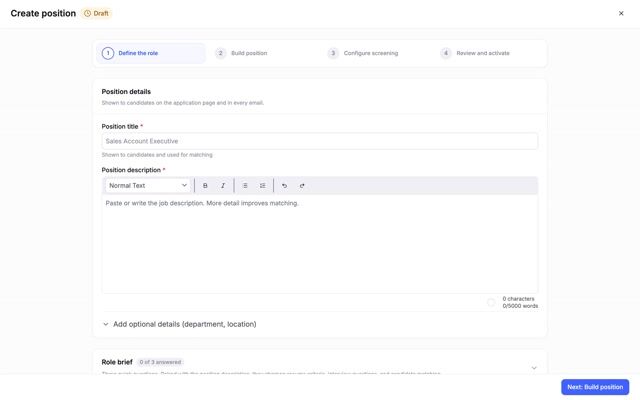
The generic advice for this role is "hire someone with a friendly phone voice who can multitask." At a small home-services business, that advice hires you a receptionist, not a dispatcher. A friendly voice matters, but it's not the job. The job is running a live logistics puzzle all day: matching the right tech to the right job, keeping drive time down, and re-arranging the whole board the moment a customer calls back about a blown pipe or a no-cool house. You're not hiring for a large call center with a supervisor down the hall and a shift lead to cover a bad decision. You're hiring the one person standing between a profitable, tight schedule and a day where two trucks cross paths across town while a customer sits on hold. This guide is built to screen for the thing that actually sinks this hire: not phone manner, but real-time scheduling judgment under pressure.
What a dispatcher actually does at a small home-services business
At a five-to-fifty person HVAC, plumbing, electrical, pest-control, or small delivery outfit, there's usually one dispatcher, sometimes two on a bigger day, running the entire operation from a desk, a headset, and a scheduling board. There's no shift supervisor to escalate to and no backup dispatcher two seats over. Whatever happens on the phone and on the schedule during the shift is this person's call.
The core responsibilities, in practice:
- Answering inbound calls, often while already mid-schedule-change, and triaging what's actually urgent versus what can be booked out
- Building and adjusting the day's schedule in real time as new calls, cancellations, and emergencies come in
- Routing crews efficiently, thinking in terms of drive time and geography, not just "who's free next"
- Communicating with techs in the field about their next job, delays, or a change in priority
- Handling a customer whose appointment window just got blown, without losing the account
- Deciding when a true emergency justifies bumping an already-scheduled job, and who to bump
- Keeping the schedule tight enough to be profitable, without overbooking a tech into a day that can't actually be finished
- Basic customer intake: capturing the right details up front so a tech doesn't show up unprepared
The phone skill is what shows up in an interview. The scheduling judgment is what actually determines whether the day goes well. A dispatcher who's warm on the phone but builds a bad route sends techs in circles and burns hours that should have gone to billable work. A dispatcher who's sharp on the schedule but rattles under an angry customer loses accounts you worked hard to win. You need both, and most hiring processes only test for one.
This role sits at the center of two crews you're likely also hiring for. A dispatcher who's scheduling an HVAC technician's day needs a rough sense of how long a no-cool diagnostic takes versus a full install. A dispatcher coordinating a delivery driver's route needs the same instinct for drive time and sequencing. If you're hiring both roles around the same time, it's worth reading that context so your dispatcher interview questions reflect what your crews' actual days look like.
Job description you can post today
Copy this, then adjust the specifics (your service area, your scheduling software, your hours) to match your shop.
Dispatcher
[Company name] is looking for a dispatcher to run our daily schedule and be the first voice our customers hear. You'll answer inbound calls, build and adjust the day's schedule as things change, and keep our crews moving efficiently between jobs.What you'll do
Answer inbound calls and triage what's urgent versus what can be booked out. Build the day's schedule and adjust it in real time as new calls, cancellations, and emergencies come in. Route crews with drive time and geography in mind, not just "next available." Communicate delays and schedule changes to both customers and techs, clearly and without drama. Handle an upset customer whose appointment window slipped, and keep the account. Make fast calls about when an emergency job needs to bump the existing schedule, and who it bumps. Capture the right details from customers up front so techs show up prepared.What we're looking for
Calm, clear communication on the phone, especially with a frustrated customer. Real judgment about priorities when the schedule is already full and something urgent comes in. Comfort juggling multiple live threads (a call, a schedule change, a tech text) without dropping any of them. Basic comfort with a scheduling or dispatch software (we'll train you on ours). Prior dispatch, call center, or scheduling-coordinator experience is a plus but not required if you can show us the judgment in the interview.Schedule
[Insert hours, e.g. Monday-Friday, 7am-5pm, with occasional on-call coverage for emergency calls][Insert pay range, per your company's policy and any applicable state salary transparency requirements]
12 interview questions, and what a good answer sounds like
1. Walk me through how you'd build tomorrow's schedule if you had six jobs and three trucks.
You're checking for actual routing logic, not just a willingness to "figure it out." A strong answer talks about grouping jobs by geography to cut drive time, considering how long each job type realistically takes, and leaving some buffer instead of packing the day edge to edge. A weak answer jumps straight to "whoever's free takes the next one," with no thought for the map or the clock.
2. It's 10am, the schedule is already full, and a customer calls with no heat and a baby in the house. What do you do?
This tests emergency judgment under a full board. A strong answer treats this as a real triage decision: confirming it's genuinely urgent, figuring out who can realistically get there soonest without wrecking the rest of the day, and communicating clearly with whichever customer gets pushed. A candidate who says they'd just "squeeze it in somewhere" without thinking through who pays the cost is skipping the actual decision.
3. A customer is furious because their 12-2pm window slipped to 4pm. What do you say?
Listen for ownership without over-apologizing into a promise you can't keep. A strong answer acknowledges the frustration directly, gives an honest new estimate, and offers something concrete, an update call, a discount if that's within their authority, rather than vague reassurance. A candidate who says they'd just say sorry and hope the customer calms down hasn't thought about what actually de-escalates a real call.
4. Tell me about a time you had to keep multiple things moving at once, a call, a change, a deadline, without dropping any of them.
You want a real example with real stakes, not a general claim of being a good multitasker. A strong answer describes an actual method: writing things down immediately rather than trusting memory, triaging what needs attention right now versus in five minutes, and closing the loop on each thread before it's forgotten. A vague answer with no specifics suggests they haven't actually been tested on this yet.
5. Two techs are running behind on unrelated jobs and you have a 3pm arriving in twenty minutes. What's your move?
Good answers show real-time re-sequencing: checking which tech is realistically closer to freeing up, deciding whether to call the 3pm now with an honest heads-up rather than waiting for them to notice, and not just hoping both techs speed up. A candidate who says they'd wait and see what happens is describing exactly the instinct that turns a small delay into three angry customers.
6. How would you decide which tech to send to a tricky job versus a routine one?
This surfaces whether they think about matching skill to job, not just proximity. A strong answer considers a tech's experience level, whether the job sounds complex from the intake details, and balancing that against drive time. A candidate who says "whoever's closest, every time" hasn't thought about the cases where that backfires.
7. Describe the most chaotic day you've had at work, phone-wise or schedule-wise. What actually happened, and how did you get through it?
Listen for a real story with a real resolution, not just "it was crazy but I handled it." A strong answer names what broke, what they prioritized first, and what they'd do differently next time. A candidate who can't produce a specific example probably hasn't been tested under real pressure yet.
8. A tech calls and says a job is taking twice as long as scheduled. What do you do with the rest of the day?
Strong answers describe recalculating the day in real time: which downstream jobs are affected, who needs a heads-up call now rather than a surprise later, and whether anything needs to move to another tech or get rescheduled outright. A candidate who says they'd just wait and adjust things "as they come up" is describing reactive dispatching, not the real job.
9. How do you keep a schedule tight without overbooking a tech into a day they can't actually finish?
This tests whether they understand the profitability side of the job, not just the customer-facing side. A strong answer talks about realistic time estimates per job type, building in some buffer for drive time and surprises, and not treating every open slot as bookable just because it's open. A candidate who says "just fill every gap" is describing the instinct that leads to techs finishing jobs at 8pm and customers getting bumped.
10. Tell me about a time you had to deliver bad news to someone, a delay, a cancellation, a mistake, and how you handled the conversation.
You're listening for directness and calm, not deflection. A strong answer describes stating the bad news clearly and early rather than burying it, taking ownership of what's in their control, and offering a next step. A candidate who describes softening the news so much the person didn't understand what was actually happening is showing you a real communication risk for this job.
11. How comfortable are you learning a new scheduling or dispatch software, and how have you picked up a new system quickly before?
Most shops run some kind of field-service or dispatch software, and a new hire needs to get functional on it fast. A strong answer names a real example of learning a new tool under time pressure and describes how they got up to speed, not just "I'm a fast learner." A candidate who can't point to a real example may take longer to ramp than your business can absorb.
12. Why does dispatching interest you, specifically the parts that are stressful, the ringing phone, the schedule falling apart, the angry calls?
This surfaces whether they actually understand what they're signing up for. A strong answer names something real: they like solving the puzzle in real time, they're energized by a fast pace, they've done phone-heavy work before and know what it takes out of you. A candidate who can only talk about liking to help people, without acknowledging the pressure and pace, may be underestimating the job.
A scorecard you can score candidates against
Twelve questions are only useful if everyone on your side is listening for the same thing. Score every candidate on the same six signals, so you're comparing evidence instead of comparing gut feelings from different conversations. Copy this into a doc and fill in a row per candidate.
| What you're scoring | Strong signal | Weak signal |
|---|---|---|
| Real-time scheduling judgment | Thinks in terms of geography, realistic job length, and buffer, not just "next available tech" | "Whoever's free takes the next one," no consideration of drive time or realistic duration |
| Emergency prioritization | Treats a full-schedule emergency as a real tradeoff, decides who's affected, and communicates the change proactively | Would just "squeeze it in somewhere" without weighing who pays the cost |
| Composure with an upset customer | Acknowledges frustration directly, gives an honest new estimate, offers something concrete | Vague apology with no real plan, or over-promises to end the call quickly |
| Multitasking under live pressure | Names a real method (writing things down immediately, triaging by urgency) with a specific example | General claim of being "good at multitasking" with no real example |
| Proactive communication | Calls ahead with bad news rather than waiting for the customer or tech to notice a problem | Waits and hopes the situation resolves itself before saying anything |
| Understanding of profitability, not just customer service | Talks about realistic time estimates and buffer so the schedule stays tight without overbooking techs | "Just fill every open slot," no concept of what that does to a tech's day |
How to screen dispatcher candidates without losing a week to it
Truffle is an AI screening platform that combines resume screening, one-way video interviews, and talent assessments, so you can build a screening workflow around what actually matters for a role where the interview itself is close to the job: live, verbal, and under pressure.
A dispatcher opening tends to pull a wide range of applicants: former call center agents, restaurant or retail shift leads used to juggling a lot at once, people with no formal dispatch background at all but real phone experience. Resume screening alone can't tell you who's actually going to stay calm on a call or build a sane schedule. A workflow that fits a small business doing its own hiring:
- Resume screening first. Cut obvious mismatches on relevant phone, scheduling, or coordination experience before you spend live time on anyone. This is also where you handle volume, since dispatcher and call-center-style postings often draw more applicants than a technician role does.
- A one-way video interview for your first real listen, not a live call. This is the closest thing to actually hearing how someone sounds on the phone, calm or rattled, clear or rambling, without you having to schedule a call for every applicant. Ask 2-3 of the scenario questions above, like the blown-window question or the full-schedule-emergency question, and listen for tone as much as content.
- A short skills assessment for scheduling judgment and phone composure. A resume or a friendly video can't show you real triage logic under time pressure. Our call center assessment is built around exactly this kind of realistic, scenario-based scoring for phone and coordination roles, and it's short enough that strong candidates won't drop out over it.
- A live conversation only for candidates who clear the first three steps. By the time you're on a call, you already know they can communicate clearly, handle a scenario under pressure, and think like a scheduler. The live conversation is for team fit and specifics about your shop, not for discovering for the first time whether they can do the job.
Our resume screening and one-way video interview tools handle the first two steps in one place, with AI that surfaces your strongest matches against the criteria you set. You review the evidence and decide. It doesn't pick for you.
3 questions from the assessment we'd actually run for this role
An assessment for a dispatcher only helps if it tests real judgment under realistic pressure, not generic customer-service trivia. These three are adapted from Truffle's call center assessment, the assessment we'd point you to for this role, since a dispatcher's core skill, handling a live phone call under pressure while managing a schedule, maps closely to what that assessment is built to score. Try them yourself before you decide what "ready" means for your opening.
1. A customer calls furious: "You people said 12 to 2 and it's almost 4. This is ridiculous." The tech is genuinely stuck on a job that ran long. What do you say in the first 30 seconds? Reveal answer
There's no single scripted line that's "correct," but a strong answer opens by naming the frustration directly ("I hear you, that window slipping is frustrating and I'm sorry") before explaining anything, gives an honest updated estimate instead of a vague one, and offers something concrete, a callback with a firm time, or an update the moment the tech wraps up. Watch for candidates who jump straight to excuses about traffic or the previous job before acknowledging the customer at all. That ordering is exactly what makes an already-angry customer angrier.
2. Your board is full for the day. A new call comes in: a commercial customer's walk-in cooler is down and they're losing inventory by the hour. Do you fit them in today, and how do you decide? Reveal answer
A strong answer treats this as a real tradeoff, not an automatic yes. It names the questions that should come first: how urgent is it really, which tech could realistically get there without wrecking the rest of the day, and who would need to be told about a delay if this job goes in. It also flags that whoever gets bumped needs a proactive call, not a surprise. A candidate who says "of course, just fit them in" without naming who pays the cost is skipping the actual decision a dispatcher has to make multiple times a week.
3. You're mid-call with a customer when a tech texts that he's running 45 minutes behind on his current job, which pushes his next two appointments. What do you do? Reveal answer
Look for an answer that doesn't drop either thread: finishing the current call properly first (or getting a natural pause to jot a quick note), then immediately working out which downstream customers need a heads-up call and how the rest of the day needs to shift. A candidate who says they'd just deal with the text the moment they see it, mid-call with a live customer, is showing you a habit that leads to dropped threads and customers who feel deprioritized. The strong answer is about sequencing under pressure, not about doing everything at once.
The point isn't these three questions specifically. It's that a short, scenario-based assessment like this tells you in a few minutes what a resume and a friendly phone manner can hide: whether someone actually makes sound calls when the board is full and the phone won't stop. Truffle's AI scores and surfaces the results against the bar you set. You still make the call on who clears it.
Common hiring mistakes for this role
Hiring for phone charm alone. A warm, easy phone voice is genuinely valuable, but it's not the job. Someone can sound great on every call and still build a schedule that has two techs crossing town twice in an afternoon. Test scheduling judgment directly, not just how someone sounds saying hello.
Never testing how someone actually handles an angry customer. Almost every candidate will say they're "great with difficult customers" in an interview. Very few have actually been put in front of a realistic angry-customer scenario and asked to respond in the moment. That gap only shows up on the job, usually during your first real complaint, unless you test it beforehand.
Underestimating how much this is really a logistics job disguised as a phone job. The phone is the visible part. The schedule, the routing, the constant re-sequencing as the day changes, is the part that actually determines whether the day was profitable. Weight scheduling and prioritization judgment as heavily as communication skill, not as an afterthought behind it.
Skipping a scenario-based check to save time. A short, structured assessment takes a few minutes to run and tells you more about how someone will handle a real bad day than an extra round of phone screening ever will. The time you save by skipping it is small compared to the cost of a dispatcher who freezes or fumbles the first time the board falls apart.
Not being honest in the interview about how stressful the role actually is. If you soften what the job involves to make it sound easier and more attractive, you'll hire someone who's surprised and burns out fast. Describe the ringing phone, the schedule falling apart, and the occasional angry call plainly in the interview. The candidates who are genuinely a fit will tell you they're up for it, specifically, not just in general terms.
What should your screening process look like?
Answer six quick questions about how you hire. We'll point you to the screening steps that fit, so you spend your time on the candidates worth a conversation.
What each result looks like
Start with resume screening
You're working through real volume, and the resume still carries signal. Score every resume against your criteria first, so a shortlist surfaces before you spend time on anyone.
- Resume screeningScore every resume against your criteria and surface your strongest matches first.
- One-way interviewsHear how candidates think on a recorded prompt, on their schedule and yours.
7-day free trial. No credit card required.
Lead with one-way interviews
Resumes look interchangeable and phone screens are eating your week. Let candidates answer a recorded prompt on their own time. You watch the moments that matter and decide who's worth a live round.
- One-way interviewsHear how candidates think on a recorded prompt, on their schedule and yours.
- Resume screeningScore every resume against your criteria and surface your strongest matches first.
7-day free trial. No credit card required.
Anchor on talent assessments
For these roles the work matters more than the paper. Put a role-calibrated assessment up front, so you see real, comparable evidence before you book a calendar slot.
- Talent assessmentsSee role-calibrated work before you spend a calendar slot on a live round.
- One-way interviewsHear how candidates think on a recorded prompt, on their schedule and yours.
7-day free trial. No credit card required.
Layer all three signals
Your hiring spans high volume and high stakes, so no single step covers it. Layer all three: score resumes first, hear candidates on a one-way interview, then confirm with an assessment. Each step narrows the field, and you make the call at every stage.
- Resume screeningScore every resume against your criteria and surface your strongest matches first.
- One-way interviewsHear how candidates think on a recorded prompt, on their schedule and yours.
- Talent assessmentsSee role-calibrated work before you spend a calendar slot on a live round.
7-day free trial. No credit card required.