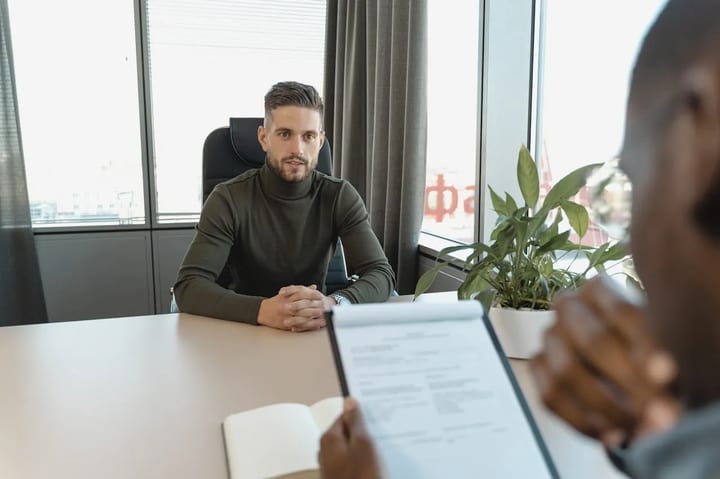
How to dress for a one way interview (and look confident on camera)
What candidates should wear on a one-way or Zoom video interview, and how hiring teams can share attire guidance that keeps the focus on answers.


AI summary
- In async video interviews, clothing is part of the signal: clean, well-fitting, camera-friendly outfits keep reviewers focused on answers instead of distracting prints, wrinkles, or overly casual looks.
- Hiring teams should proactively share attire guidance because comfort drives performance, candidates who feel prepared fidget less, project more confidence, and give you a clearer read on communication and presence.
- Video-specific pitfalls matter more than “fashion”: avoid patterns that warp on webcam, extremes like pure white or all-black that break auto-exposure, and the waist-up shortcut that can backfire (and even hurts mindset).
You’ll never believe this, but the worst presentation I ever gave was the one with no audience. My professor assigned a recorded video submission: no classroom, no live Q&A, just me and my laptop. I figured less pressure meant less prep. So I winged it in a hoodie, read half my points off-screen, and submitted it thinking “good enough.” I got it back with a grade that made clear my professor had watched it very carefully, even if I hadn’t treated it that way.
That’s exactly what a one-way video interview feels like. You get a link, a set of questions, and no interviewer on the other end. Just you and your webcam. You could record in pajama pants and nobody would know. But the hiring team will watch your recording alongside dozens of others, and your outfit is part of the signal they pick up before you say a word.
What to wear for a one way interview
These principles apply regardless of gender. The specifics come later.
Dress professionally from head to toe
Most one-way interview platforms frame you from mid-chest up. That doesn’t mean you should skip pants. You might need to stand up to adjust your camera or grab something off-screen. More importantly, wearing a full outfit changes how you carry yourself. People who dress completely tend to sit taller and speak with more authority, even when nobody can see their shoes.
Choose clothes that fit well and move easily
Tight clothing makes you fidget. Stiff fabric makes you sit rigidly. Both show up on camera. Wear something you’ve worn before, something you know fits and lets you gesture naturally. Test your range of motion before you hit record.
Keep patterns simple and stick to solids
Busy patterns create a visual effect called moiré, where fine lines interact with camera sensors and produce distracting wavy distortions on screen. Solid colors or very subtle textures avoid this entirely and keep the viewer’s attention on your face.
Select minimal jewelry and accessories
Dangling earrings catch light. Chunky bracelets create noise when they tap the desk. Reflective watches flash the camera. Stick with small, understated pieces that won’t compete with what you’re saying.
Test your outfit on camera before recording
Colors look different on screen than they do in a mirror. A shade that looks great in person might wash you out or blend into your background on webcam. Do a quick test recording in your actual setup to check how everything reads. Most one-way interview platforms (including Truffle) let you re-record, so you have time to adjust.
What colors to wear for a video interview
| Color type | Examples | Why it works on camera |
|---|---|---|
| Neutral tones | Navy, charcoal, soft black, tan | Professional without competing with your face |
| Soft colors | Light blue, blush, sage green | Flattering on most skin tones, approachable |
| Muted jewel tones | Burgundy, teal, deep purple | Adds personality while staying polished |
Neutral tones that work on camera
Navy, charcoal, and soft black are safe defaults. They read as professional, they don’t distract, and they work with almost any background. If you’re unsure, navy is the single safest choice for video interview attire.
Soft colors that project confidence
Light blue, muted greens, and soft pinks photograph well and create a warm, approachable impression. These work especially well if your background is neutral or dark, because they provide enough contrast without being harsh.
Colors to avoid in virtual interview attire
Bright white and neon shades
Pure white can blow out on webcam, creating harsh glare that makes your face look dark by comparison. Neons cast unwanted color onto your skin. If you want to wear white, choose an off-white or cream instead.
Busy patterns and thin stripes
Fine stripes, herringbone, and small checkerboard prints are the worst offenders for the moiré effect. The camera turns them into shimmering, wavy lines that pull attention away from your answers. Stick to solids.
Female virtual interview outfit guide
Blouses and tops that photograph well
Structured blouses, tailored knits, and simple shells in solid colors all work. Crew necks, modest V-necks, and collared shirts read cleanly on camera. A blazer or cardigan layered over a solid top adds polish without overdoing it. Avoid sheer fabrics or low necklines, which can appear differently on screen than they do in person.
Professional bottoms even when not visible
Dress pants, a skirt, or tailored trousers. Not just for the practical reasons (you might need to stand), but because completing the outfit changes your posture and energy. You’ll feel more interview-ready, and that shows.
Accessories and jewelry for women
Small stud earrings over hoops. A simple necklace over a statement piece. Nothing that reflects, dangles, or creates noise when you move. The goal is to look put-together without giving the viewer anything to fixate on besides your answers.
What to wear for a video interview as a man
Shirts and jackets that work on camera
A collared dress shirt in a solid color is the baseline. Blue, light gray, or white (off-white if your background is light) all work. For corporate roles, adding a blazer sharpens the look. Make sure your collar lies flat and isn’t wrinkled. On camera, a rumpled collar is the first thing people notice.
Pants and shoes even if off screen
Dress pants or chinos. Not shorts. Not sweatpants. The same logic applies here: completing the outfit puts you in a different headspace, and you never know when you might need to stand.
Grooming and accessories for men
A tie is usually optional for one-way interviews unless you’re applying to a law firm or financial institution. If you wear a watch, make sure it doesn’t catch light. Keep facial hair neat. On camera, stubble that looks intentional in person can read as unkempt.
How to match your outfit to company culture
When you don’t know the dress code, research before you record. Check the company’s website team page, their LinkedIn photos, and any social media posts from employees. Job postings sometimes include culture cues too (“casual environment” vs. “professional setting”).
If you still can’t tell, lean slightly more formal than you think is necessary. One-way interviews are typically early in the screening process. Showing professional polish at this stage costs you nothing. Showing up too casual might cost you the next round.
Common mistakes in video interview attire
Dressing only from the waist up
The most common mistake. It backfires when you stand up, and it subtly undermines your confidence even if nobody sees. Dress like you’d walk into an office.
Wearing distracting patterns or colors
Stripes that shimmer. White that glares. Neons that cast color on your face. All preventable with a quick camera test.
Skipping the lighting and camera check
A great outfit looks bad under overhead fluorescent light or in front of a bright window. Face your light source. Check your recording preview. Adjust before you start.
Overdressing or underdressing for the role
A three-piece suit signals poor judgment at a casual startup. A hoodie signals poor judgment at a corporate bank. Match your formality to the role, not to what feels comfortable.
Your one way interview outfit checklist
Before you record:
- Outfit is professional from head to toe
- Colors are solid or have subtle patterns
- Clothes fit comfortably and allow easy movement
- Jewelry is minimal and non-distracting
- Outfit has been tested on camera
- Background coordinates with clothing (no clashing)
- Lighting shows true colors without harsh shadows
Look confident and let your answers stand out
Once you’ve handled the outfit, forget about it. The whole point of dressing well is to remove it as a variable so you can focus on delivering strong answers.
In a one-way video interview, you control the environment. You pick the time, the space, the lighting, and (on most platforms) you can re-record if your first take doesn’t feel right.
Truffle is a candidate screening platform that combines resume screening, one-way video interviews, and talent assessments. Hiring teams using Truffle review your responses with AI-generated transcripts and summaries, so the weight falls on what you say, not what you’re wearing. Dress well, prepare your answers, and let the recording speak for itself.
FAQs about video interview attire
Should I wear a suit for a one way video interview?
A full suit is usually unnecessary unless you’re applying for executive, legal, or highly formal corporate roles. A blazer over a dress shirt is sufficient for most positions and hits the right balance between polished and approachable.
What should I wear if I do not know the company dress code?
Default to business casual. A collared shirt or blouse with an optional blazer is a safe middle ground that works across most industries. You can always dress down in later rounds once you’ve seen the office culture.
Does wearing glasses affect how I look on camera?
Glasses are fine. The only issue is glare. Position your light source in front of you rather than overhead or behind you. If glare persists, anti-reflective lenses solve the problem.
Should I keep my hair up or down for a video interview?
Either works as long as your face is clearly visible. Avoid styles that require frequent touching or adjustment during recording, because fidgeting on camera reads as nervousness.
Can I wear casual clothes for a startup video interview?
Even casual startups expect effort in interviews. Smart casual (a clean button-down, a structured top, dark jeans) shows you took the process seriously while matching a relaxed culture.
How much of my body will be visible in a one way interview?
Most platforms frame you from mid-chest up. But you should still dress fully in case you need to adjust your position, stand up, or move during recording.
.png)