The best AI staffing agency tools in 2026
The only AI staffing tools list that tells you which category each tool actually falls into (sourcing, engagement, or screening), what the legal risks are, and how to wire them together without burning your tech budget.

AI summary
- Breaks 12 tools into three buckets (sourcing, engagement, screening) so agencies stop buying overlapping products
- Covers selection criteria most lists skip: compliance/bias audits, data quality prerequisites, and why AI tools fail at exec-level roles
- Includes a sample four-tool stack for a 10-recruiter agency and honest pricing where available
“AI” in staffing gets talked about like it’s one thing. It’s not. It’s sourcing engines, chat assistants, matching algorithms, one-way interview platforms, and the copilot baked into your ATS. Some of these earn their keep in week one. Others need six months of data before they’re useful. Buying the wrong category is worse than buying nothing.
According to the GRID 2026 Industry Trends Report, staffing firms that grew revenue by more than 25% were four times more likely to be running AI. But “running AI” doesn’t mean the same tool at every desk.
This guide breaks down the 12 best AI staffing tools in 2026, what each one’s actually for, where it falls short, and how to combine them into something that works. If you want the bigger thought-leadership picture first, our AI staffing overview sets the table. This is the tools companion.
What “AI staffing tools” actually covers
When recruiters say “AI staffing solutions,” they usually mean one of three buckets. Knowing which bucket a tool sits in saves you from buying three products that do the same thing.
- Sourcing. These tools find candidates who aren’t in your ATS yet. Think hireEZ, SeekOut, Juicebox. They scrape the open web, rank people against your position, and help you send outbound.
- Engagement. Chatbots, SMS automation, and scheduling assistants that talk to candidates at scale. Paradox and Sense live here. They shine on high-volume requisitions where response time is the game.
- Screening. The layer between “we got 300 applicants” and “here are 8 I trust.” Resume parsing, AI candidate screening, one-way video interviews, and scored pre-employment assessments. Truffle lives here, along with HireVue.
Most staffing agencies need at least one tool from each bucket. The trick is picking ones that don’t step on each other.
How to choose AI staffing tools in 2026
Start with your bottleneck, not the feature list. If your recruiters drown in screening calls, sourcing software won’t help. If you can’t find candidates in the first place, a better interview tool is the wrong fix.
Then check four things. Does it plug into your ATS cleanly, ideally Bullhorn, JobDiva, or whatever you already run? Does it price for an agency model, meaning per-user or flat-rate, not per-hire? Can your team learn it in a week, not a quarter? And does the vendor have a clear answer on bias and compliance? NYC Local Law 144, the Illinois AI Video Interview Act, and evolving EEOC guidance all apply to staffing. If the vendor can’t explain how their AI is audited, walk.
One more thing before you demo: check your data. Every AI tool on this list runs on whatever’s in your ATS. If your database is 100,000 records of stale contacts and duplicate entries, the tool will amplify the mess. Clean first, automate second.
Ask for a real trial with real data. Demo data is always pretty. Your data is what matters.
The 12 best AI staffing tools in 2026 at a glance
| Tool | Category | Best for | Pricing | ATS integration |
|---|---|---|---|---|
| Truffle | Screening | Agencies running 5-50 positions that need client-ready shortlists fast | From $49/mo, credit-based | API + integrations |
| Bullhorn Copilot | End-to-end | Agencies already on Bullhorn who want AI without swapping platforms | Contact sales | Native (Bullhorn only) |
| Sense | Engagement | High-volume agencies with a big database they’re not mining | Contact sales | Bullhorn, JobDiva, Avionté |
| hireEZ | Sourcing | Executive search and perm desks sourcing passive candidates | Contact sales | 30+ ATS integrations |
| SeekOut | Sourcing | Niche verticals: healthcare, engineering, security-cleared | Contact sales | Major ATS platforms |
| Loxo | End-to-end | Smaller agencies and boutique search firms consolidating tools | Contact sales | Built-in ATS |
| Paradox (Olivia) | Engagement | Light industrial, hospitality, 50+ same-role fills per month | Contact sales | Major ATS platforms |
| HireVue | Screening | Enterprise staffing firms supporting branded client assessments | Contact sales | Major ATS platforms |
| iCIMS Talent Cloud | End-to-end | Staffing firms with enterprise MSP/VMS client integrations | Contact sales | Built-in ATS |
| SmartRecruiters | End-to-end | Mid-market and enterprise TA teams on SmartRecruiters | Contact sales | Built-in ATS |
| Eightfold AI | Sourcing | Large enterprises and MSPs running workforce planning at scale | Contact sales | Major ATS platforms |
| Juicebox (PeopleGPT) | Sourcing | Recruiters who want natural language search without boolean | Contact sales | Export + integrations |
1. Truffle
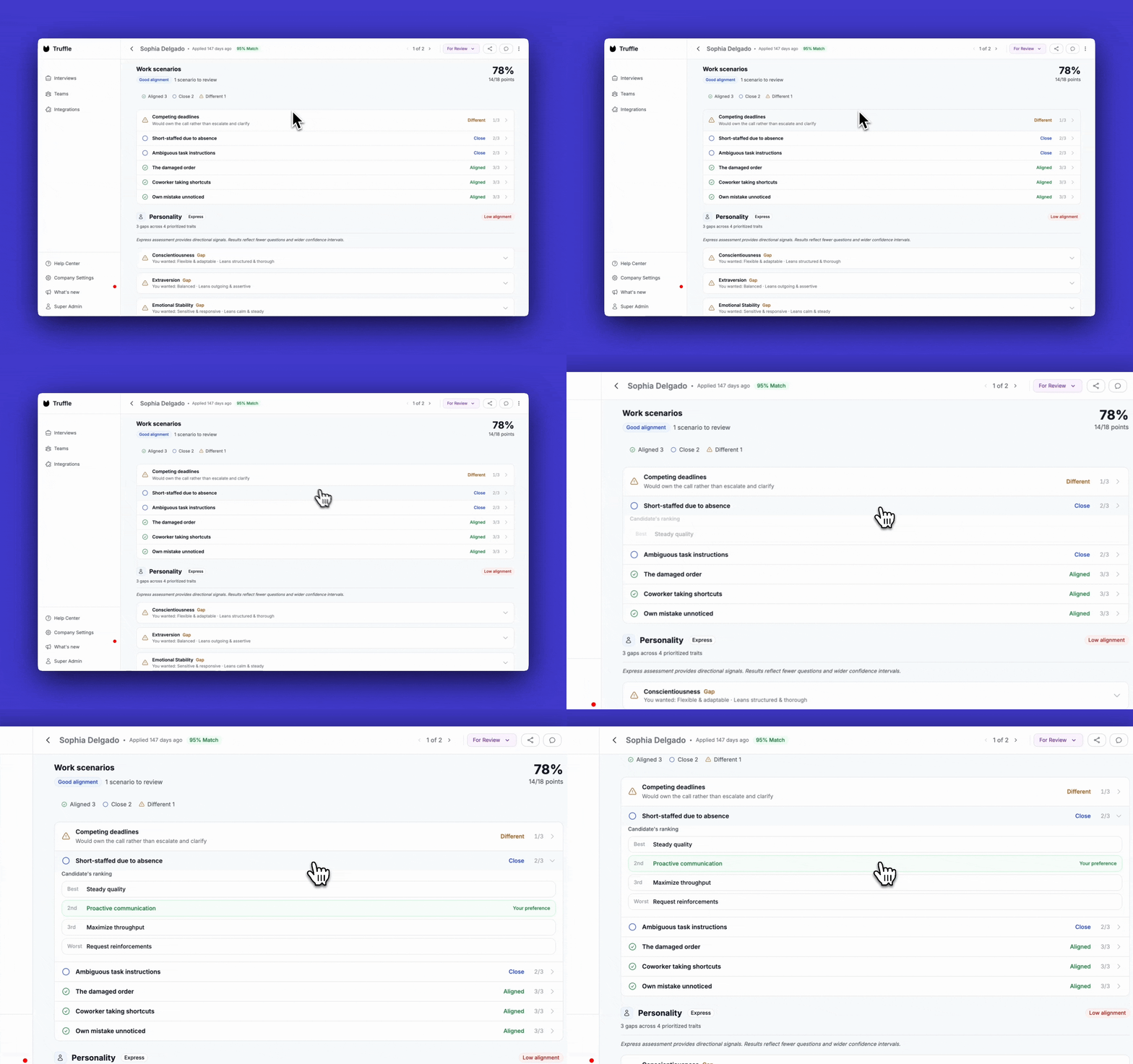
Truffle is the AI screening layer for staffing agencies. You post a position, candidates upload a resume, record a one-way interview, and complete talent assessments (Personality, Situational Judgment, Environment Fit), and you get AI Summaries, an AI Match score against your intake, and Candidate Shorts you can send straight to your client.
- Best for: Staffing agencies running 5 to 50 positions at once who need to send client-ready shortlists fast.
- Strength: Candidate profiles and AI analysis your account manager can drop into a client email without editing. Clients see a real person in under a minute, backed by structured assessment data alongside the resume and interview.
- Pairs well with: Your ATS and sourcing tools. Truffle sits in front of whatever ATS you run and does the part it’s built for: showing which candidates are worth a client’s time.
- Pricing: Credit-based, plans from $49/mo, 7-day free trial.
2. Bullhorn Copilot and Bullhorn One
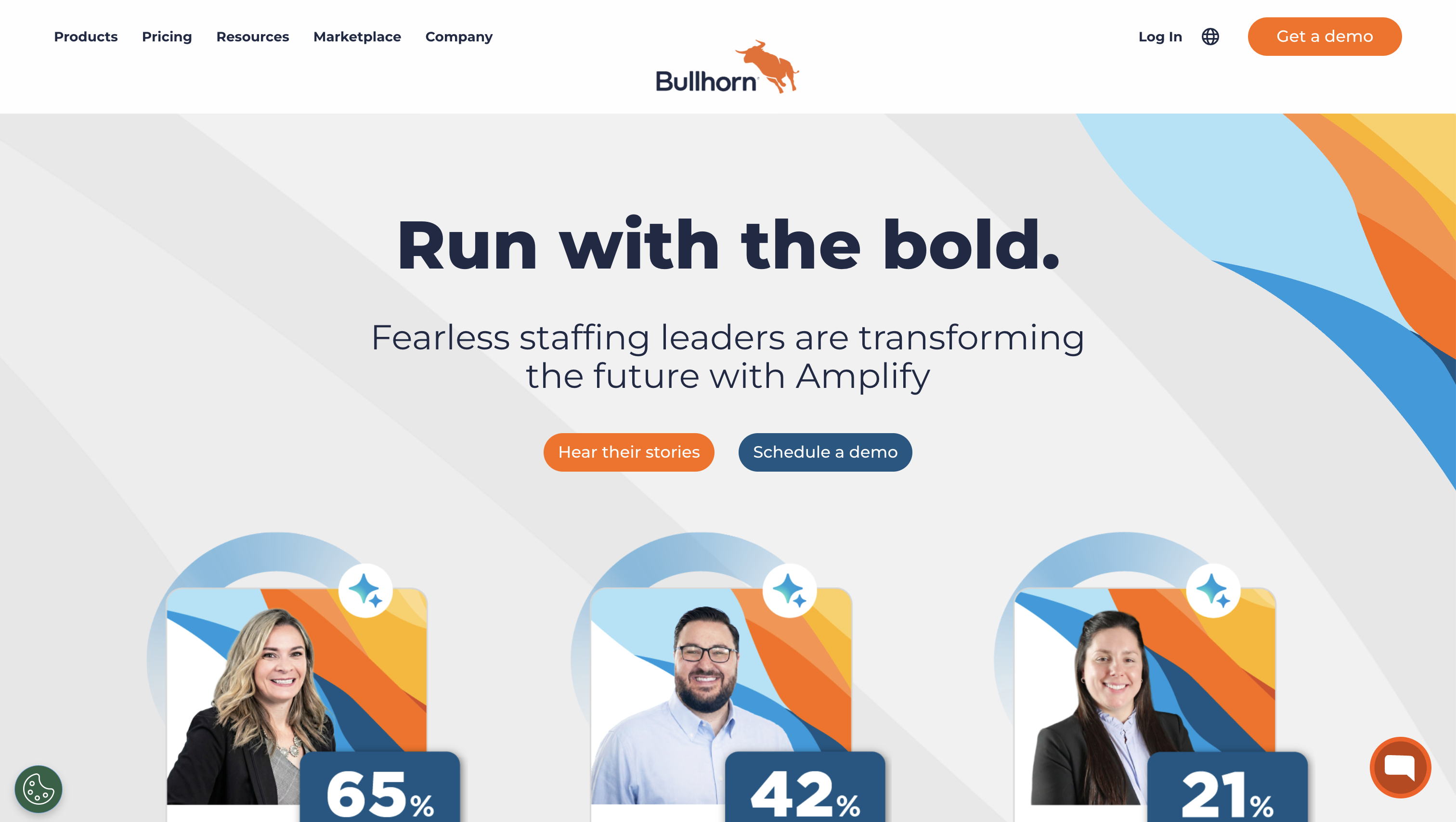
Bullhorn’s been the dominant staffing ATS/CRM for years, and Copilot brings generative AI into the record itself. You can draft candidate outreach, summarize notes, and pull position matches without leaving the record view.
- Best for: Agencies already running Bullhorn who want AI without swapping platforms.
- Strength: Lives where your recruiters already work. Zero adoption tax if you’re on Bullhorn.
- Weakness: You’re locked into the Bullhorn ecosystem and pricing tier. If you’re on a different ATS, it’s not an option.
- Pricing: Contact for pricing.
3. Sense
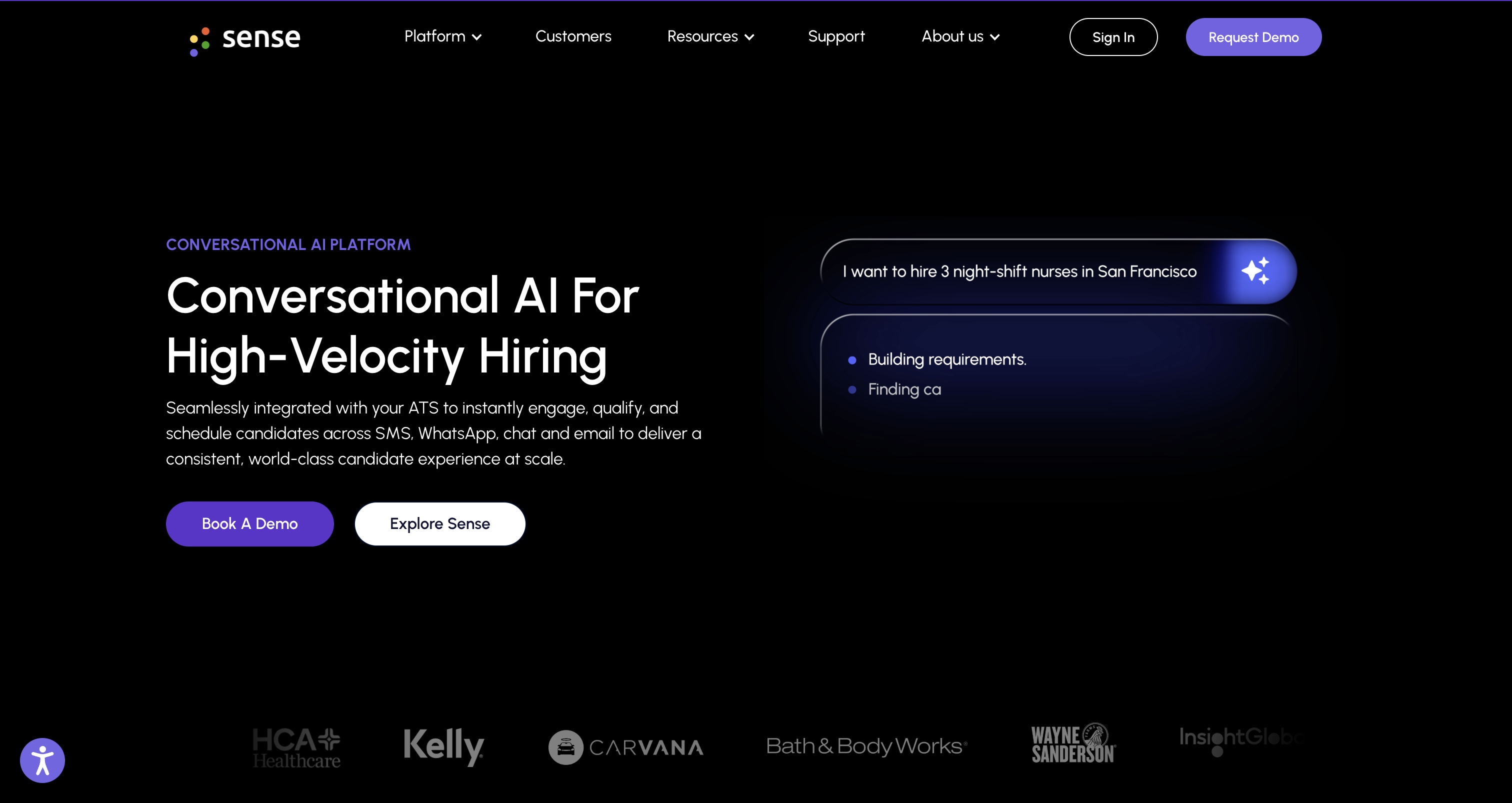
Sense handles candidate engagement at scale with SMS, email, and chatbot flows built for staffing. It reactivates dormant candidates in your ATS, which is gold for agencies sitting on 100k+ records.
- Best for: High-volume staffing agencies with a big database they’re not mining.
- Strength: SMS automation that feels like a recruiter wrote it, plus redeployment campaigns that surface contractors between gigs.
- Weakness: Real ROI needs a clean database. If your ATS is a mess, Sense can amplify the mess.
- Pricing: Contact for pricing.
4. hireEZ
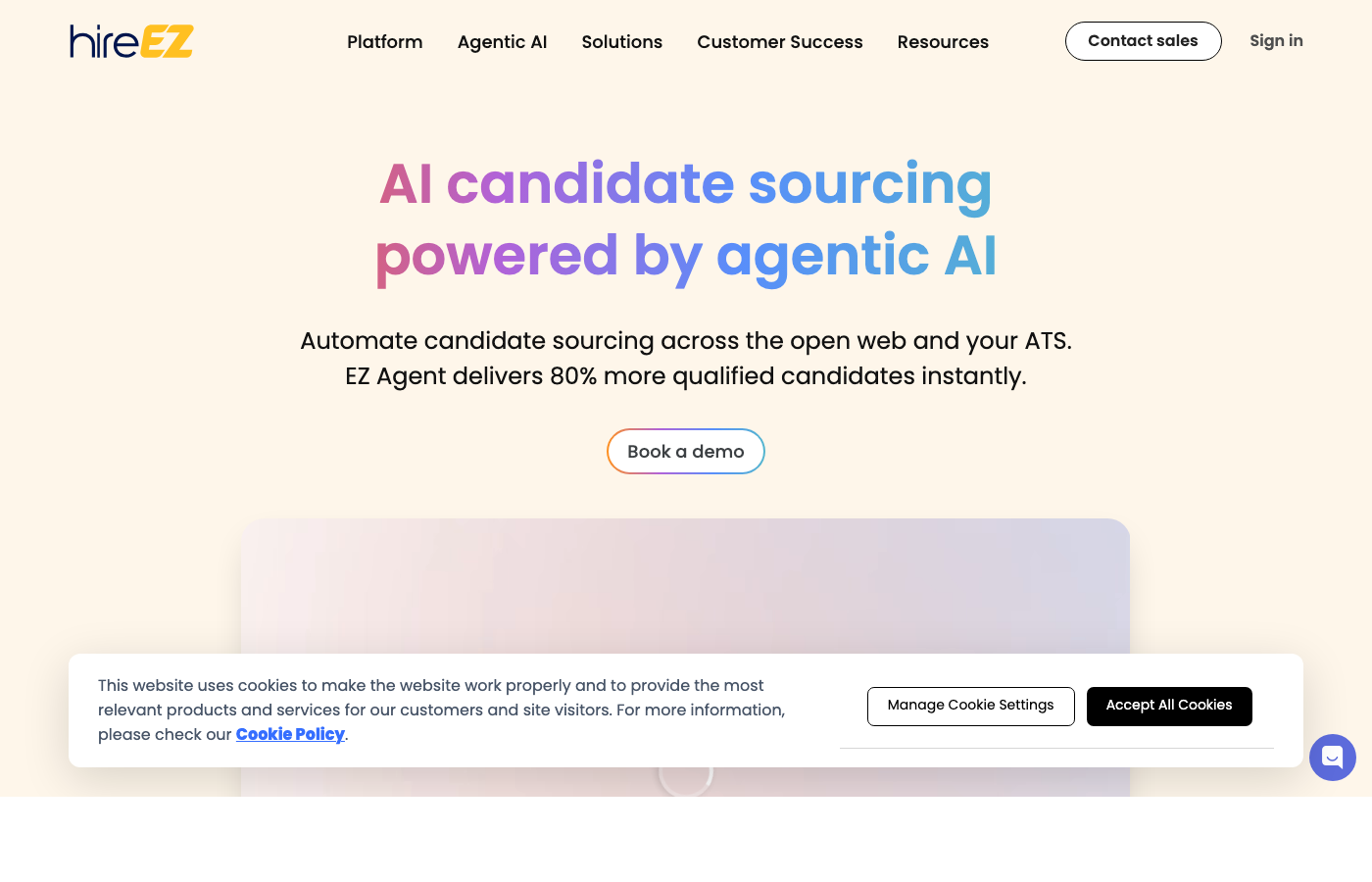
hireEZ is an AI sourcing and outbound platform. It searches the open web, enriches contact info, and helps you run sequenced outreach from one place.
- Best for: Executive search and perm desks where you need to find people who aren’t applying.
- Strength: Contact data coverage is strong, and the outbound sequencing beats cobbling together LinkedIn plus a separate email tool.
- Weakness: Sourcing tools are only as good as the person writing the search. Bad briefs still produce bad lists. And if you’re filling senior or executive roles, expect to do heavy manual vetting on top of whatever the AI returns. These tools are built for volume, not judgment calls.
- Pricing: Contact for pricing.
5. SeekOut
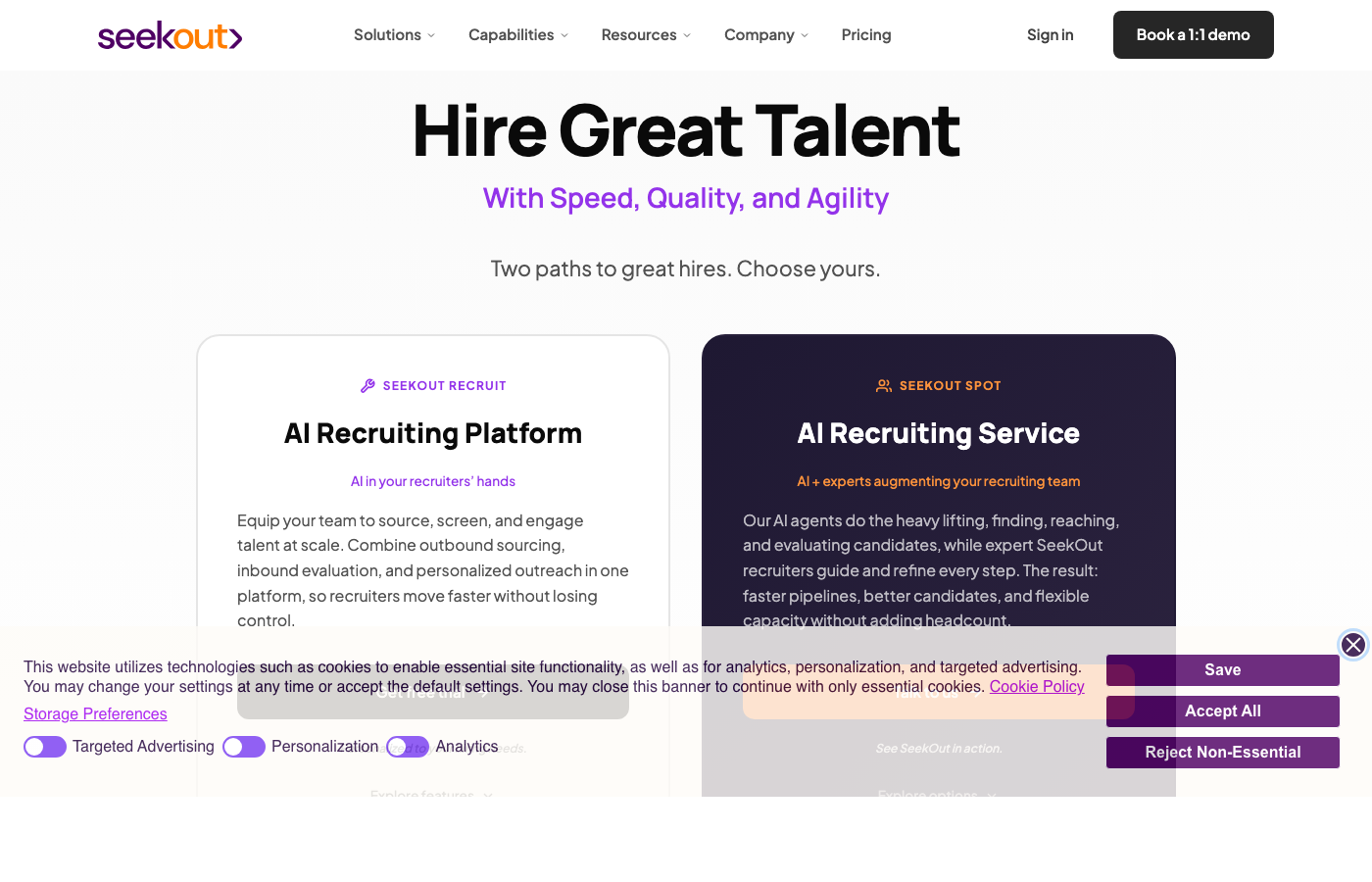
SeekOut is a sourcing database with deep filters for tech, healthcare, and cleared talent. It’s been a favorite of in-house recruiting teams and increasingly shows up on agency desks.
- Best for: Niche verticals like healthcare, engineering, and security-cleared roles.
- Strength: Diversity filters and vertical-specific data (publications, GitHub, clinical specialties) you don’t get from LinkedIn alone.
- Weakness: Priced for bigger teams. A two-recruiter shop will feel the seat cost.
- Pricing: Contact for pricing.
6. Loxo
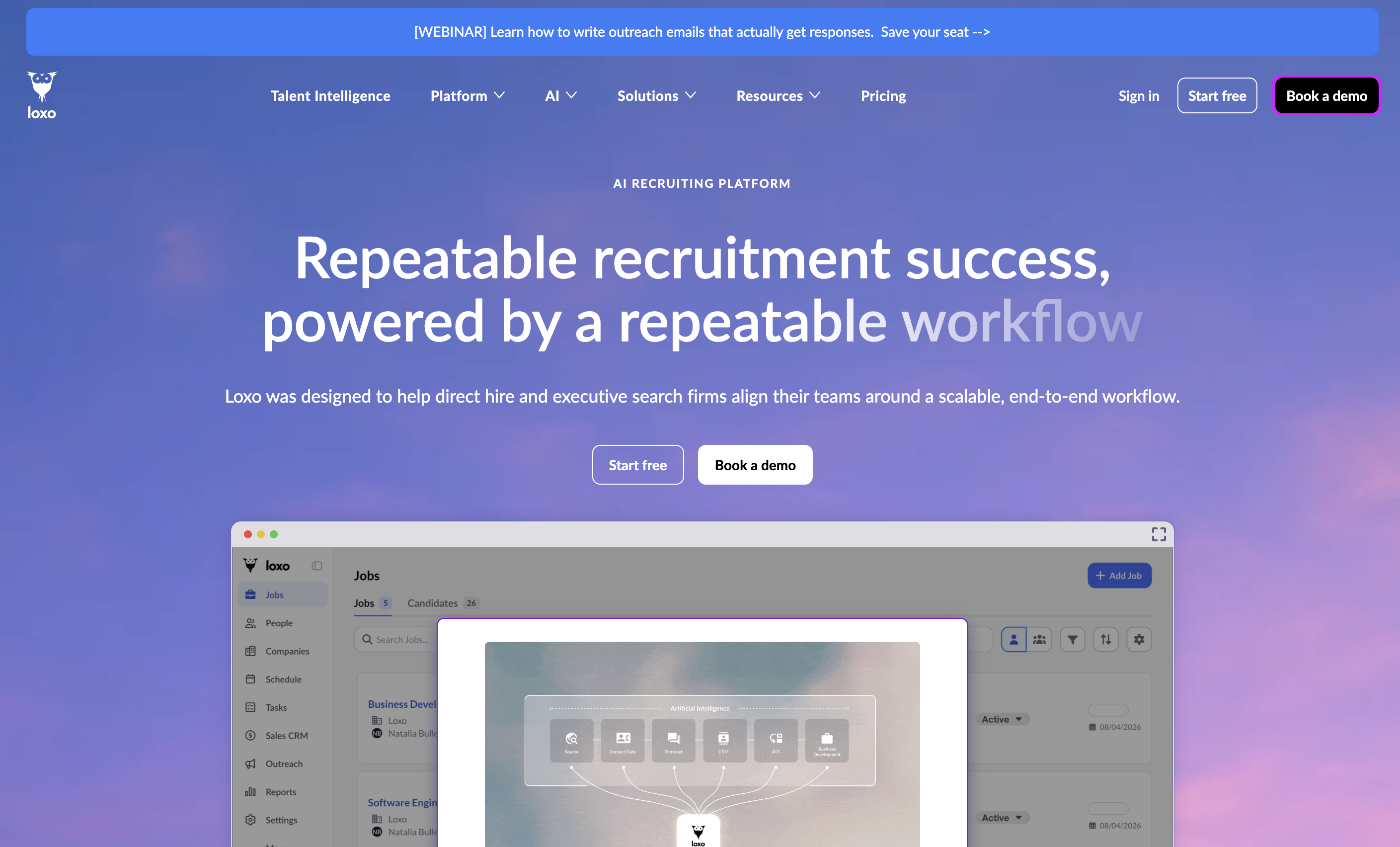
Loxo pitches itself as an all-in-one: ATS, CRM, sourcing, and outreach in one platform. Its AI layer ranks candidates inside your own pipeline.
- Best for: Smaller agencies and boutique search firms who want to consolidate tools.
- Strength: One login for sourcing through placement. The fewer windows, the fewer missed follow-ups.
- Weakness: All-in-ones are rarely best-in-class at everything. If you’ve outgrown any one module, you’ll feel it.
- Pricing: Contact for pricing.
7. Paradox (Olivia)
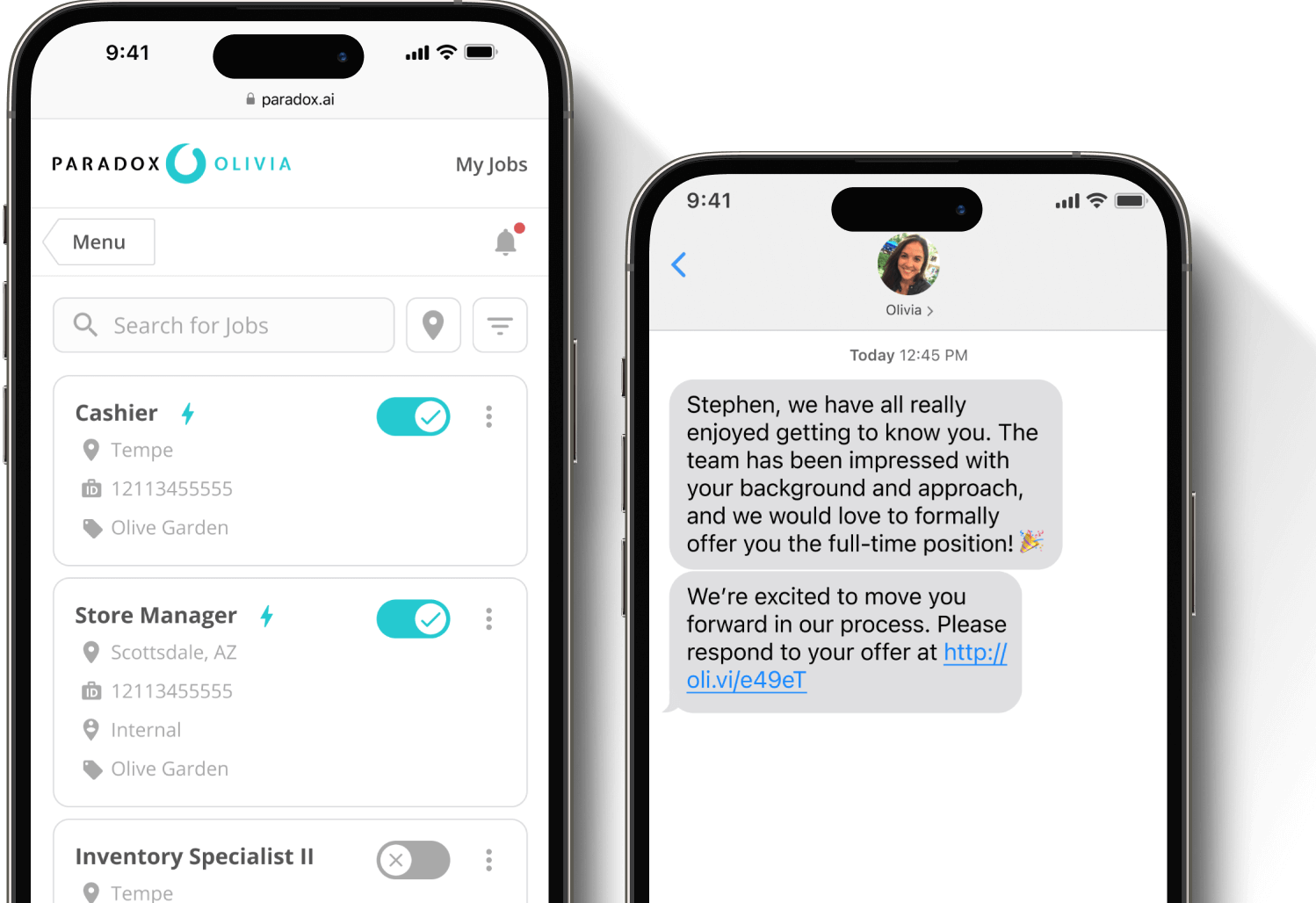
Paradox runs a conversational AI assistant named Olivia that handles high-volume candidate chat, screening questions, and interview scheduling. It’s built for retail, QSR, and hourly hiring.
- Best for: Light industrial, hospitality, and any desk where you’re filling 50+ of the same role a month.
- Strength: Candidates complete a full pre-screen conversation on their phone, often in under three minutes.
- Weakness: Overkill for perm and executive desks. The conversational model fits high-volume, not high-touch.
- Pricing: Contact for pricing.
8. HireVue
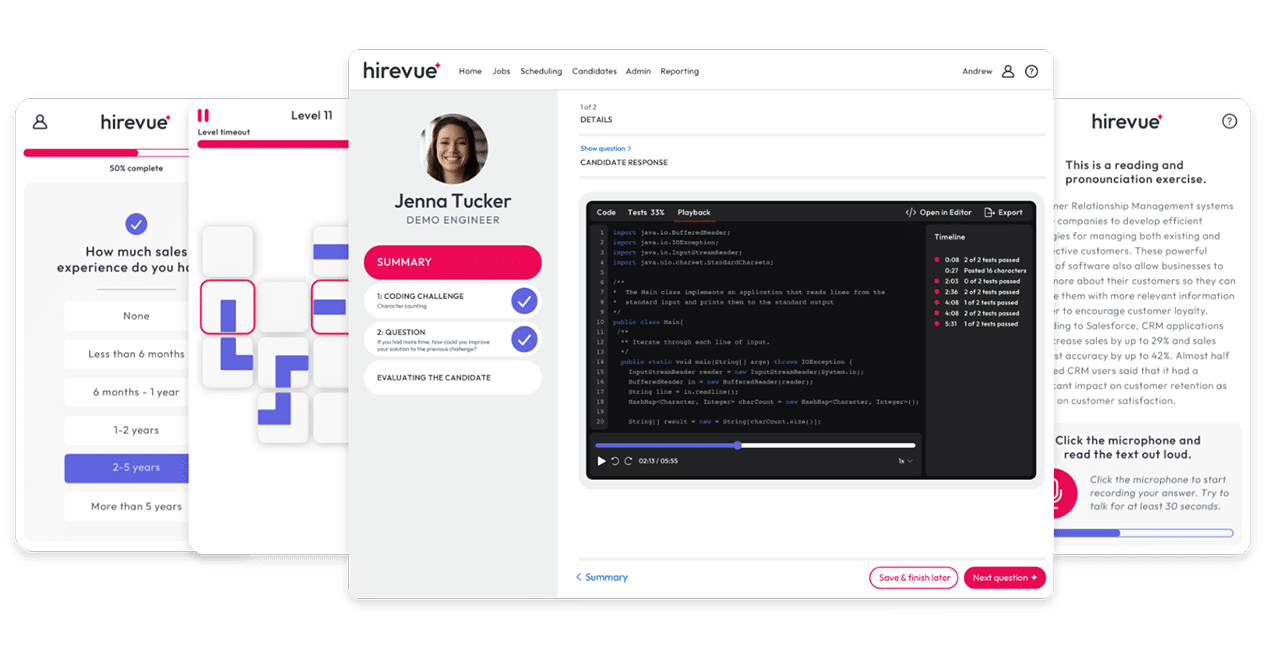
HireVue has been in the video interview space for over a decade. It offers one-way video, live interviews, and game-based assessments with an AI layer on top.
- Best for: Large enterprises and staffing firms supporting enterprise clients who want branded assessments.
- Strength: Mature platform with a long track record and deep assessment library.
- Weakness: Priced and built for the enterprise. Smaller staffing agencies usually find it heavier than they need. For a lighter option, see our one-way video interview software breakdown.
Pricing: Contact for pricing.
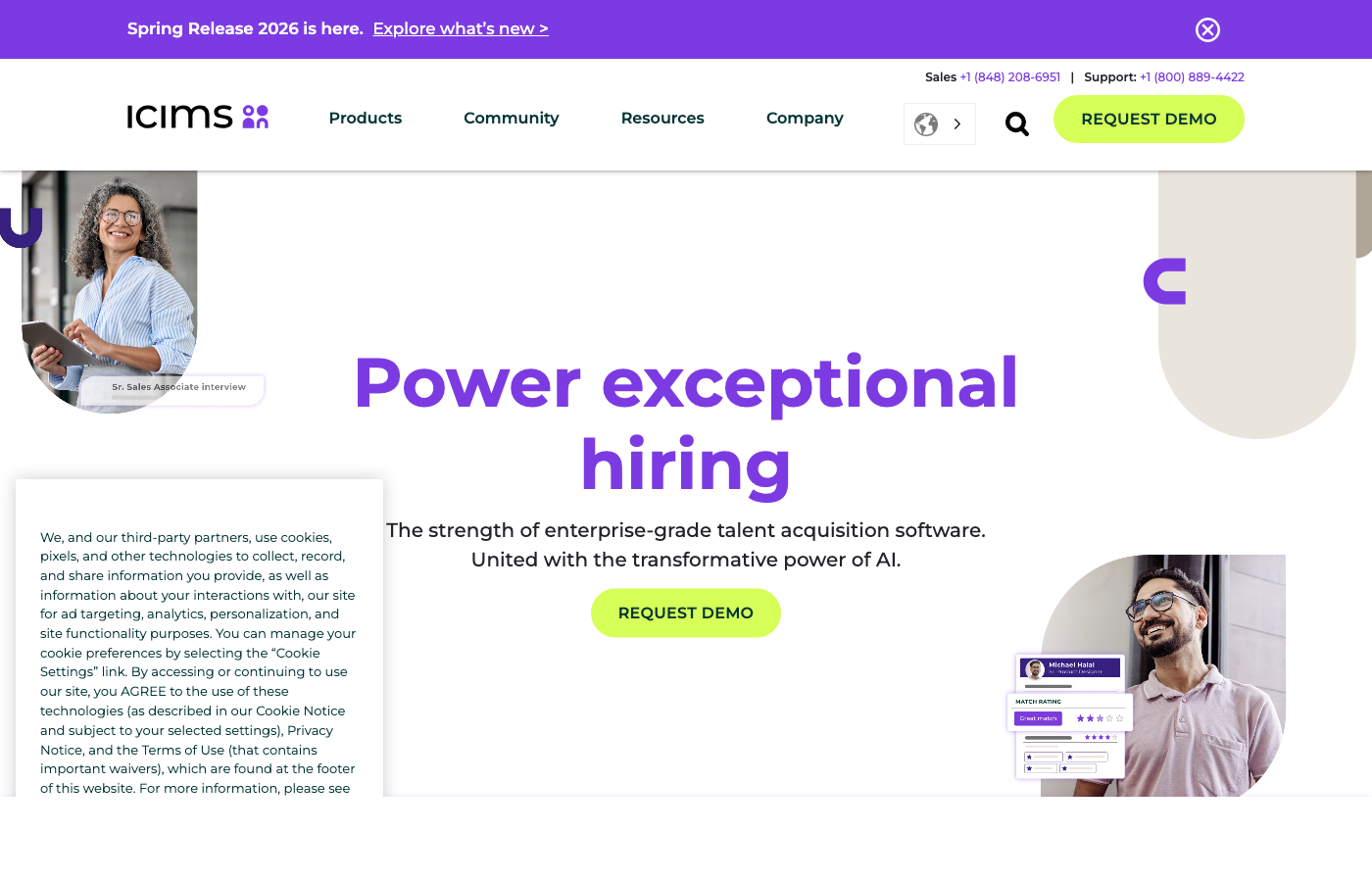
9. iCIMS Talent Cloud
iCIMS is an enterprise TA suite with AI layers for matching, CRM, and video. For staffing, the appeal is supporting enterprise MSP and VMS clients who already run iCIMS.
- Best for: Staffing firms with enterprise client integrations or internal enterprise hiring needs.
- Strength: Deep enterprise integrations and a long feature list across the hiring lifecycle.
- Weakness: Implementation time and cost. You don’t spin this up over a weekend.
- Pricing: Contact for pricing.
10. SmartRecruiters (SmartAssistant)
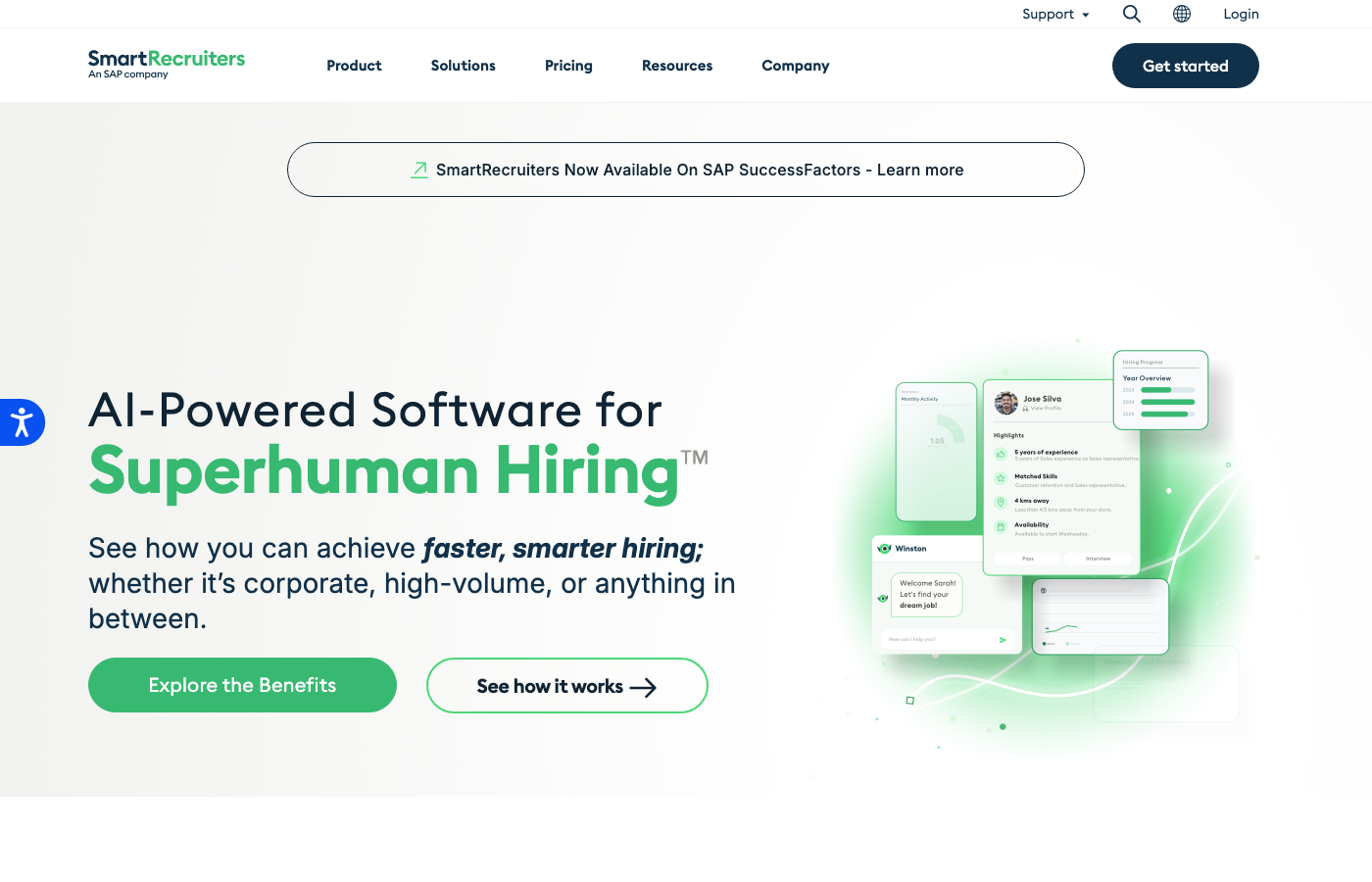
SmartRecruiters is a talent acquisition suite with SmartAssistant doing the AI matching work. It ranks applicants against your position and surfaces the top of the list.
- Best for: Mid-market and enterprise TA teams running SmartRecruiters as their core ATS.
- Strength: Matching happens inside the same UI your recruiters already live in, so adoption’s easy.
- Weakness: Not a staffing-first product. Agency workflows like submittal tracking and client portals aren’t the focus.
- Pricing: Contact for pricing.
11. Eightfold AI
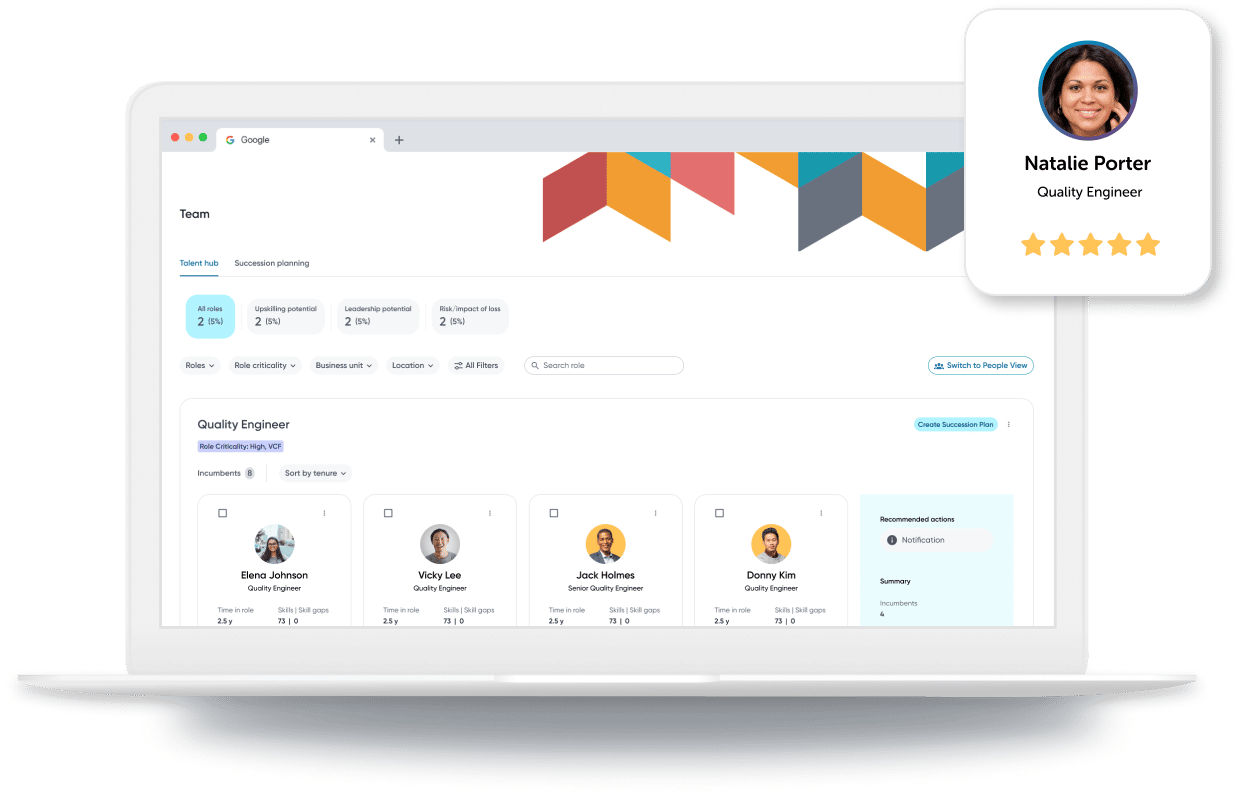
Eightfold is a talent intelligence platform that maps skills and career trajectories across internal and external talent pools. It’s ambitious and data-hungry.
- Best for: Large enterprises and MSPs running workforce planning across thousands of roles.
- Strength: Skill inference is strong. It can suggest candidates whose titles wouldn’t match a keyword search but whose skills fit.
- Weakness: Needs scale and data to shine. A 10-recruiter agency won’t see the payoff.
- Pricing: Contact for pricing.
12. Juicebox (PeopleGPT)
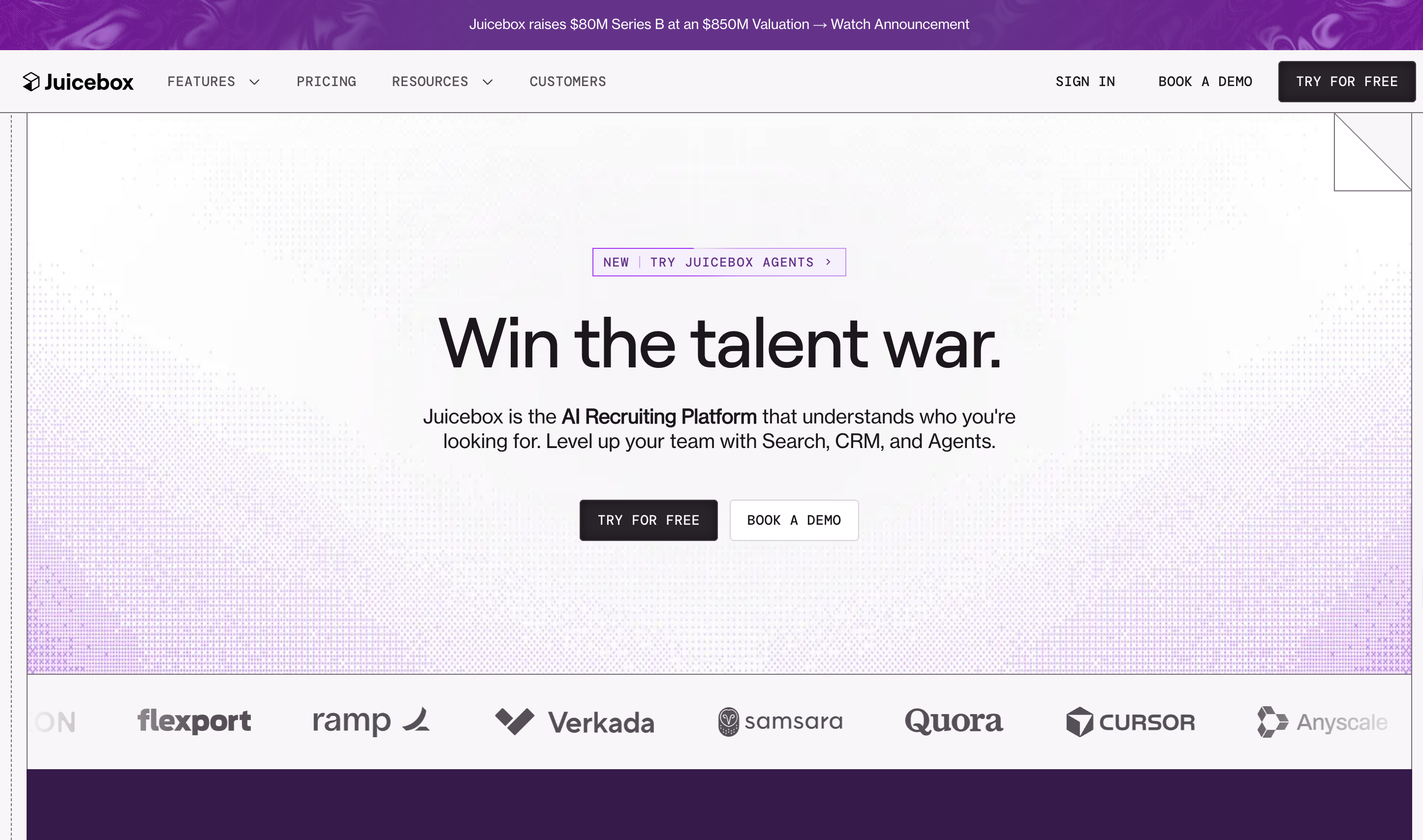
Juicebox lets you search candidates with natural language prompts like “senior Python engineer in Austin who’s worked at a Series B startup.” It’s sourcing without boolean strings.
- Best for: Recruiters who hate boolean and want a faster way to prototype searches.
- Strength: The prompt-to-list workflow genuinely saves time on exploratory sourcing. Great for new desks and new verticals.
- Weakness: Natural language search can be imprecise. You still need to verify matches before reaching out.
- Pricing: Contact for pricing.
How to build a staffing AI stack that works together
Buying every tool on this list is a fast way to burn your tech budget. Pick one from each bucket and wire them together.
A reasonable stack for a 10-recruiter agency might look like Bullhorn as the ATS spine, hireEZ or Juicebox for sourcing, Sense for engagement and database reactivation, and Truffle for the screening and client-ready shortlist layer. That’s four tools doing four jobs. If you also need a dedicated staffing CRM, that’s a fifth, but most agencies already have one baked into their ATS. For the bigger automation picture, our recruiting automation software guide shows how the pieces fit.
Integration matters more than feature count. If your sourcing tool can’t push into your ATS, or your screening tool can’t pull from it, you’ll spend more time on copy-paste than on calls. Before you sign anything, ask for a 20-minute walkthrough of the actual data flow between the tool and your ATS.
Pricing matters too. Staffing margins aren’t tech margins. If you’re a perm desk running 20 placements a quarter, per-hire pricing adds up faster than flat monthly. For agencies supporting high-volume recruiting, per-seat pricing usually wins.
And remember the stack isn’t just tools. Your ATS choice, your client portal, your submittal workflow, and your staffing agency software stack all shape which AI tools you can actually use.
Frequently asked questions about AI staffing tools
What’s the difference between AI sourcing tools and AI screening tools?
Sourcing tools find candidates who aren’t in your database yet. Screening tools help you evaluate the candidates you already have. You need both, but they solve different problems and you shouldn’t confuse them during a demo.
Can small staffing agencies afford AI tools?
Yes, more now than two years ago. Self-serve pricing is common, and credit-based plans like Truffle’s, from $49/mo, let a two-recruiter shop adopt AI screening without an enterprise contract. Start with one tool against your biggest bottleneck.
Do AI staffing tools work for contract and contingent workforce placements?
They do, with caveats. Engagement and redeployment tools like Sense are especially useful for contingent worker pools because the same candidate can fit multiple positions over time. Sourcing tools work fine too. Just make sure your ATS handles contractor records cleanly before you pile on automation.
Do AI staffing tools work for executive and senior roles?
Barely. AI sourcing and matching tools are built for volume. They’re strong when you have hundreds of candidates and need to narrow fast. For executive search, the signal-to-noise ratio is different. You’re evaluating five people, not five hundred, and the criteria are too nuanced for keyword matching or skill inference. Use AI tools to handle the admin (scheduling, note summarization, outreach sequencing) but keep the actual evaluation human.
What are the legal risks of using AI in staffing?
They’re real and growing. NYC Local Law 144 requires annual bias audits on automated hiring tools. The Illinois AI Video Interview Act requires candidate consent and disclosure. EEOC guidance treats AI-driven adverse impact the same as human-driven adverse impact. If your AI tool screens out a protected class at a higher rate, you’re liable, not the vendor. Ask every vendor: how is your model audited, when was the last audit, and can you share the results?
How do I measure ROI on AI staffing software?
Pick two or three metrics before you buy. Time-to-shortlist, submittal-to-interview ratio, and recruiter hours saved per week are the honest ones. Track them for 60 days before and 60 days after. If the numbers don’t move, the tool’s not earning its line item.