15 best remote interview tools for building a global team
Discover 16 of the best remote interview tools tailored for small businesses. We cover everything from async video to automated phone screening and AI-assisted feedback.


Remote hiring is no longer a workaround. For a lot of teams, it is the default.
The problem is that not every remote interview tool solves the same problem. Some platforms are built for live conversations. Some are built for async screening. Some are really AI-assisted screening systems with video layered in. If you pick the wrong category, you end up paying for software that adds steps instead of removing them.
This guide breaks down the best remote interview tools for 2026, with a practical lens. Which platforms help you screen large applicant pools quickly? Which ones are better for structured live interviews? Which tools are best if you want an online interview platform that fits your ATS and does not create more admin?
What is remote interview software?
Remote interview software is any interview software that lets hiring teams evaluate candidates without being in the same room. That can mean a live video call, a one-way interview completed on a candidate’s own time, or an AI-powered screening workflow that records, scores, and ranks responses for you.
For first-time buyers, it helps to think about the category in three buckets:
- Live video interviews: Real-time video calls similar to Zoom or Teams
- One-way video interviews: Candidates record responses to preset questions on their own time
- AI-powered screening tools: Platforms that automatically evaluate and rank candidate responses
The best choice depends less on whether you are hiring remotely and more on where the bottleneck sits in your process. If you are drowning in first-round screens, a one-way video interview platform usually helps more than a live meeting tool. If you need deeper conversation, panel collaboration, or candidate relationship-building, live virtual interview software matters more.
One-way video interviews vs live virtual interview platforms
One-way and live interviewing tools both fall under the broader video interview software category, but they solve different problems.
One-way asynchronous video interviews
A one-way asynchronous interview lets candidates answer pre-set questions without a live interviewer present. Recruiters create the interview, send a link, and candidates complete it when it suits them.
The workflow:
- Recruiter creates a question set
- Candidate receives a link
- Candidate records responses on their own time
- Hiring team reviews responses later
This format is best when speed, consistency, and scale matter most. It is particularly useful for early-stage screening, high-volume roles, and distributed hiring teams who do not want to spend their week on repetitive phone screens.
Live video interview platforms
Live virtual interview platforms are built for real-time conversations. They work more like Zoom, Teams, or dedicated interview software with scheduling, recording, scorecards, and panel coordination layered in.
These tools are better when the goal is back-and-forth discussion, follow-up probing, final-round evaluation, or relationship-building with strong candidates. They are also more useful for panel interviews, technical interviews that need collaboration, and later-stage decision-making.
Which interview format works best for remote hiring
For most teams, the right answer is not “one is better than the other.” It is “which one belongs at which stage?”
If you are screening dozens or hundreds of applicants, one-way video interviews are usually the stronger first-round format. They remove scheduling friction, standardize the process, and make it easier to compare candidates on the same questions.
If you are running final rounds, selling a role, or testing how someone thinks in conversation, live interviews are still the better tool.
| Factor | One-way video interviews | Live video interviews |
|---|---|---|
| Best for | Early-stage screening, high volume | Final rounds, in-depth conversations |
| Scheduling | None required | Requires coordination |
| Consistency | Same questions for every candidate | Varies by interviewer |
| Time investment | Review on your schedule | Real-time commitment |
How to choose the best remote interview software
Before comparing vendors, get clear on what you actually need the software to do. A lot of buying mistakes happen because teams compare feature lists before they define the job.
Define your hiring volume and use case
Start with volume. If you are screening 10 candidates a month for specialist roles, a lightweight live platform or all-in-one ATS may be enough. If you are reviewing hundreds of applicants for hourly, campus, retail, support, or sales roles, async screening becomes much more important.
Then define the use case:
- Early-stage filtering
- Structured first-round screening
- Full interview lifecycle management
- Technical interviewing
- Assessment plus interview workflow
The more screening-heavy your process is, the more value you will get from one-way video interview software or AI video interview software.
Evaluate AI and automation capabilities
Not all AI features are equal. Some platforms only offer transcription or summaries. Others go deeper, with question generation, qualification checks, role-based match scoring, structured scorecards, or automated follow-up workflows.
Look for practical features like:
- Job description to interview generation
- Transcription and summaries
- Match scoring against your criteria
- Knockout filters or qualification rules
- Clear reasoning behind scores
The key question is not “does it have AI?” It is “does the AI reduce review time without turning the process into a black box?”
Check ATS and workflow integrations
A remote interview tool should fit your existing workflow, not force your team into side quests. Check whether the platform connects natively with the systems you already use. Common ATS examples include Greenhouse, Lever, Workday, Workable, Ashby, BambooHR, SmartRecruiters, and iCIMS.
Three integration layers to look for:
- Native integrations for the cleanest workflow
- Zapier or no-code connectors for lighter automation
- API or OpenAPI access for custom setups
If hiring managers have to constantly switch tabs, manually paste links, or re-enter scores, adoption will suffer.
Assess candidate experience features
Candidate experience is not a “nice to have” in video interviewing. It directly affects completion rates.
The best online interview software should work across desktop, tablet, and mobile, ideally with no download, no sign-up, and no app required. Branded intros, clear instructions, tech checks, and flexible timing also matter.
Remote interview tools fail when they are clunky, slow, or stressful. A frictionless candidate experience is part of the product, not a bonus feature.
Compare remote interview software pricing models
Pricing varies a lot in this category, especially between lean-team tools and enterprise interview platforms.
Common models:
- Per-candidate pricing: Pay for each interview completed
- Monthly subscription: Flat fee for unlimited or tiered usage
- Enterprise contracts: Custom pricing for large organizations
- Free trials: Most platforms offer trial periods to test before committing
If your hiring volume is steady, monthly subscription pricing is often easier to predict. If your volume spikes seasonally, flexible or usage-based models may fit better.
Best remote video interview software at a glance
| Platform | Interview type | AI features | ATS integrations | Free trial | Best for |
|---|---|---|---|---|---|
| Truffle | One-way + assessments | Yes | Yes | Yes | Lean teams, high-volume screening |
| Hireflix | One-way | Limited | Yes | Yes | Simple async interviews |
| Willo | One-way | Yes | Yes | Yes | Global and remote-first hiring |
| HireVue | Both | Yes | Yes | No public trial | Enterprise hiring |
| VidCruiter | Both | Yes | Yes | Demo-led | Structured enterprise interviews |
| Spark Hire | Both | Limited | Yes | Yes | Growing teams needing both formats |
| Jobma | Both | Yes | Yes | Yes, sales-led | Multilingual, multi-format hiring |
| myInterview | One-way + automation | Yes | Yes | Demo-led | Brand and culture-focused screening |
| Criteria | One-way + live + assessments | Yes | Yes | Demo-led | Assessment + structured interviewing |
| Humanly | Voice, chat, video | Yes | Yes | Demo-led | High-volume hourly hiring |
| Workable | One-way inside ATS | Yes | Yes | Yes | All-in-one hiring platform |
| Manatal | Async AI interviews inside ATS | Yes | Yes | Yes | ATS + CRM + screening |
| eSkill | Assessment + video responses | Yes | Yes | Demo-led | Skills-based hiring |
| Riverside | Live recording | Limited | Limited | Yes | High-quality interview recording |
| 1Way Interview | One-way | Yes | Yes | Yes | Small teams on a budget |
15 best video interview platforms for remote hiring
These are the 15 remote interview tools worth considering in 2026, based on their fit for screening, structured interviewing, integrations, candidate experience, and overall usefulness for modern remote hiring.
Truffle
What it does
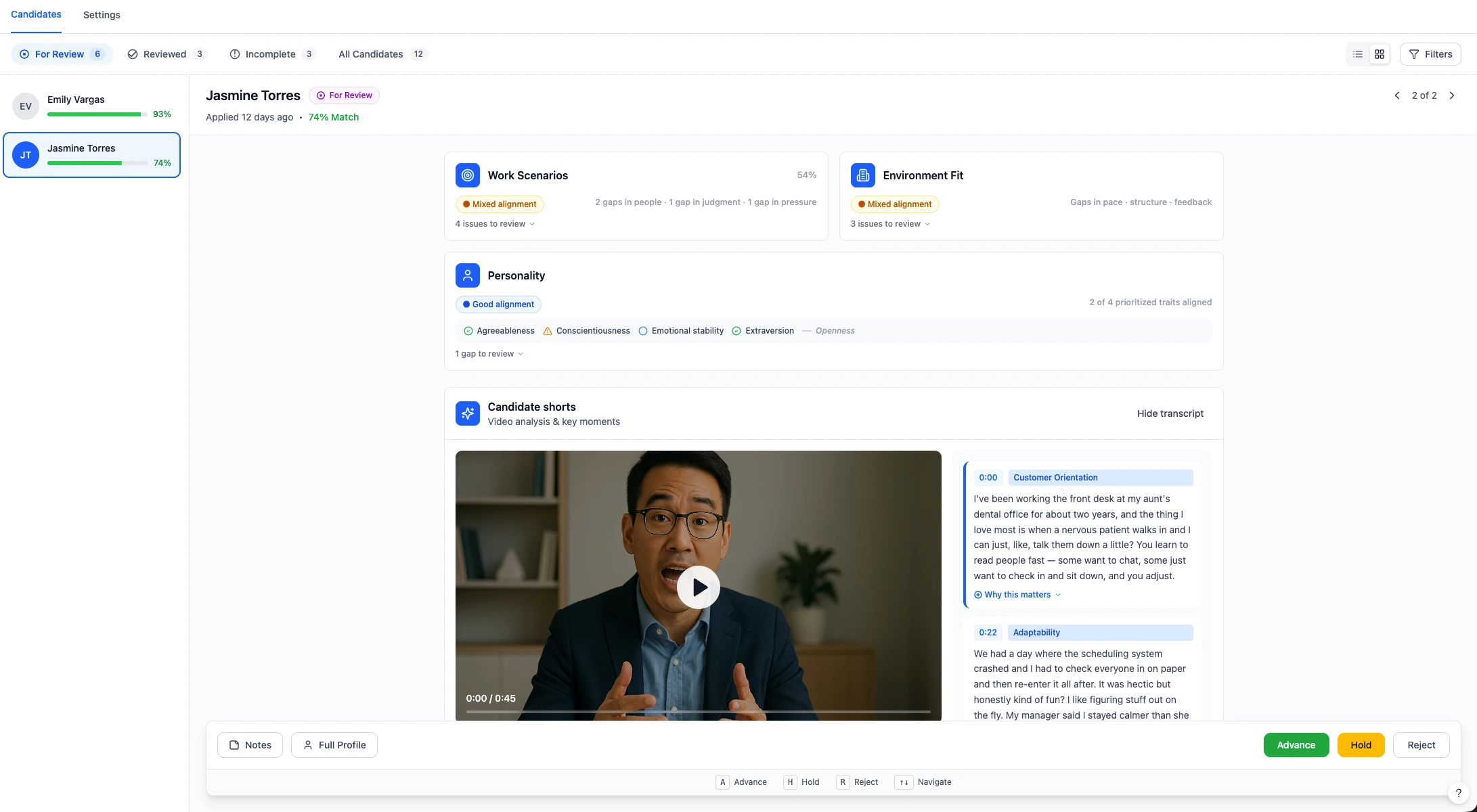
Truffle is AI-assisted candidate screening software built around one-way video interviews, resume screening, and talent assessments in a single workflow. Instead of just collecting responses, it helps you build a structured screening from a job description, evaluate every candidate against defined criteria, and move quickly from volume to shortlist.
Best for
Lean recruiting teams and hiring managers who need to screen high applicant volume without adding enterprise complexity
Standout features
- Auto-generated interviews from a job description
- AI Match % scoring with reasoning
- Candidate Shorts that surface the most relevant moments from longer responses
- AI summaries, transcripts, and rubric-based review
- Fast setup with no credit card required free trial
Integrations
Works with popular ATS and workflow tools, including options like Greenhouse, Lever, Workable, Ashby, Slack, and Zapier-style workflows
Pricing model
Subscription pricing with a free trial and no credit card required
Hireflix
What it does
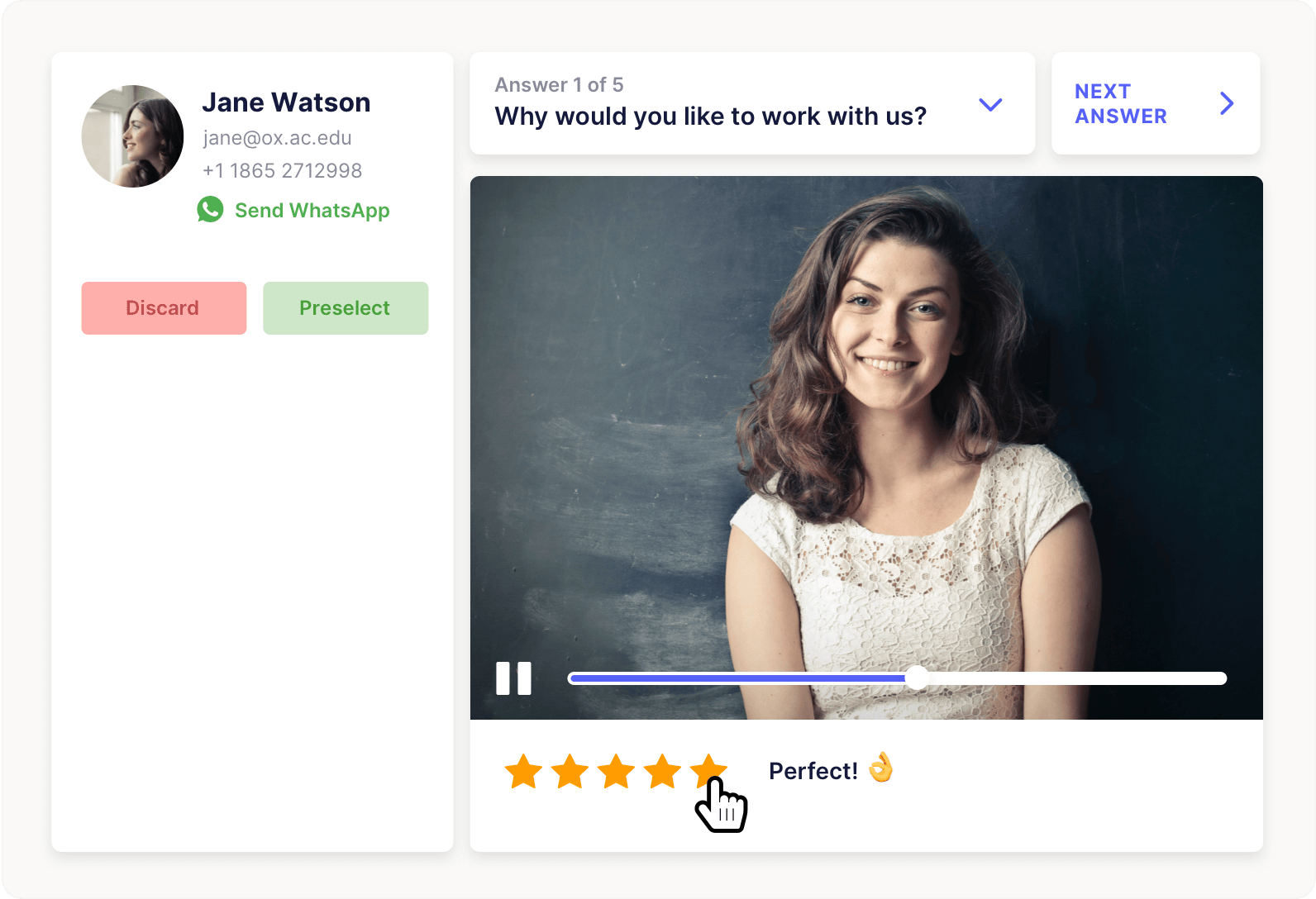
Hireflix is a focused one-way video interview platform. It does not try to be an all-in-one recruiting suite. The value is simplicity.
Best for
Small teams that want straightforward async video interviews without heavy AI or workflow complexity
Standout features
- Fast setup
- No downloads or candidate logins required
- Works across devices and browsers
- Multi-language candidate experience
- 30-day free trial
Integrations
ATS integrations plus API support for connecting into existing recruiting workflows
Pricing model
Monthly subscription
Willo
What it does
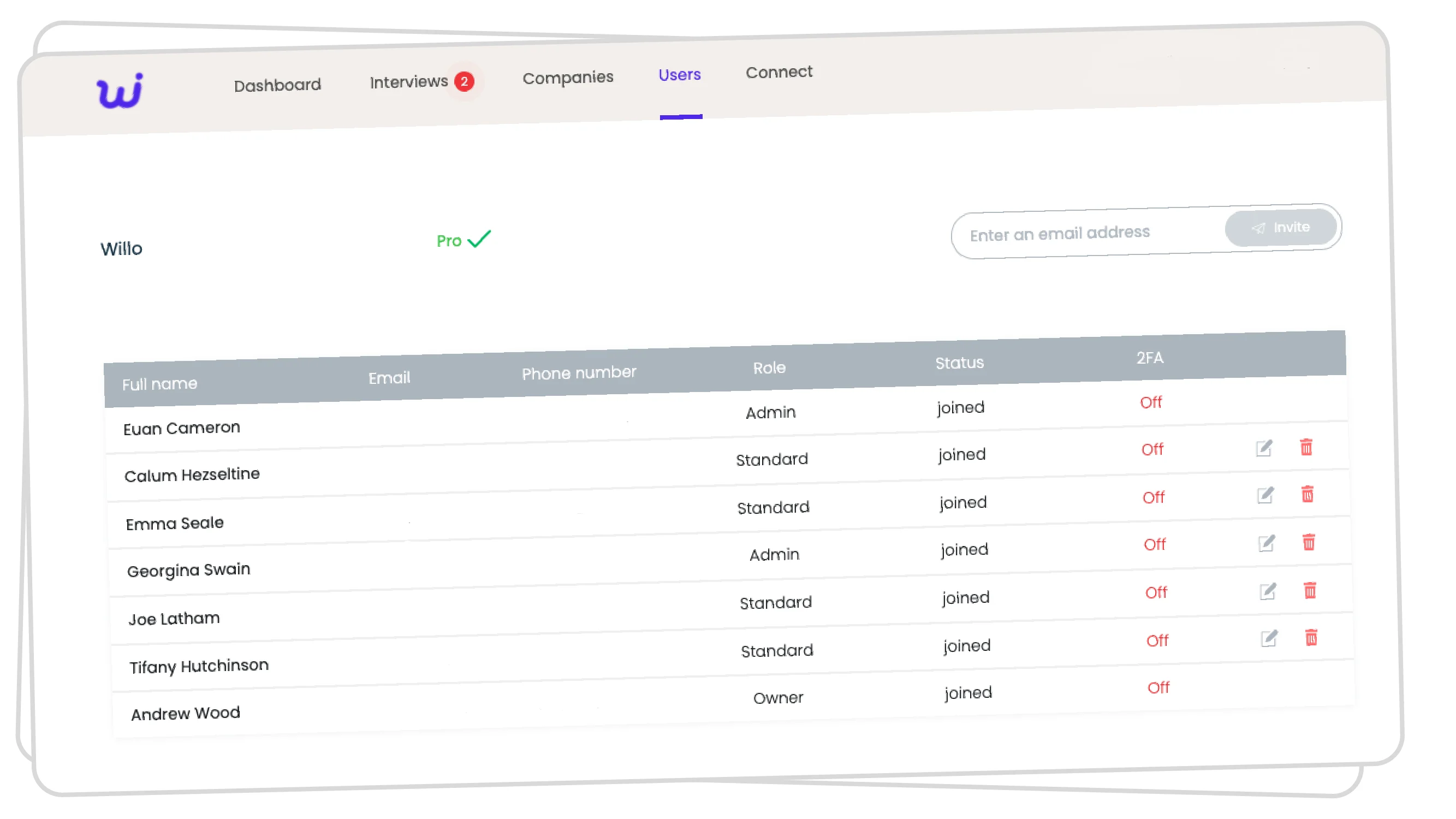
Willo is asynchronous video screening software designed for remote-friendly and global hiring. It emphasizes candidate experience, accessibility, and broad workflow connectivity.
Best for
Remote-first teams, global hiring, and organizations that care about multilingual support and compliance-friendly workflows
Standout features
- Async video screening
- AI tools for summaries, filtering, and follow-up support
- Multi-language support
- Over 5,000 integrations through native options, API, and no-code connectors
- Flexible plans with entry options for smaller teams
Integrations
Native ATS integrations, OpenAPI, Integrately, and Zapier-based connectivity
Pricing model
Tiered subscription pricing with trial or free-entry options depending on plan and promotion
HireVue
What it does
HireVue is an enterprise video interviewing and assessment platform that spans video interviews, AI-assisted evaluation, technical screening, and coding challenges.
Best for
Large organizations with complex hiring needs, multiple geographies, and a need for broader enterprise capabilities
Standout features
- On-demand and live interviews
- AI-powered evaluation workflows
- Coding assessments and technical screening
- Enterprise-level hiring infrastructure
- Compliance-focused resources and governance support
Integrations
Enterprise workflow integrations and broader talent stack support
Pricing model
Custom enterprise pricing
VidCruiter
What it does
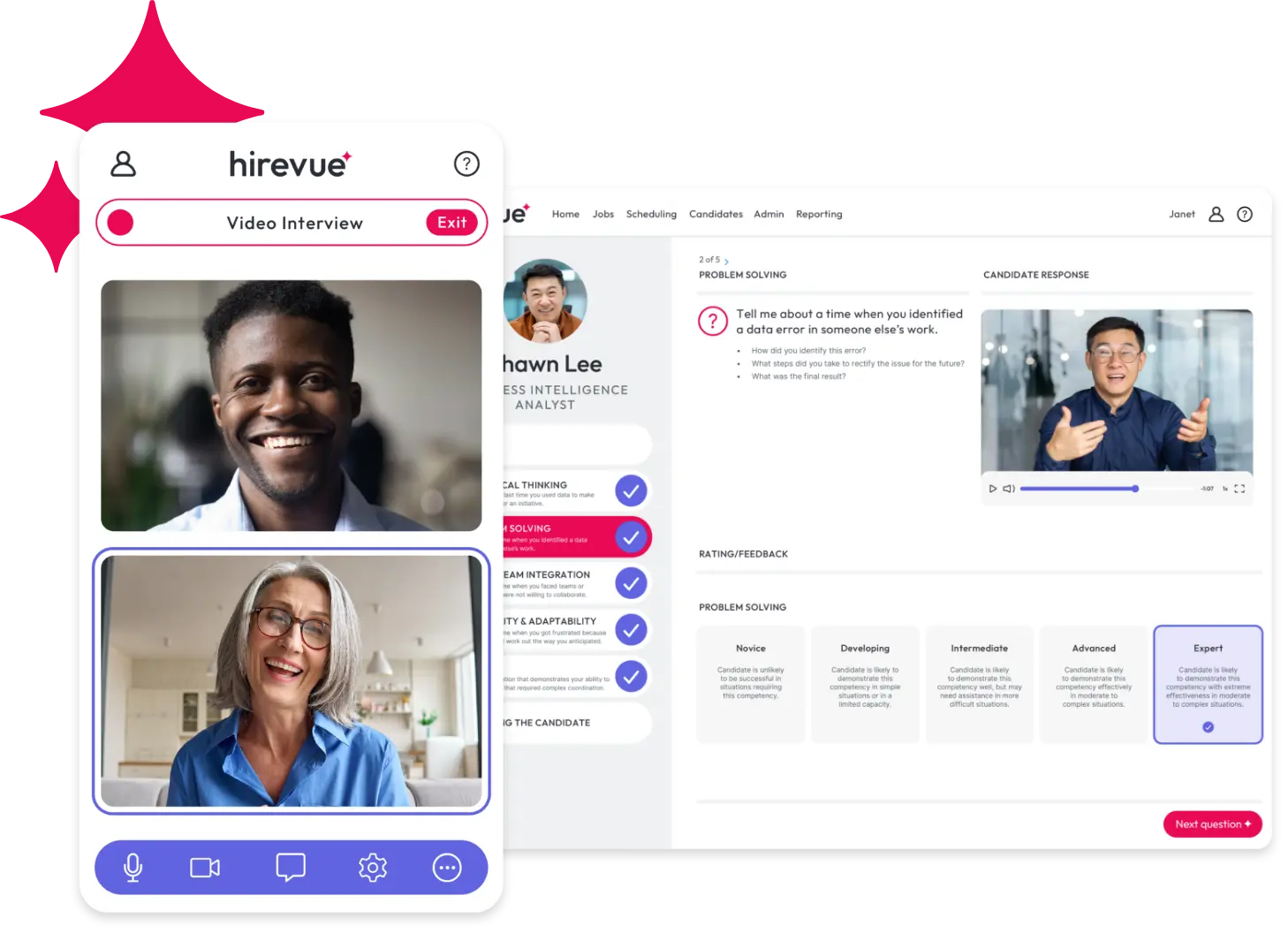
VidCruiter is structured interview software that supports both pre-recorded and live video interviews. It leans heavily into standardization, automation, and compliance.
Best for
Mid-size to enterprise teams that want both live and pre-recorded interviews in a structured, defensible workflow
Standout features
- Live and pre-recorded interview support
- Structured interview guides and scorecards
- Automation and ethical AI positioning
- Interview compliance workflows
- Strong support for formal hiring processes
Integrations
Pre-built and custom integrations with platforms like Workday, SAP SuccessFactors, SmartRecruiters, Oracle, ADP, UKG, and more
Pricing model
Custom pricing
Spark Hire
What it does
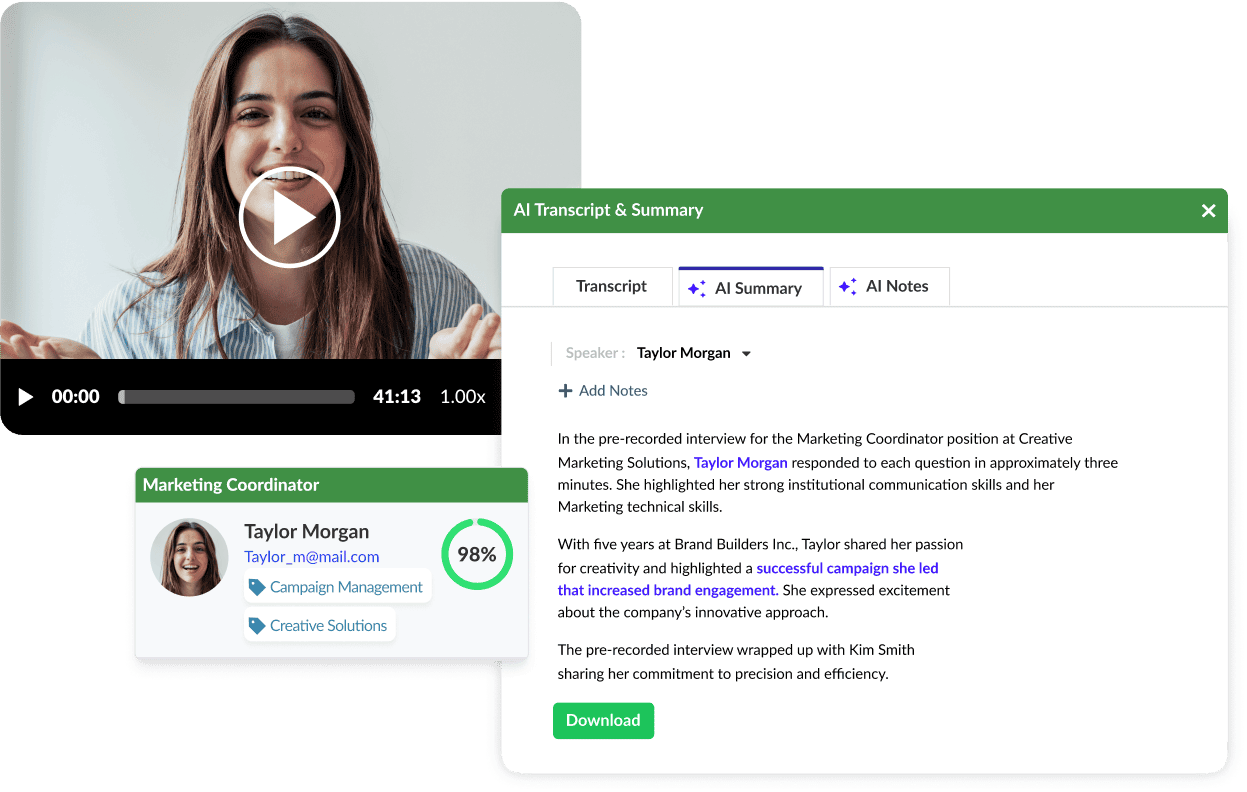
Spark Hire offers one-way video interviews, behavioral assessments, and ATS functionality aimed at lean HR and talent teams.
Best for
Growing teams that want both interview formats and easy day-to-day usability
Standout features
- One-way and live interviews
- Strong collaboration and review workflow
- Behavioral assessments
- 40+ ATS integrations plus Zapier support
- Structured early-stage screening without automated hiring decisions
Integrations
40+ ATS integrations and no-code workflow options
Pricing model
Subscription pricing with trial availability
Jobma
What it does
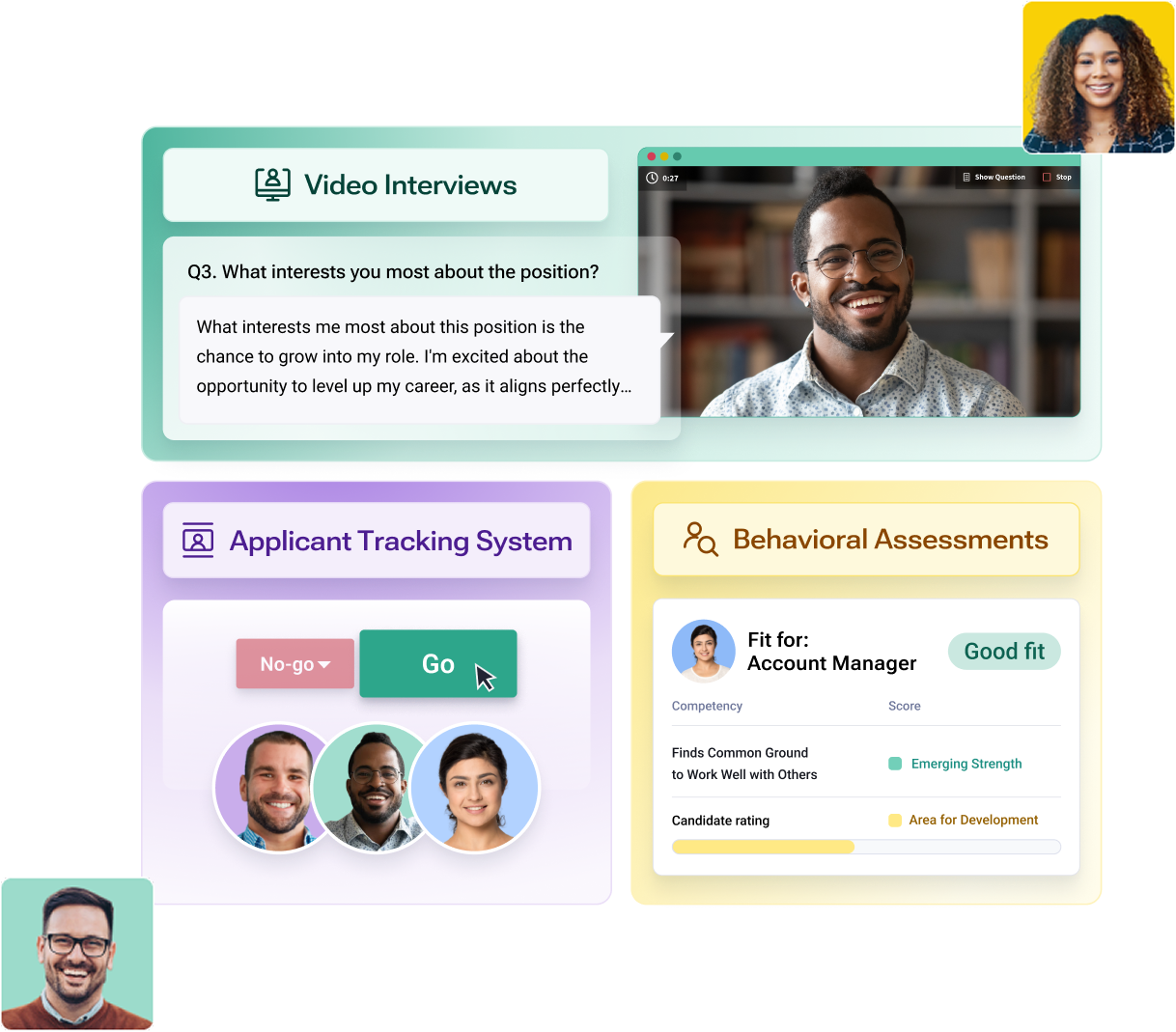
Jobma is a multi-format video interviewing platform that combines one-way interviews, live interviews, assessments, and AI-assisted workflows.
Best for
Organizations hiring globally that want flexibility across video, written, audio, and assessment formats
Standout features
- One-way and live video interviews
- AI-assisted live interviewing and automation
- Broader assessment coverage including written, audio, and coding workflows
- Strong multilingual positioning
- Mobile-friendly experience
Integrations
ATS integrations, Zapier support, and broader workflow connectivity
Pricing model
Custom pricing, typically sold as an annual subscription
myInterview
What it does
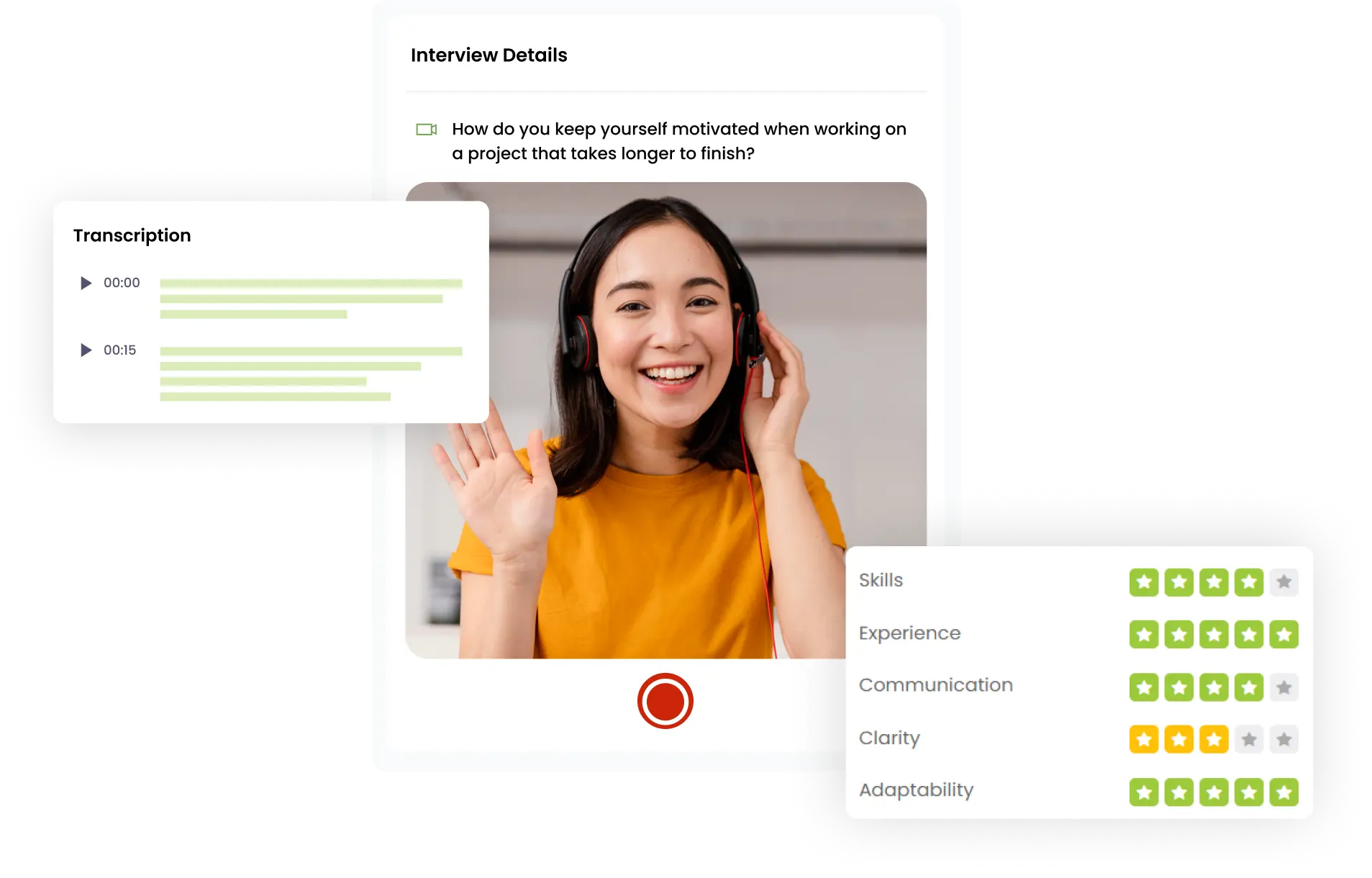
myInterview, now part of Radancy’s platform, combines screening and scheduling with optional one-way video. It is built to automate early hiring workflows while giving candidates room to show more personality than a resume allows.
Best for
Teams that care about brand, candidate storytelling, and lighter-touch AI screening in early-stage hiring
Standout features
- Flexible screening templates
- Optional one-way video responses
- Workflow automation based on candidate answers
- Candidate personality and strengths surfacing
- Scheduling built into the broader workflow
Integrations
Designed to work inside a larger recruitment marketing and hiring stack
Pricing model
Custom pricing
Criteria
What it does
Criteria combines assessments, video interviewing, live interviewing, and AI-powered interview scoring. Its positioning is more science-led than most vendors in this category.
Best for
Teams that want skills testing plus structured interviewing in one platform, especially when consistency and validation matter
Standout features
- Pre-employment assessments plus video interviewing
- Interview Intelligence for AI-powered scoring
- Structured live interviewing tools
- Strong focus on objectivity and evidence-based hiring
- Useful for teams that want more than just video responses
Integrations
Works as part of a larger assessment and interviewing platform with enterprise-friendly deployment
Pricing model
Custom pricing with add-ons depending on module mix
Humanly
What it does
Humanly is a conversational AI hiring platform built for screening, scheduling, and high-volume interview automation. It supports structured interviews across chat, voice, phone, and video.
Best for
Retail, hospitality, frontline, and other high-volume hiring teams that want to automate early conversations at scale
Standout features
- Conversational AI interviews across multiple channels
- Automated screening, scoring, and ranking
- Interview and scheduling automation
- Strong focus on candidate throughput and recruiter capacity
- Structured, audit-ready interview positioning
Integrations
ATS integrations and broader recruiting workflow support
Pricing model
Custom pricing
Workable
What it does
Workable is an all-in-one hiring platform with built-in video interview features, AI-assisted screening, scorecards, scheduling, and candidate communications.
Best for
Teams that want video interviewing inside a broader ATS instead of buying a standalone video interview platform
Standout features
- Native one-way video interviews
- AI-powered profile summaries and requirement checklists
- Interview kits and scorecards
- Self-service interview scheduling
- Strong collaboration for hiring teams
Integrations
Broad HR and recruiting integrations across calendars, job boards, and workflow tools
Pricing model
Subscription pricing with trial options
Manatal
What it does
Manatal is an AI-powered ATS and recruitment CRM that now includes AI interviewer functionality for automated asynchronous screening.
Best for
Agencies and hiring teams that want CRM plus ATS plus AI interview capabilities in one system
Standout features
- AI Interviewer for 24/7 automated screening
- Transcript and structured interview outputs
- Recruitment CRM plus ATS workflow
- Good fit for teams that want everything under one roof
- Multi-language AI interviewer support
Integrations
Broad integrations with job boards, calendars, email tools, and assessment partners
Pricing model
Per-user subscription pricing, with AI interviewer as an add-on on higher plans
eSkill
What it does
eSkill is primarily a pre-employment testing platform, but it supports video response questions inside its assessment workflows.
Best for
Technical, skills-based, or compliance-heavy hiring where testing matters more than pure video screening
Standout features
- Large assessment library
- Video and audio response questions within assessments
- Team scoring and panel review options
- Anti-cheat and proctoring tools
- Strong use case for skills-first screening
Integrations
Integrates with ATS platforms like Workday, iCIMS, Greenhouse, Taleo, UKG Pro, Bullhorn, and others
Pricing model
Custom pricing
Riverside
What it does
Riverside is not purpose-built recruiting software. It is a high-quality recording platform that some teams adapt for interviews when presentation quality matters a lot.
Best for
Employer branding, executive interviews, candidate content creation, and remote interviews where recording quality is a priority
Standout features
- Local recording for high-quality capture even on unstable internet
- Up to 4K video and separate tracks
- Browser-based access
- Built-in transcription and editing
- Strong production value for polished interview content
Integrations
Lighter workflow integrations than dedicated recruiting platforms
Pricing model
Free plan and paid subscription tiers
1Way Interview
What it does
1Way Interview is a straightforward one-way interview platform aimed at smaller businesses and budget-conscious teams.
Best for
Small teams that want an affordable async screening tool with basic AI support
Standout features
- One-way video interviews with AI pre-scoring
- Works on desktop, mobile, and tablet
- ATS integration on paid plans
- Lower-cost plans than many competitors
- Good entry point for teams new to async interviewing
Integrations
ATS integrations available on paid plans
Pricing model
Low-cost subscription pricing with free trial access
Key features of remote video interview tools
The best remote interview tools do more than record answers. They reduce admin, improve consistency, and help teams review candidates without losing signal.
AI-powered candidate evaluation
AI evaluation means the platform helps analyze responses instead of leaving your team to manually watch everything end to end. In the best systems, that can mean match scoring, qualification checks, summaries, transcripts, shortlist recommendations, or AI-generated highlights.
This is where modern AI video interview software separates itself from simple recording tools. The point is not to replace judgment. It is to reduce the amount of low-value manual review standing between you and the strongest candidates.
Customizable interview templates
Strong interviewing software should let you create structured interviews that reflect the role you are hiring for. That usually includes:
- Custom questions
- Time limits and think time settings
- Retake rules
- Intro and outro messages
- Role-specific templates
More advanced platforms can generate a first draft from a job description, which is especially helpful for busy teams who want to get live quickly.
Transparent scoring and rubrics
Rubric-based scoring matters because it makes candidate evaluation more consistent. A good scoring system defines what strong, average, and weak answers look like before candidates start responding. Some platforms use that rubric for human reviewers. Others use it to guide AI scoring. The most trustworthy systems make the reasoning visible so reviewers can understand why a candidate received a score.
Team collaboration and scorecards
Remote hiring often involves more people, not fewer. That means collaboration tools matter.
Look for:
- Shared scorecards and side-by-side candidate comparison
- Independent reviewer ratings with consensus views
- Role-based permissions
- Comments and internal notes
If multiple stakeholders are involved in hiring, this is where a true interview platform beats generic video conferencing tools.
ATS and workflow integrations
Integrations determine whether a tool becomes part of your process or a parallel system everyone resents. Most serious video interviewing platforms now support some mix of native ATS integrations, Zapier-style automation, webhooks, or API access. The stronger the workflow fit, the less copy-pasting, tab switching, and manual status updating your team has to do.
Mobile and multi-device support
A lot of candidates will complete interviews on their phone. Some will start on one device and finish on another. That is why the best online interview platform should be mobile-friendly, browser-based where possible, and easy to access without forcing candidates through signups, downloads, or awkward setup.
Benefits of using remote video interviewing platforms
Features matter, but outcomes matter more.
Screen candidates faster at scale
This is the biggest reason teams adopt async video interviewing. Instead of spending all week on live phone screens, recruiters can review candidates in batches, and AI can help surface top fits before a human watches every response. That means more coverage, faster shortlisting, and less recruiter fatigue.
Standardize interviews for fairer evaluation
When every candidate answers the same questions in the same format, comparisons get easier and more defensible. That does not remove bias on its own, but it does reduce interviewer drift and make decisions more consistent.
Reduce scheduling friction
Remote interview tools cut down the calendar chaos that slows down hiring. Candidates complete one-way interviews when they are available. Reviewers watch when they have time. Even live platforms reduce friction when they include self-scheduling and calendar sync.
Improve candidate reach and diversity
A strong remote interview process opens the door to more candidates across geographies and time zones. It also makes life easier for people who cannot take a daytime recruiter call on short notice.
Cut hiring costs
You do not need a spreadsheet to see the efficiency gain. Fewer phone screens, less back-and-forth scheduling, faster time-to-hire, and less manual review all reduce cost. The bigger the applicant volume, the bigger the compounding effect.
How to implement remote video interview software
Rolling out a new online interviewing platform does not need to be complicated, but it should be intentional.
1. Map your current screening process
Write down what happens today. Where do phone screens happen? Which questions are repeated every time? Where does scheduling slow the team down? Which steps create the most recruiter drag? That tells you where video interviewing belongs.
2. Select and configure your platform
Choose a platform based on your actual bottleneck, then set up the basics: branding, user roles, permissions, notifications, and candidate instructions. Do not overbuild on day one.
3. Build your first interview template
Start with one role, not your whole company. Build a focused interview template with a sensible number of questions, clear instructions, response settings, and a simple rubric. If your tool supports job-description-based generation, use it as a starting point and then edit.
4. Integrate with your ATS
Connect the interview platform to your ATS through a native integration, Zapier, or API. The goal is simple: candidate data should flow without duplicate manual entry.
5. Train your hiring team
The software may be easy, but people still need a point of view on how to use it well. Show reviewers how to watch, score, compare, and comment consistently. Agree on what a strong answer looks like before candidates start coming in.
6. Monitor completion rates and iterate
After launch, watch the data. If completion is low, the issue is often not the concept of video interviewing. It is too many questions, unclear instructions, poor mobile usability, or a process that feels cold. Tighten the experience and re-test.
Start screening candidates faster with AI video interviews
The best remote interview tools do not just help you talk to candidates online. They help you turn applicant volume into decision-ready signal.
If your biggest problem is scheduling final rounds, a live interview platform may be enough. But if your real bottleneck is first-round screening, the bigger win usually comes from one-way interviewing software or AI-assisted screening that helps you evaluate every candidate consistently.
For teams that want fast setup, transparent scoring, and AI-assisted screening without enterprise drag, Truffle is worth a serious look. It is built to help you move from applications to shortlist faster, with job-description-based setup, AI Match scoring, Candidate Shorts, and structured review workflows.
FAQs about remote interview tools
How do video interview platforms detect if candidates use AI to answer questions?
Some platforms flag responses that appear heavily AI-assisted by looking at patterns in language, delivery, and response structure, but these signals are best used as prompts for review rather than automatic disqualifiers.
What candidate completion rates should hiring teams expect from one-way video interviews?
Completion rates vary by role and design, but shorter, mobile-friendly interviews with clear instructions generally perform much better than long or confusing async workflows.
How long does it take to set up remote interview software for a new role?
Most modern platforms let teams launch a new interview in minutes, especially when they support templates or job-description-based question generation.
Can remote video interviewing software help reduce unconscious bias in hiring decisions?
It can help when interviews are structured, questions are standardized, and scoring uses clear rubrics, especially when the platform gives reviewers a consistent way to compare candidates.
Do candidates prefer one-way video interviews over traditional phone screens?
Not always, but many candidates do prefer the flexibility of completing an interview on their own time instead of coordinating a live phone screen during the workday.
What should hiring teams do if a candidate experiences technical issues during a video interview?
Use a platform that supports restart, resume, or reset options, and always provide a fallback path so a strong candidate is not filtered out by avoidable technical friction.