The 15 best staffing CRMs in 2026
A side-by-side look at the 15 best staffing CRMs in 2026, with honest strengths, weaknesses, published pricing, third-party review scores, and who each one fits.

AI summary
- A staffing CRM is the spine of your desk when it works and an expensive contact list when it doesn't, and most teams discover the gaps six months after signing.
- This post compares the 15 staffing CRMs agencies actually use in 2026 (Bullhorn, JobAdder, Vincere, Crelate, Avionté Bold, Loxo, PCRecruiter, Zoho Recruit, Recruit CRM, TargetRecruit, Manatal, Recruiterflow, Firefish, Tracker RMS, Pin) with published pricing, third-party review scores, temp vs perm fit, and honest weaknesses.
- The real unlock isn't picking the perfect CRM, because there isn't one, it's pairing whichever CRM you use with a screening layer in front that turns raw applications into submittal-ready shortlists.
A staffing CRM is the spine of your desk when it works and a very expensive contact list when it doesn’t. Most staffing teams pick the wrong one, pay too much, and discover the gaps six months in.
This post covers the 15 staffing CRMs agencies actually use in 2026: Bullhorn, JobAdder, Vincere, Crelate, Avionté Bold, Loxo, PCRecruiter, Zoho Recruit, Recruit CRM, TargetRecruit, Manatal, Recruiterflow, Firefish, Tracker RMS, and Pin. For each one you get published pricing, current third-party review scores, who it fits, where it falls short, and whether it’s built for temp, perm, or both. At the end, a short section on how to make any of them faster with a screening layer in front.
Last updated June 2026 with current pricing, Capterra and G2 review scores, and four tools that now rank for this search: Recruiterflow, Firefish, Tracker RMS, and Pin.
Staffing CRM comparison at a glance
| CRM | Starting price | Best for | Temp vs perm | Free trial | Rating |
|---|---|---|---|---|---|
| Bullhorn | ~$99 to $315 per user per month | Mid-market and enterprise staffing | Both, strong temp back office | No | 4.0 (1,022) |
| JobAdder | ~$99 per user per month | Mid-market agencies under 100 seats | Perm with some temp | Yes | 4.4 (161) |
| Vincere | ~$87 to $109 per user per month | Growing agencies that want one stack | Both | Yes | 4.8 (329) |
| Crelate | $69 to $119 per user per month | Boutique and mid-market firms | Perm-leaning | Yes | 4.5 (443) |
| Avionté Bold | Contact for pricing | Light industrial, commercial, clerical | Temp-heavy | No | 3.9 (168) |
| Loxo | Free tier, paid from ~$119 per user per month | Exec search and boutique agencies | Perm | Yes | 4.5 (132) |
| PCRecruiter | Contact for pricing | Established agencies with custom workflows | Both | Yes | 4.3 (380) |
| Zoho Recruit | ~$30 per user per month | Solo recruiters and small teams | Perm-leaning | Yes | 4.5 (1,220) |
| Recruit CRM | ~$85 to $165 per user per month | Global boutique search firms | Perm | Yes | 4.9 (470) |
| TargetRecruit | Contact for pricing | Salesforce-first mid-market and enterprise | Both | No | 4.4 (27) |
| Manatal | ~$15 to $55 per user per month | Small and mid-sized agencies on a budget | Perm-leaning | Yes | 4.6 (141) |
| Recruiterflow | ~$149 per user per month | Perm and search agencies that want automation | Perm and search | Yes | 4.7 (332) |
| Firefish | Contact for pricing | Growing UK and EU agencies on mixed desks | Both | No | 4.6 (291) |
| Tracker RMS | ~$95 to $99 per user per month | Mixed desks that want native back office | Both | No | 4.7 (186) |
| Pin | From $99 per month (solo seat) | Solo recruiters and sourcing-led boutiques | Perm and sourcing | Yes | 4.8 (G2) |
Prices are vendor-published starting rates, and ratings are current Capterra scores with review counts in parentheses. Both were reviewed in June 2026. Pin’s rating is from G2, since it is newer on Capterra. Most staffing deals land 20 to 40 percent above the published floor once you add modules, integrations, and implementation. Check each vendor for current numbers.
What does a staffing CRM do?
A staffing CRM is the system of record for your candidates, clients, and positions. It tracks every touch, every resume, every interview note, and every placement across the full lifecycle of your desk.
The strong ones go further. They hold your hotlist, your redeploy queue, your client pipeline, and your submittal history in one place. They sync with email and LinkedIn so the activity you already do gets logged without extra clicks.
A good staffing CRM should answer three questions fast. Who have I talked to for this skill set? What’s the status of this client’s last five reqs? And who can I submit in the next hour? If your current tool struggles with any of those, you’re paying rent for a filing cabinet.
For the deeper story on how these tools connect to the rest of your stack, see our guide to staffing agency software.
What’s the difference between a staffing CRM and an ATS?
An ATS tracks one candidate through one hiring process for one employer. A staffing CRM adds the client side, the business development side, and the long-term candidate relationship side, because agencies place the same person at different clients over years.
Here’s the short version.
| Job to be done | Where it lives |
|---|---|
| Open a req, post a job, move a single applicant through stages | ATS |
| Track every candidate you’ve ever sourced, whether or not they applied | CRM |
| Track every client, every intake, every submittal, every placement | CRM |
| Redeploy a contractor into a new assignment when the old one ends | CRM |
| Compliance, EEO, offer letters, onboarding paperwork | ATS |
Most modern staffing tools blur the line and do both. Bullhorn, Vincere, Crelate, JobAdder, and Loxo all ship CRM and ATS in one product. The category label matters less than whether the workflow fits how your desk runs. For the pure ATS side of the decision, see our roundup of the best applicant tracking systems.
Temp vs perm staffing CRMs
Desk type matters more than any feature checklist.
A perm desk filling executive roles lives inside sourcing, long client relationships, and careful candidate control. A temp or light industrial desk lives inside shift scheduling, pay-and-bill, timesheets, compliance, and redeployment. The same CRM rarely wins both.
- Temp and contract-heavy desks. Bullhorn, Avionté Bold, Vincere, and TargetRecruit are the strongest picks, with Firefish and Tracker RMS close behind when you want native timesheets at a lower price. They handle shift scheduling, pay-and-bill modules, timesheet capture, auto-invoicing, and the redeployment queue that keeps a contractor on assignment without starting over. If you place hundreds of people a week and invoice against timesheets, this is your shortlist.
- Perm and retained search desks. Loxo, Recruit CRM, Crelate, JobAdder, and Recruiterflow fit better, and Pin leans hardest on AI sourcing if that’s where your desk gets stuck. They prioritize sourcing, candidate marketing, long pipelines, and fee tracking over bill rate math. You’ll hit fewer dead ends if your desk looks like this.
- Mixed desks. Bullhorn and Vincere cover both sides, but you pay for the range. JobAdder and Crelate work if the mix tilts perm. Firefish and Tracker RMS are the value picks when you want perm and temp back office in one system. Pay-and-bill still usually bolts on from a partner like Great Recruiters, Gusto, or a dedicated back-office platform.
If you run a mixed perm and contingent desk, our guides to the contingent worker and contingent workforce screening connect directly to this stack.
How to choose a staffing CRM in 2026
Start with your desk type. A perm desk chasing executive searches has different needs than a high-volume light industrial team running 400 submittals a week. Pick a tool that matches your rhythm, not the one with the flashiest demo.
Then look at four things. First, how fast can a recruiter get from new intake to submittal inside the tool? Second, how well does it log activity automatically from email, calendar, and LinkedIn? Third, what does the AI actually do, and can you trust it? Fourth, how painful is the data import and the onboarding?
On AI, be careful. Plenty of vendors promise the CRM will read minds. In practice, the useful features are narrower. Parsing resumes is real. Summarizing call notes is real. Surfacing a candidate from your existing database on the right intake is real. An AI that picks who to hire is marketing copy, not a feature. For a clearer read on what AI is actually doing in recruiting right now, read AI in staffing, the best AI staffing tools in 2026, and the broader take on the best recruiting automation software.
Finally, price the full stack. Some CRMs look cheap until you add the texting module, the parsing add-on, the analytics seat, and the integration fee.
How much does a staffing CRM cost in 2026
Published pricing ranges from around $15 per user per month at the low end to $315 per user per month on the high end, before implementation.
The pattern is predictable. Budget tools like Manatal and Zoho Recruit sit between $15 and $55 per user per month. Mid-market staffing CRMs like Recruit CRM, Crelate, Vincere, and JobAdder cluster around $69 to $165 per user per month. Bullhorn, Loxo premium tiers, and Salesforce-based TargetRecruit land $99 per user per month and up, often well above once modules are added.
What bumps the bill.
- Texting and SMS modules, usually $10 to $25 per user per month on top
- Resume parsing beyond the base allowance
- Advanced analytics seats
- Third-party integration fees (job boards, background check, pay-and-bill)
- Implementation and data migration, often $5,000 to $50,000 one time depending on size
Rule of thumb: the real annual cost is the published seat price times 1.3 to 1.5. Teams that only budget for the sticker price always run over. For the same pricing logic applied to the ATS side, see applicant tracking system costs.
Most staffing teams hit payback inside 60 to 120 days if the rollout is clean. The ones that don’t tend to have the same root cause. Data imported dirty, no recruiter training plan, and a configuration built to collect metrics instead of to help the desk.
The 15 best staffing CRMs in 2026
Bullhorn
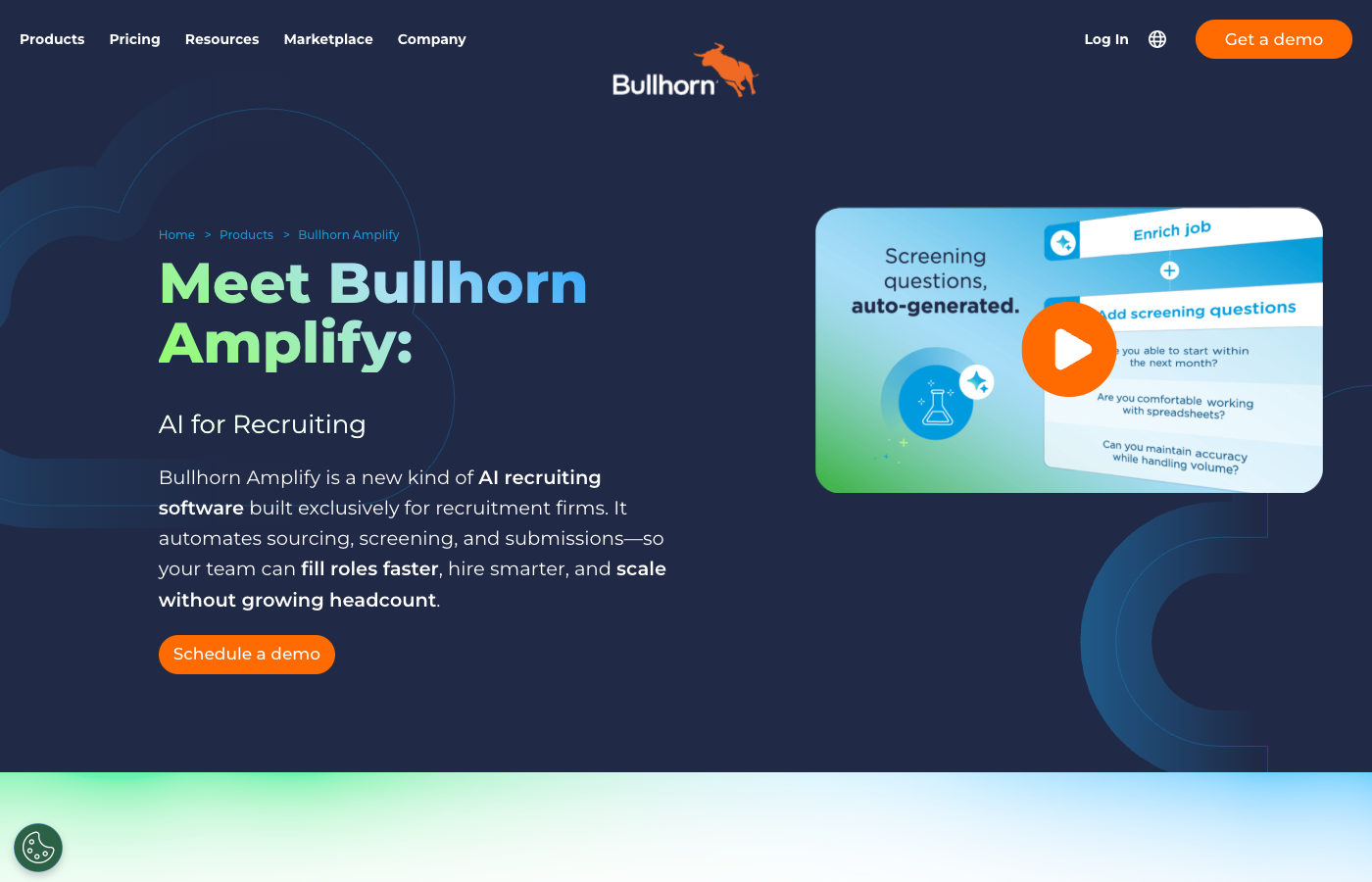
Bullhorn is the default choice for mid-sized and enterprise staffing agencies, and it has been for years. Positioning: the heavyweight system of record for staffing, with deep workflow depth and a big partner ecosystem.
Best for agencies with 20+ recruiters running multiple desks who need reporting, compliance, and a marketplace of integrations. The strength is the breadth. Almost every staffing tool you’d want to plug in has a Bullhorn connector, and the pay-and-bill module is built for real temp desks.
The honest weakness is weight. New recruiters take weeks to get comfortable, and the UI shows its age in places. Configuration often needs a partner or an internal admin. Search is a recurring complaint on Reddit, with partial-name matching that misses more than it should.
Pricing: around $99 to $315 per user per month depending on modules and seat count, plus implementation. Enterprise deals often land at $25,000 and up annually.
JobAdder
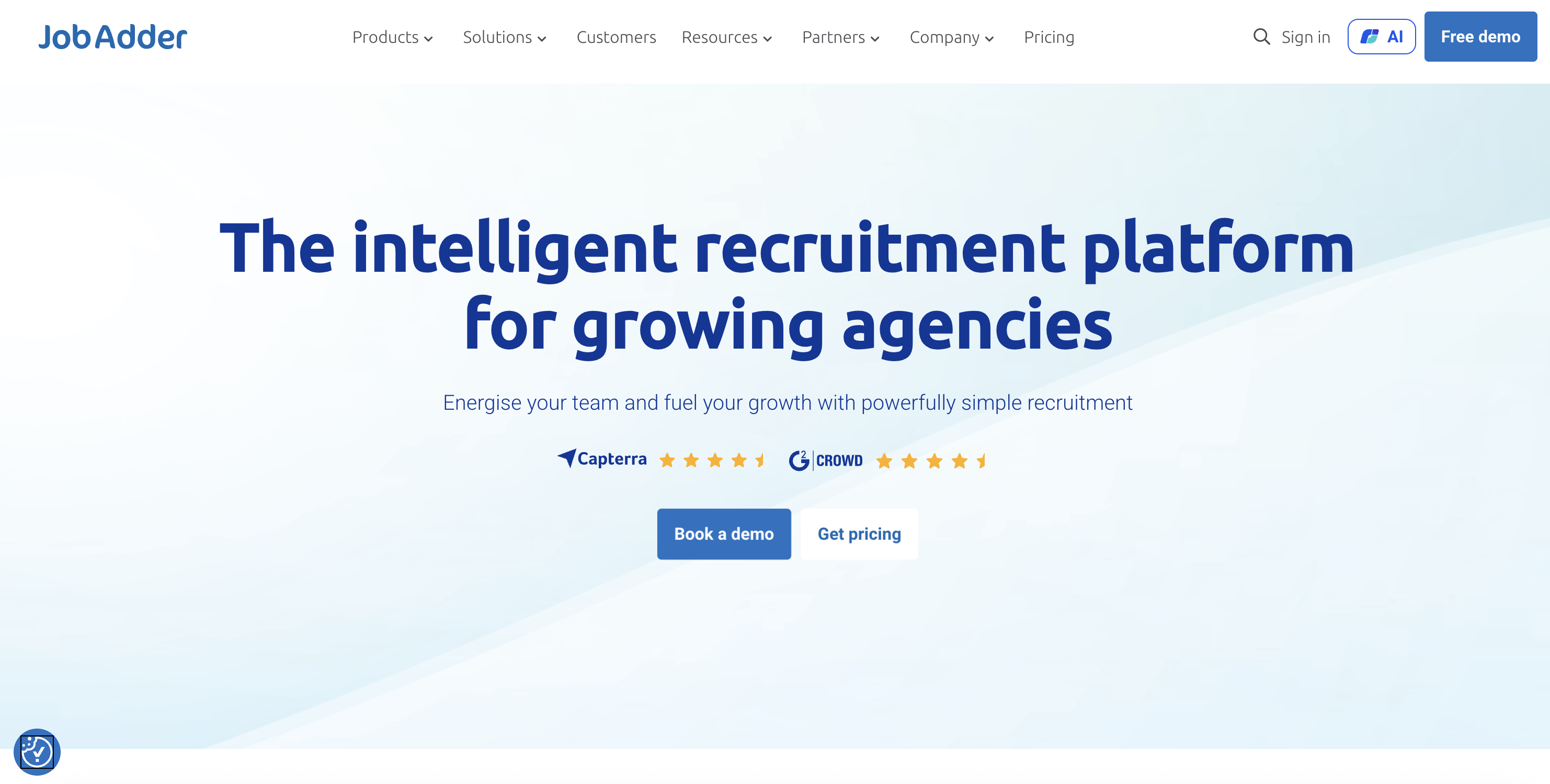
JobAdder is the mid-market staffing CRM that shows up most in ANZ, UK, and growing US agencies. Positioning: a cleaner, faster alternative to Bullhorn for teams under 100 seats.
Best for agencies that want a modern interface without a six-month rollout. The strength is usability. Recruiters can actually find what they need on day two, and the job board posting flow is tight. 150+ integrations cover most of the stack you’d actually plug in.
The honest weakness is depth. Large enterprise teams with complex compliance needs can outgrow it. Some reporting requires exports to get what you want.
Pricing: around $99 per user per month, custom for larger deals. Free trial available.
Vincere
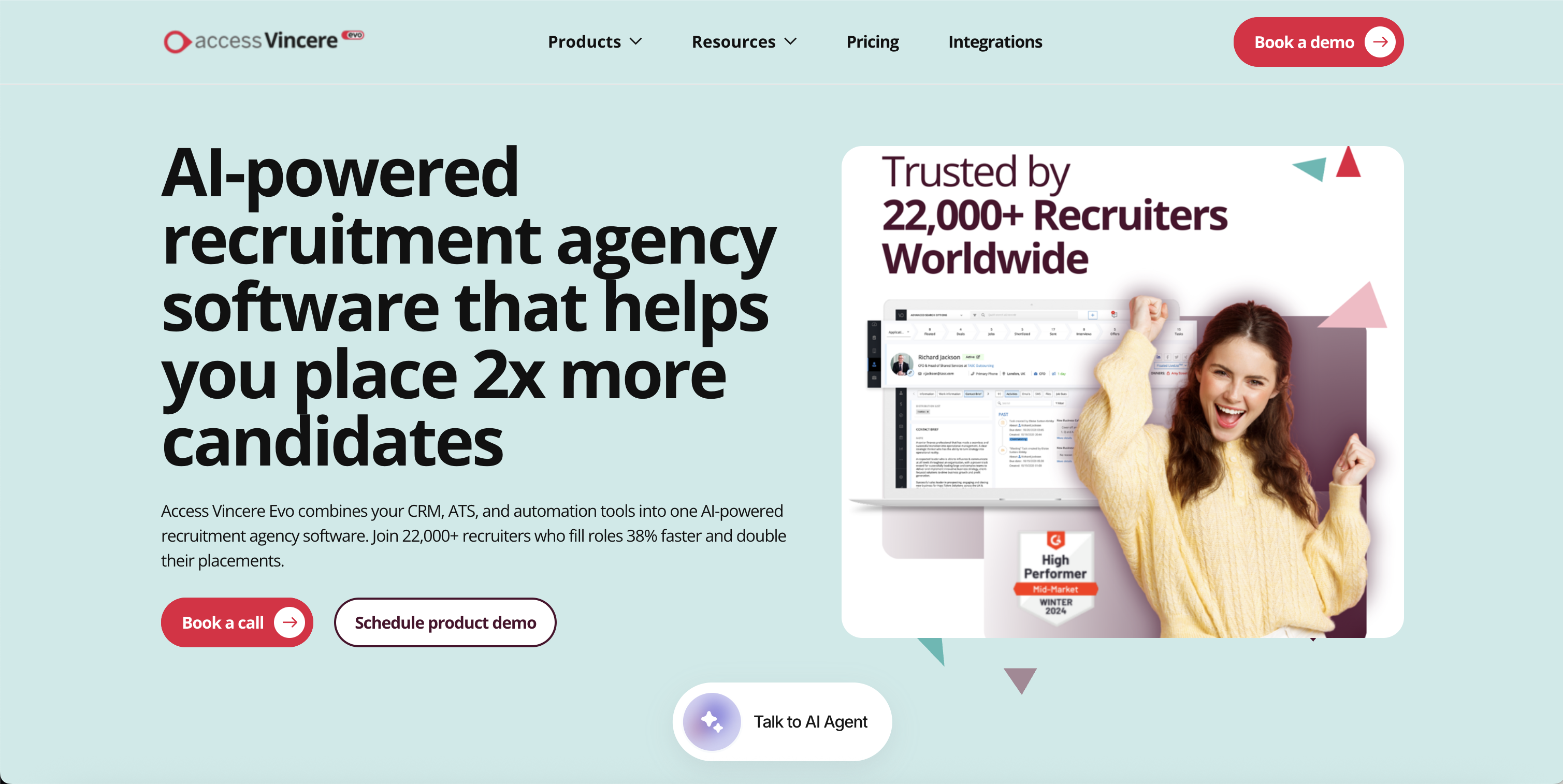
Vincere pitches itself as the front, middle, and back office stack for staffing in one platform. Positioning: an all-in-one CRM and ATS with pay and bill modules built in for teams that hate stitching tools together.
Best for growing agencies that want to consolidate vendors. The strength is the scope. You get CRM, ATS, analytics, and timesheets without buying four separate products.
The honest weakness is that all-in-one tools trade some depth per module for breadth. Teams that need best-in-class in one area sometimes find the dedicated tools sharper.
Pricing: around $87 to $109 per user per month. Free trial available.
Crelate
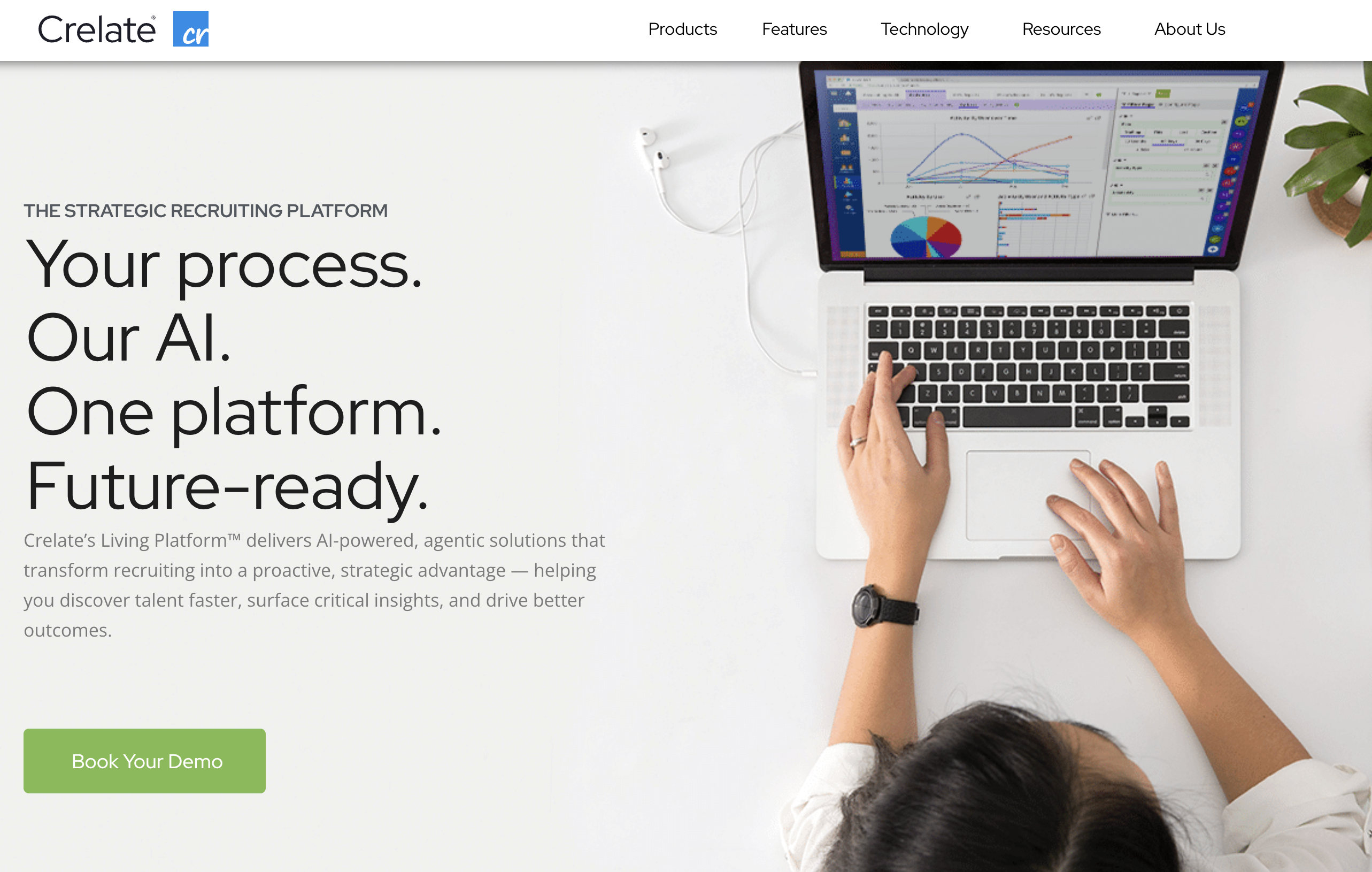
Crelate is a recruiting CRM and ATS that leans into boutique and mid-market staffing firms. Positioning: a visual, drag-and-drop pipeline tool that feels more like a modern SaaS product than legacy staffing software.
Best for boutique and specialized agencies who want quick setup and a light footprint. The strength is the pipeline view and the speed of configuration. You can be running in days.
The honest weakness is scale. Once you push into multi-office, high-volume environments, some teams hit edges around reporting and automation.
Pricing: tiered plans starting at $69 per user per month, with a common mid-tier at $119 per user per month for a five-seat minimum.
Avionté Bold
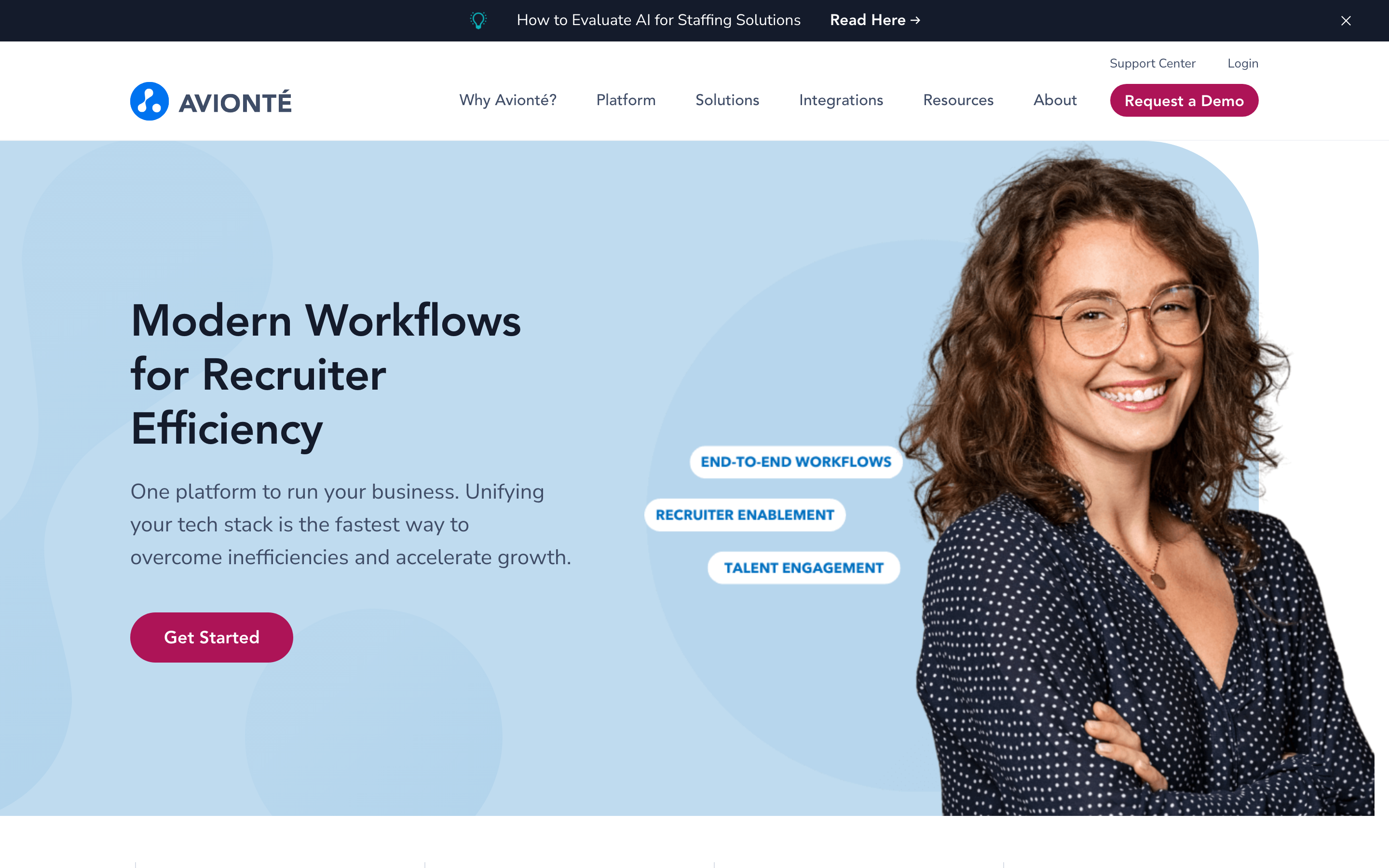
Avionté Bold is the modern front office from Avionté, aimed at light industrial, commercial, and clerical staffing. Positioning: a staffing CRM and ATS built for high-volume desks that need to move fast on mass recs.
Best for light industrial and commercial staffing agencies running hundreds of placements a week. The strength is the volume workflow. It’s designed for the rhythm of a high-throughput desk, not a slow exec search, and it connects cleanly to Avionté’s pay-and-bill back office. For more on that rhythm, see our guide to high-volume hiring.
The honest weakness is that it’s less of a fit for perm or exec search teams. Configuration for those workflows can feel forced.
Pricing: contact for pricing.
Loxo
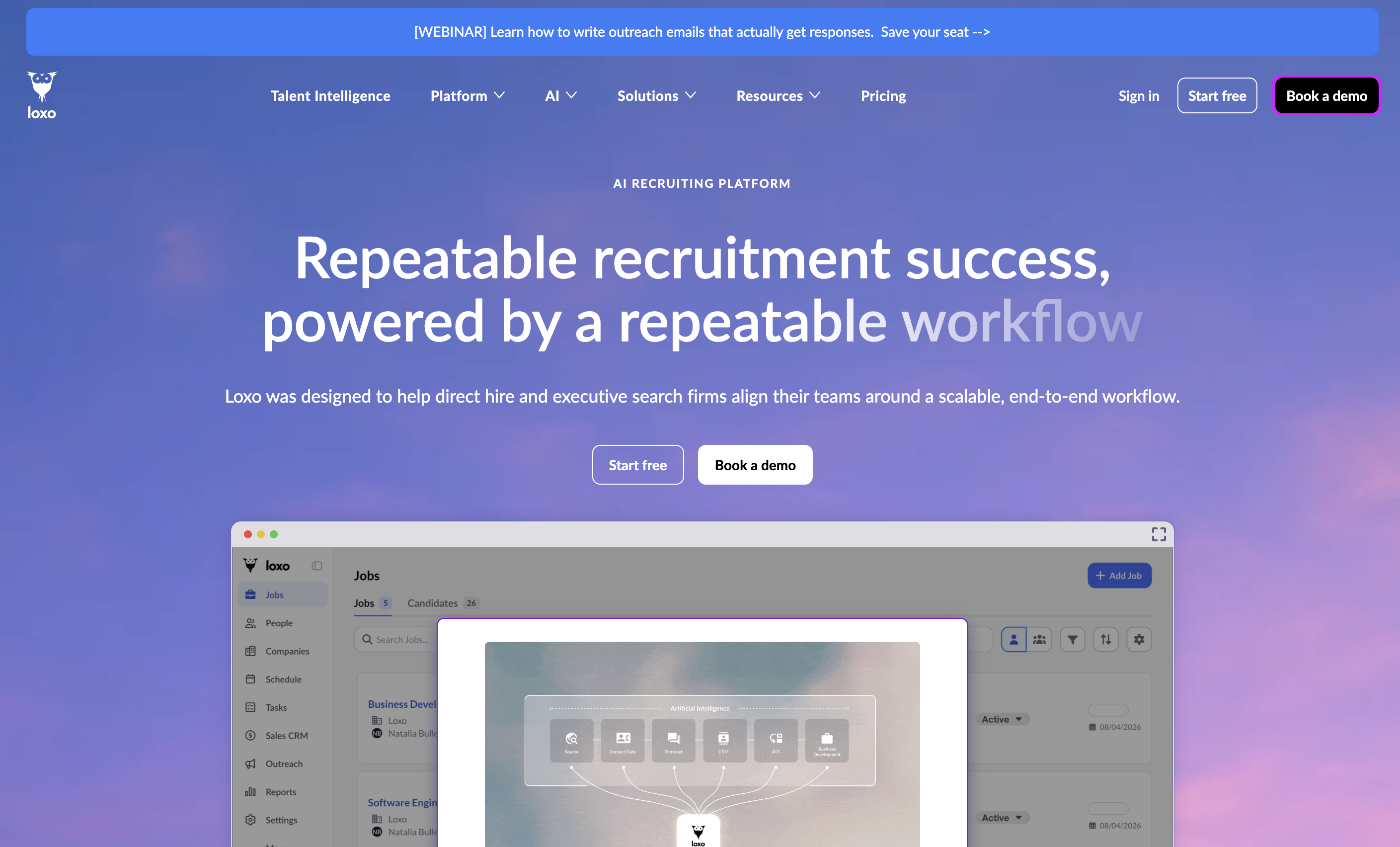
Loxo calls itself a talent intelligence platform and tries to bundle sourcing, CRM, ATS, and outreach in one tool. Positioning: a modern stack for exec search and recruiting teams that want their sourcing and CRM in one login.
Best for exec search, retained search, and boutique agencies who live in sourcing mode. The strength is the combined sourcing layer. You can find people and work them inside the same product.
The honest weakness is that the bundled model means you’re trusting one vendor across everything. Teams that already love their sourcing tool will feel friction.
Pricing: free plan available. Paid tiers scale by features, with premium plans starting around $119 per user per month.
PCRecruiter
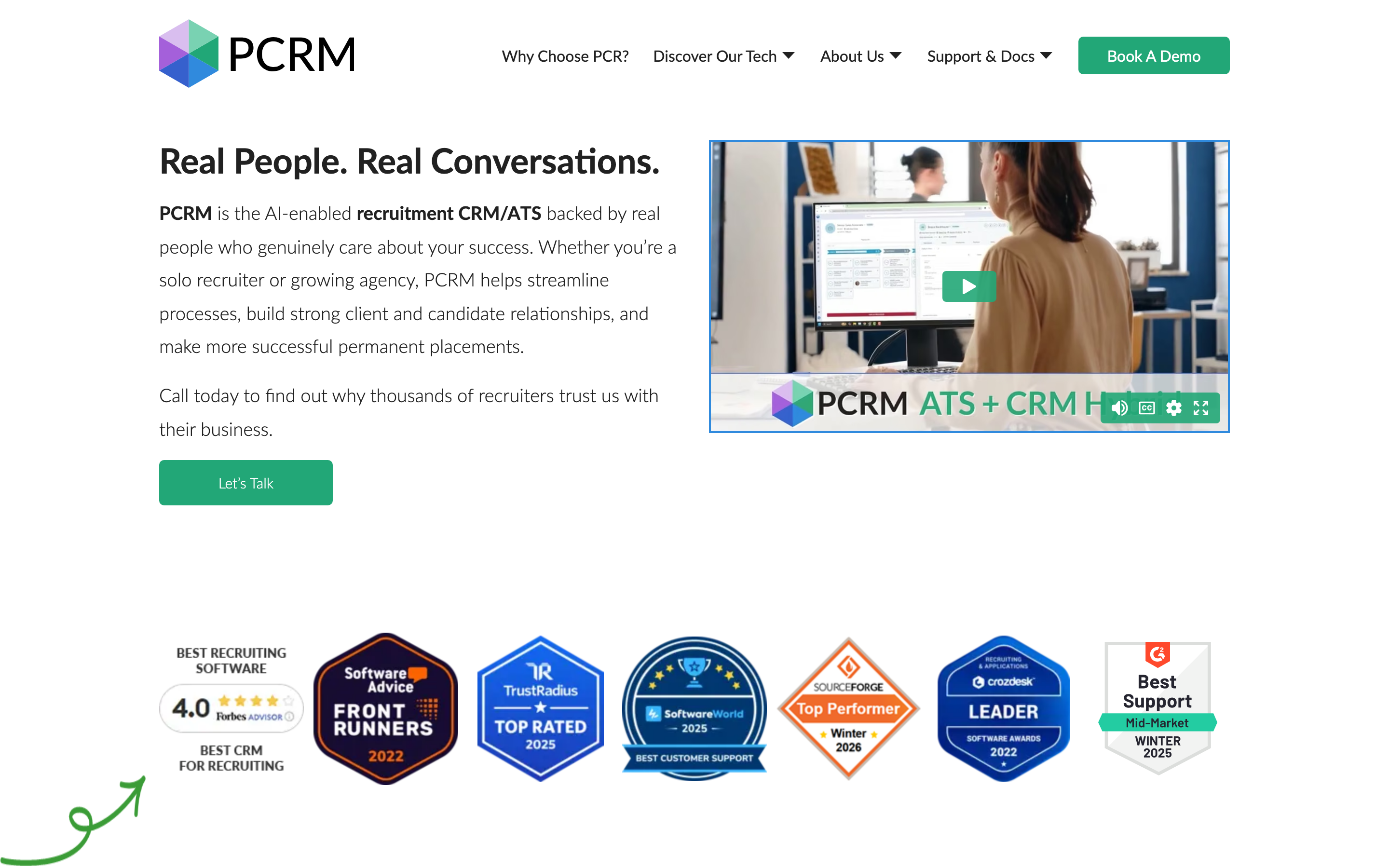
PCRecruiter is a long-running staffing CRM and ATS that has quietly held onto a loyal base for years. Positioning: a flexible, customizable system for agencies that want control and don’t need a shiny UI.
Best for established agencies with specific workflows they’ve refined over time. The strength is flexibility. You can shape it to a lot of different desk types without a huge services bill.
The honest weakness is the interface. It looks and feels like a tool from an earlier era, and new recruiters trained on modern SaaS take time to adjust.
Pricing: contact for pricing.
Zoho Recruit
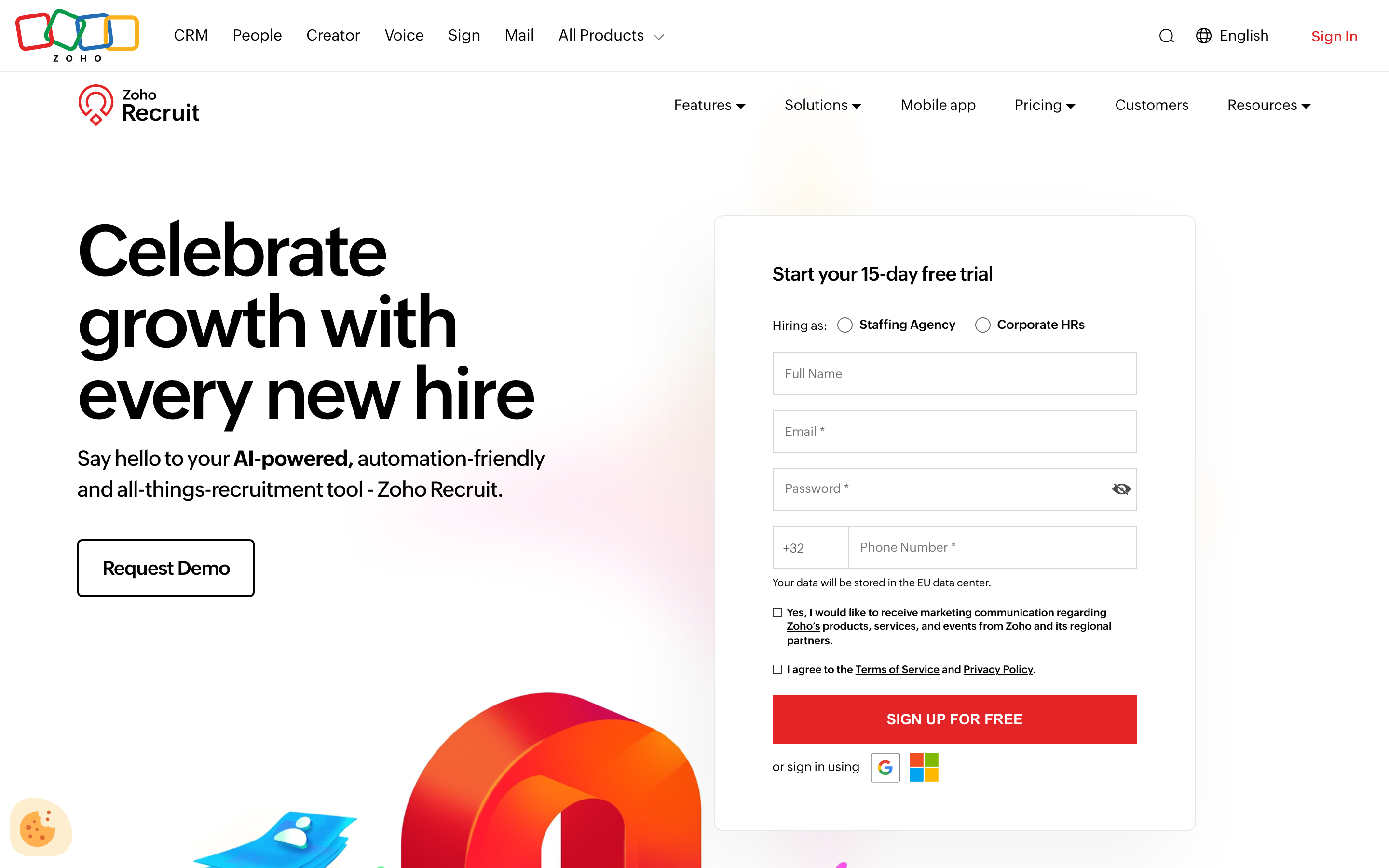
Zoho Recruit is the staffing arm of the broader Zoho suite, and it’s priced aggressively for small teams. Positioning: the budget-friendly staffing CRM for solo recruiters and small agencies.
Best for teams of one to ten who want a working CRM without a big monthly bill. The strength is price and the wide Zoho ecosystem around it. You can plug it into Zoho Mail, Books, and the rest.
The honest weakness is depth for staffing-specific workflows. It’s a strong general CRM with a recruit module, not a tool built by staffing people for staffing people.
Pricing: plans start around $30 per user per month, with a free tier available for very small teams. Check their site for current numbers.
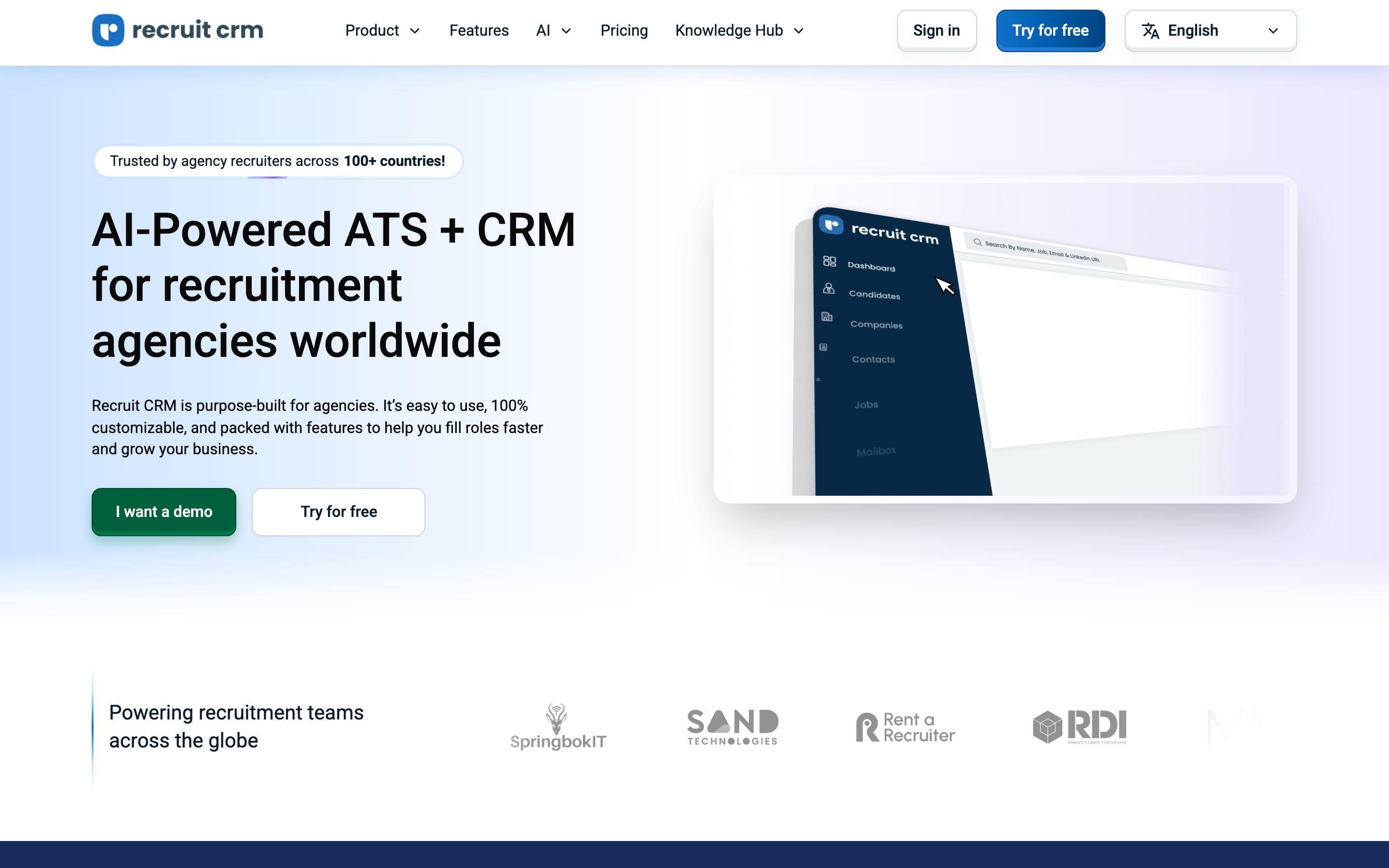
Recruit CRM
Recruit CRM is a fast-growing CRM and ATS for staffing and executive search, with a strong reputation for support. Positioning: a clean, modern staffing CRM for global boutique agencies.
Best for small and mid-sized search firms that want a modern interface and responsive support. The strength is the balance. It’s simple enough for a two-person shop and deep enough for a 30-person firm. For our deeper look, read the Recruit CRM review.
The honest weakness is that the largest enterprise teams will find the reporting and automation layers lighter than Bullhorn or Vincere.
Pricing: around $85 to $165 per user per month depending on tier. Free trial available.
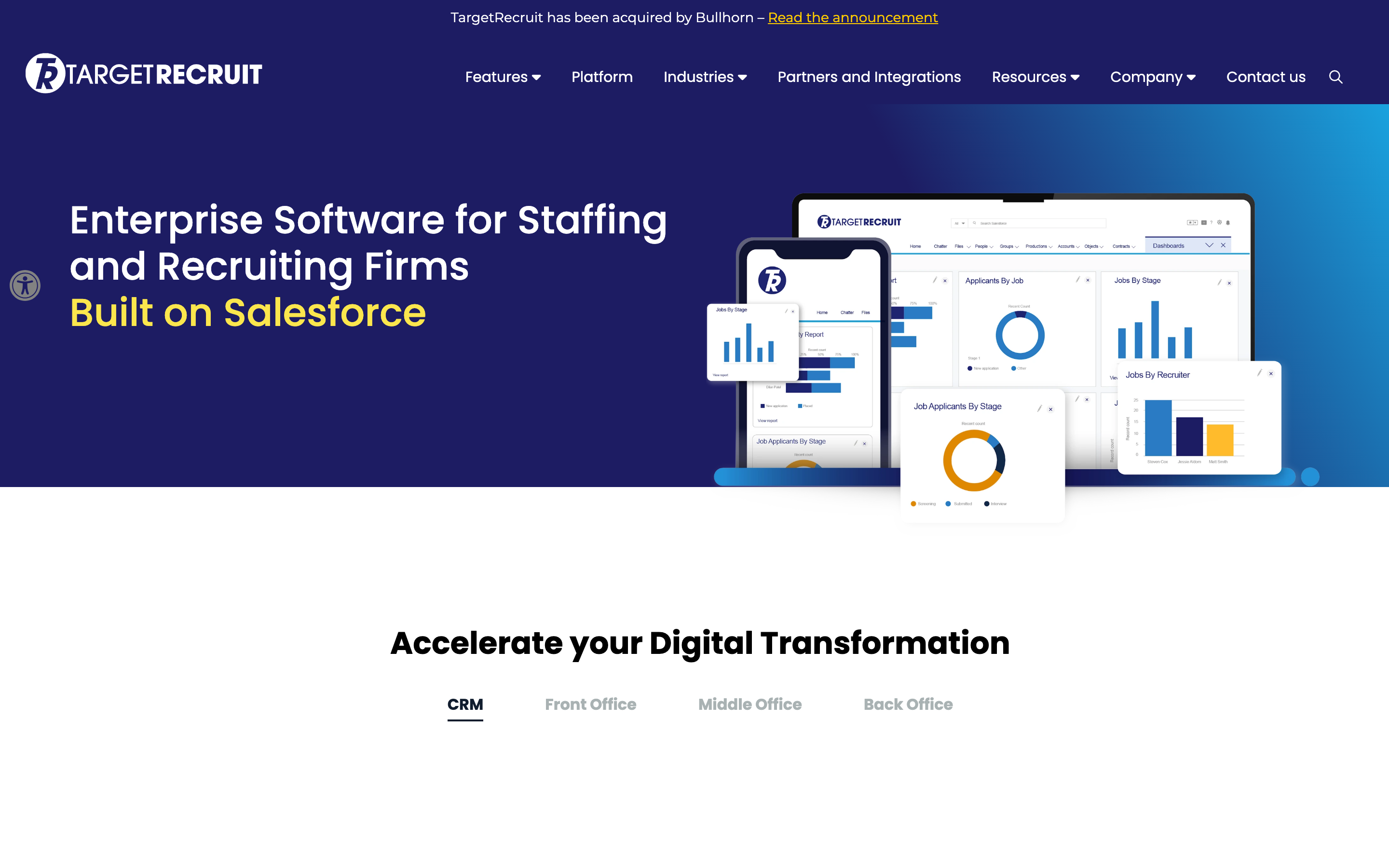
TargetRecruit
TargetRecruit is built on the Salesforce platform and targets mid-market to enterprise staffing agencies. Positioning: a staffing CRM and ATS for teams that already live in or want the Salesforce ecosystem.
Best for agencies that use Salesforce elsewhere in the business and want one platform. The strength is the Salesforce foundation. You get the customization, the reporting, and the app ecosystem that comes with it.
The honest weakness is that Salesforce-based tools often come with Salesforce-level complexity. Admins and services hours add up.
Pricing: contact for pricing.
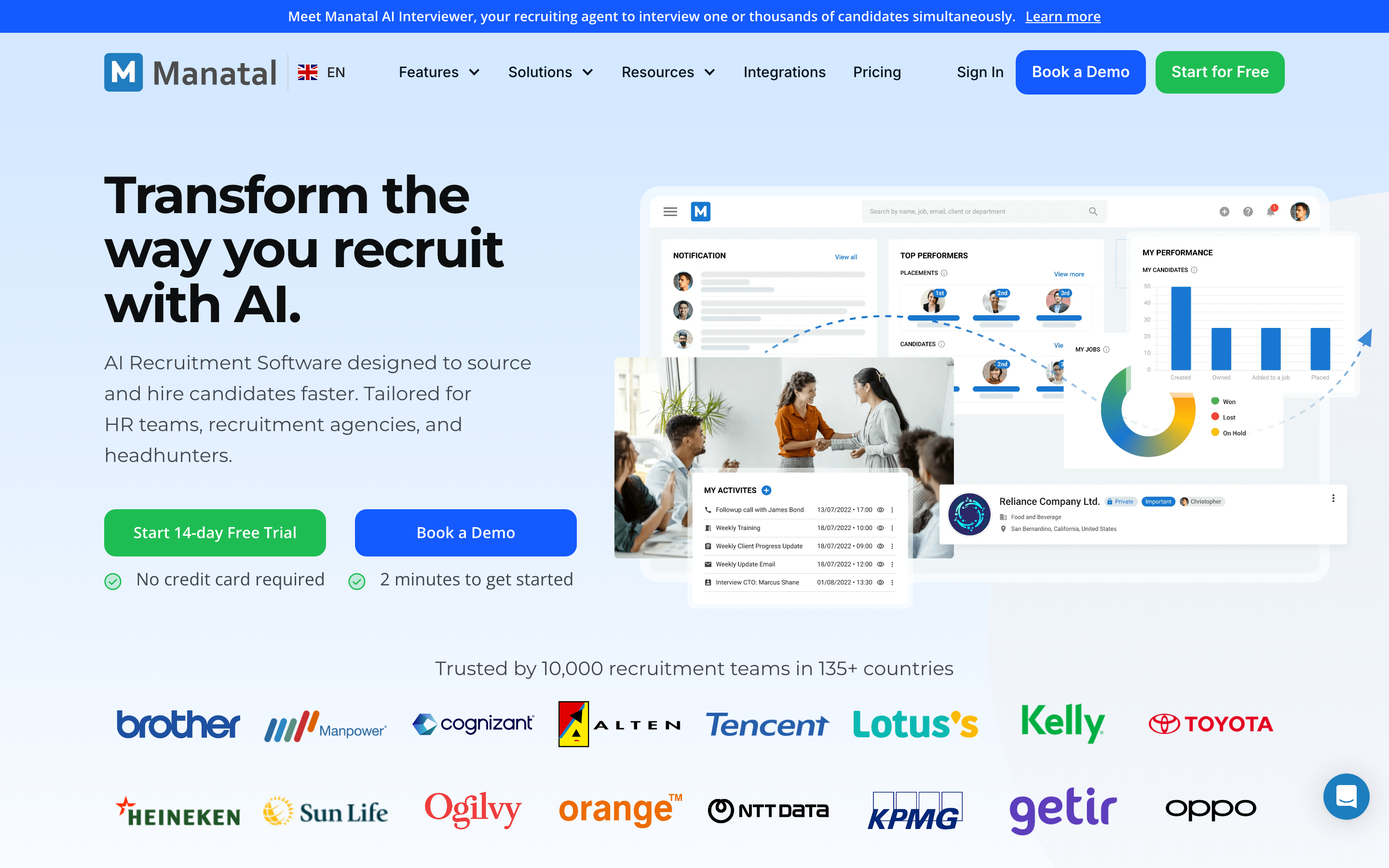
Manatal
Manatal is an AI-leaning recruitment CRM and ATS popular with agencies in APAC, EMEA, and smaller US teams. Positioning: an affordable modern CRM with AI surfaces for sourcing and matching.
Best for small and mid-sized agencies who want AI features without a Loxo or Bullhorn price tag. The strength is the value. The interface is clean, the AI sourcing is useful, and the price point is friendly.
The honest weakness is enterprise scale. Large, complex staffing operations will hit limits around workflow depth and integrations.
Pricing: plans start at $15 per user per month, scaling to around $55 per user per month on the higher tiers. Free trial available.
Recruiterflow
Recruiterflow is an AI-native ATS and CRM built for executive search, recruiting, and staffing agencies, and it’s trusted by more than 2,100 search firms. Positioning: a modern, automation-first stack for perm and search desks that want sourcing, CRM, and outreach in one login.
Best for boutique and mid-market perm and retained search firms that live in candidate relationships and want their outbound on autopilot. The strength is the CRM and the automation around it. Sequences, pipelines, and client updates run with far less manual work than legacy tools, and the sourcing extension pulls candidates straight into the pipeline.
The honest weakness is the back office. Recruiterflow is built for perm and contingency search, so temp pay-and-bill and timesheets lean on integrations rather than native modules. Reviewers also flag thin resume parsing and reporting you often finish in a spreadsheet.
Pricing: around $149 per user per month on the Platform plan, with a custom AI tier on top. Free trial available.
Reviews: 4.7/5 on Capterra (332 reviews).
Firefish
Firefish is a UK-built recruitment CRM and ATS for agencies running mixed perm, temp, and contract desks. Positioning: one connected platform that folds candidate marketing into the same tool you place from.
Best for growing UK and European agencies that run both perm and temp and want attraction and marketing built in, not bolted on. The strength is the breadth across desk types. It ships native timesheets, temp and contract workflows, and a marketing layer most CRMs leave to a separate product.
The honest weakness is feel and flexibility. Reviewers describe the interface as dated and sometimes slow, customization as limited, and the contract as a 12-month minimum, which is a lot to commit to before you know the tool fits.
Pricing: contact for pricing. Firefish quotes by demo, sized to your agency, so there’s no public starting rate and no free trial.
Reviews: 4.6/5 on Capterra (291 reviews).
Tracker RMS
Tracker RMS (Tracker) is an all-in-one ATS, CRM, and back-office platform for staffing and recruitment firms. Positioning: front office to back office in one system, whether your desk runs perm, contract, or temp.
Best for small and mid-market agencies on mixed desks that want timesheets, billing, and back office without stitching three vendors together. The strength is the range for the price. The higher tiers bring native timesheets, invoicing, and payroll integrations that real temp desks need, under one login.
The honest weakness is reporting and the add-on math. Custom reports can be rigid enough that you ask support to build them, and capabilities like automation, job-board posting, and back office are priced separately, so the real cost climbs as you switch them on. The interface also shows its age.
Pricing: around $95 to $99 per user per month to start, with Professional and Enterprise quoted on request. Six-month minimum, no free trial.
Reviews: 4.7/5 on Capterra (186 reviews).
Pin
Pin is an AI sourcing and outreach CRM that pairs candidate discovery across a large profile database with multichannel outreach and a shared team inbox. Positioning: a sourcing-first CRM for recruiters who want AI to find and contact candidates, not a pay-and-bill back office.
Best for independent recruiters, boutique search firms, and small agencies that want AI sourcing and outreach without per-seat pricing working against them as they grow. The strength is the top of the funnel. Sourcing, outreach sequences, and shared pipelines sit in one place, and small teams can share a flat plan instead of buying a seat per head.
The honest weakness is maturity and data. It’s a newer product, some advertised ATS integrations are still landing, and reviewers note scraped contact details can be stale, which means bounces you have to manage.
Pricing: from $99 per month for a solo seat, with per-user plans from $149 per user per month. Free trial, no credit card.
Reviews: 4.8/5 on G2 (27 reviews). Pin is newer on Capterra, so its G2 score is the better read.
When to switch CRMs and when to stay put
Every staffing CRM has gaps. Recruiters who’ve used five of them will tell you each one did something great and had crucial things missing. The honest answer is that the next CRM won’t be perfect either.
Here’s when a switch actually pays back.
- Your current CRM can’t support a desk type you’ve grown into (you bought a perm tool, you’re now half temp)
- Pay-and-bill or compliance gaps are forcing you to run parallel spreadsheets
- Recruiter adoption is under 50 percent after six months of real effort
- Vendor support is gone (product stagnant, account team turned over, roadmap unclear)
- The total annual cost including modules now exceeds a real alternative by 30 percent or more
Here’s when switching is the wrong answer.
- Recruiters hate the configuration, not the software (fix the config first)
- A single missing feature has a workflow workaround
- The pain is data quality, not the CRM (dirty data in one system becomes worse data in the next)
- You’re under a year in and still inside the learning curve
- The last switch was within two years
Two quiet patterns ruin most migrations. First, importing dirty data, because the old CRM’s junk becomes the new CRM’s junk. Budget time for a cleanup before the cutover. Second, rolling out the new CRM to track recruiters instead of help them. If the configuration leads with metrics and policing, adoption dies on day one and no product choice will save it.
If those patterns sound familiar, the fix usually isn’t a new CRM. It’s a better layer in front of the one you have.
How to make any staffing CRM faster
Here’s what breaks on most staffing desks. Your CRM is great at storing candidates. It’s not great at helping you decide which three out of fifty to submit by 5pm. That’s a screening problem, not a CRM problem.
Truffle is an AI screening platform that sits in front of your CRM. It handles resume screening, one-way video interviews, and short talent assessments, then hands the qualified candidates back to you ready to submit. See one-way video interview software for the long version.
Here’s how the pairing works on a real desk. You get an intake. You drop a Position Link into your job post and your outreach. Candidates self-serve into a short one-way interview with the questions the client actually cares about. AI Match scores each one against the position criteria, and AI Summaries pulls key points out of the video answers. You open the dashboard and see the shortlist, not the flood.
Now the part that matters for staffing. Every candidate generates Candidate Shorts, 30-second highlight clips from the video responses. You drop two or three clips into your submittal email and the client sees the person talking about the exact skill they asked for, before any interview slot gets burned. That’s the difference between a resume and a decision.
This matters because submittal speed wins reqs. For more on why screening in front of the CRM works, read AI candidate screening and the broader take on AI recruiting software. And if you’re running a mixed perm and contingent desk, the same flow works for temp and contingent worker placements.
Truffle starts from $49 per month, credit-based, with a 7-day free trial and no credit card required. No separate module to buy inside your CRM, no procurement cycle, no services hours. You sign up, drop a Position Link into your next intake, and start shipping shortlists by Friday.
If you’re also rethinking the ATS layer, our roundup of the best applicant tracking systems is a good companion read.
Frequently asked questions about staffing CRMs
What’s the difference between a staffing CRM and an ATS?
An ATS tracks candidates through a single hiring process, usually for one employer filling its own roles. A staffing CRM adds the client side, the business development side, and the long-term candidate relationship side, because agencies place the same person at different clients over years. Most modern staffing tools blur the line and do both.
How much does a staffing CRM cost in 2026?
Published pricing runs from around $15 per user per month at the budget end (Manatal, Zoho Recruit) to $99 to $315 per user per month at the enterprise end (Bullhorn, Loxo premium, TargetRecruit). Mid-market staffing CRMs cluster at $69 to $165 per user per month. Plan for 30 to 50 percent above the sticker price once modules, integrations, and implementation are added.
What’s the best staffing CRM for temp and light industrial agencies?
Bullhorn, Avionté Bold, and Vincere are the strongest picks for temp desks. All three handle shift scheduling, pay-and-bill, timesheets, and redeployment in ways perm-focused CRMs don’t. Tracker RMS is also worth a look if you want a temp-specific stack at a lower price.
What’s the best staffing CRM for small agencies and solo recruiters?
Manatal starts at $15 per user per month and is the most common pick under 10 seats. Zoho Recruit is close behind at around $30 per user per month if you already use the Zoho suite. Recruit CRM is a step up in depth for small search firms willing to pay $85 and up.
Do I need a CRM with built-in timesheets and pay-and-bill?
Only if you run temp or contract placements. Perm-only desks don’t need either. If you do run contract, you have two paths. Pick an all-in-one like Avionté, Vincere, or Bullhorn, or pair a perm-focused CRM with a dedicated pay-and-bill platform. The all-in-one is simpler. The pair is usually deeper in each module.
How long does it take to switch staffing CRMs?
Switching ranges from a few weeks for a boutique team on a modern tool to six to nine months for a large agency leaving Bullhorn. Data migration is the slow part, not the software. Budget time for cleanup before you import, because bad data in the old system becomes worse data in the new one.
Do I really need AI in my staffing CRM in 2026?
You don’t need it, but you probably want it for the narrow tasks where it works. AI surfaces candidates from your existing database, pulls key points from notes, and drafts outreach. Be skeptical of vendors who promise AI that makes hiring decisions. The useful features are smaller and more honest.
Can I use Truffle instead of a staffing CRM?
No. Truffle is an AI screening platform, not a CRM. It sits in front of whichever staffing CRM you use and handles the screening step with resume screening, one-way video interviews, and talent assessments, so the shortlist that reaches your CRM is already vetted. Think of it as the layer that gets candidates from raw application to submittal-ready, faster.