How to hire faster with AI and automation
You lost a candidate last quarter. Not to a better offer. To a faster process. Here's how to fix the bottlenecks that are actually slowing you down.


AI summary
- AI scores and ranks every resume against your criteria so you review 50 qualified candidates instead of reading 300 applications
- One-way video interviews and 30-second Candidate Shorts replace phone screens, cutting days of scheduling into minutes of review
- You design the screening workflow (resumes, interviews, assessments, or all three) and AI handles the analysis while you make the calls
Any recruiter juggling more than a few open roles knows it: the screening process is brutal. You’ve got to read through hundreds of resumes. Schedule and sit through phone screens. Chase hiring managers for feedback. Compare candidates from memory because your notes are scattered across three tools.
In between each of those steps, you’re also writing job posts, coordinating with hiring managers, fielding candidate questions, and trying to keep your ATS from turning into a graveyard of stale applicants.
Truffle is an AI screening platform that lets you design your own screening process, from resumes to one-way interviews to assessments, and uses AI to surface the insights that help you make confident decisions at scale.
It all takes time. But with the help of AI and automation, even a one-person recruiting team can hire faster without burning out.
Whether you’re drowning in applications for a single role or trying to fill 20 positions at once, here’s how to make your hiring process run on autopilot where it can and on your judgment where it should.
Use knockout questions
You posted a role. 300 people applied. At a couple of minutes per resume, that’s 15 hours before you’ve spoken to a single person. And half those resumes were built with ChatGPT, so they all sound the same anyway.
This is where AI-powered resume screening changes the math.
With Truffle, you define what matters for the role: must-have qualifications, years of experience, location, certifications. AI scores every resume against your criteria and ranks the entire pool by match percentage. Instead of reading 300 resumes, you’re reviewing the top 50 that actually fit.
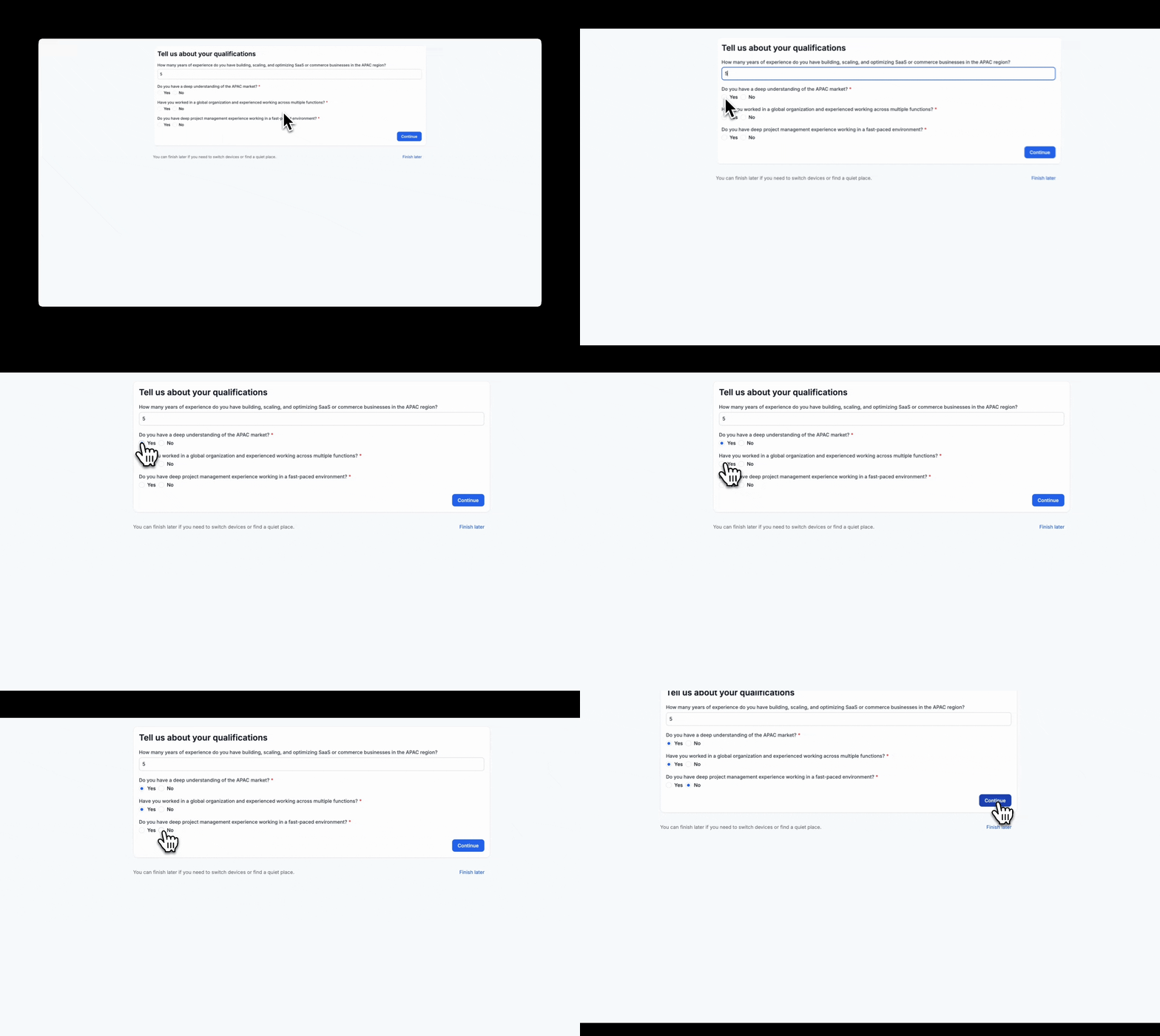
Knockout questions target deal-breakers before you even look at a resume. Work authorization? Availability? Salary expectations? Candidates who don’t meet your must-haves get flagged automatically.
Replace phone screens with one-way interviews
Phone screens exist because resumes don’t tell you enough. Fair. But 15 minutes per call, 30 candidates deep, is 7.5 hours of your week on the same introductory conversation. And half of those calls just confirm what you already suspected.
One-way video interviews flip the model entirely. You record your questions once. Candidates record their answers on their own time. No scheduling. No phone tag. No “does Tuesday at 3 work?”
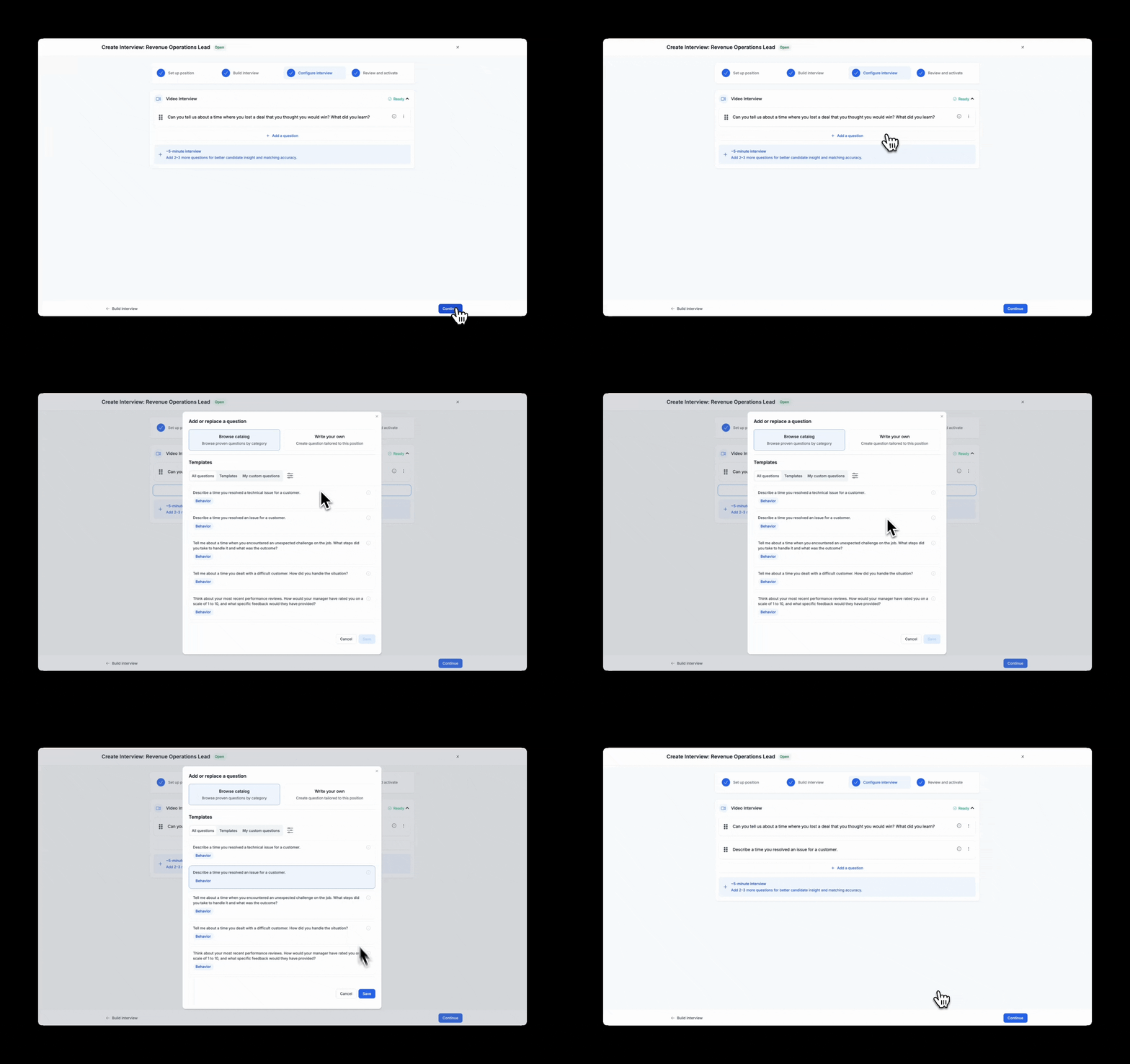
With Truffle, you create a position, add your interview questions (or let AI recommend them based on the role), and share a single link. Post it on your job board, careers page, LinkedIn, or send it directly via email. Candidates click, complete a mic and camera check, and record their responses.
Review 50 candidates in the time it takes to do 1 phone screen
Having 50 recorded interviews is only useful if you don’t have to watch 50 full recordings. This is where AI does the heavy lifting.
- AI Match s rank every candidate against your criteria. Not keyword matching. Actual evaluation of how each response aligns with what you said you’re looking for. Each score shows its reasoning so you can see exactly why a candidate ranked where they did
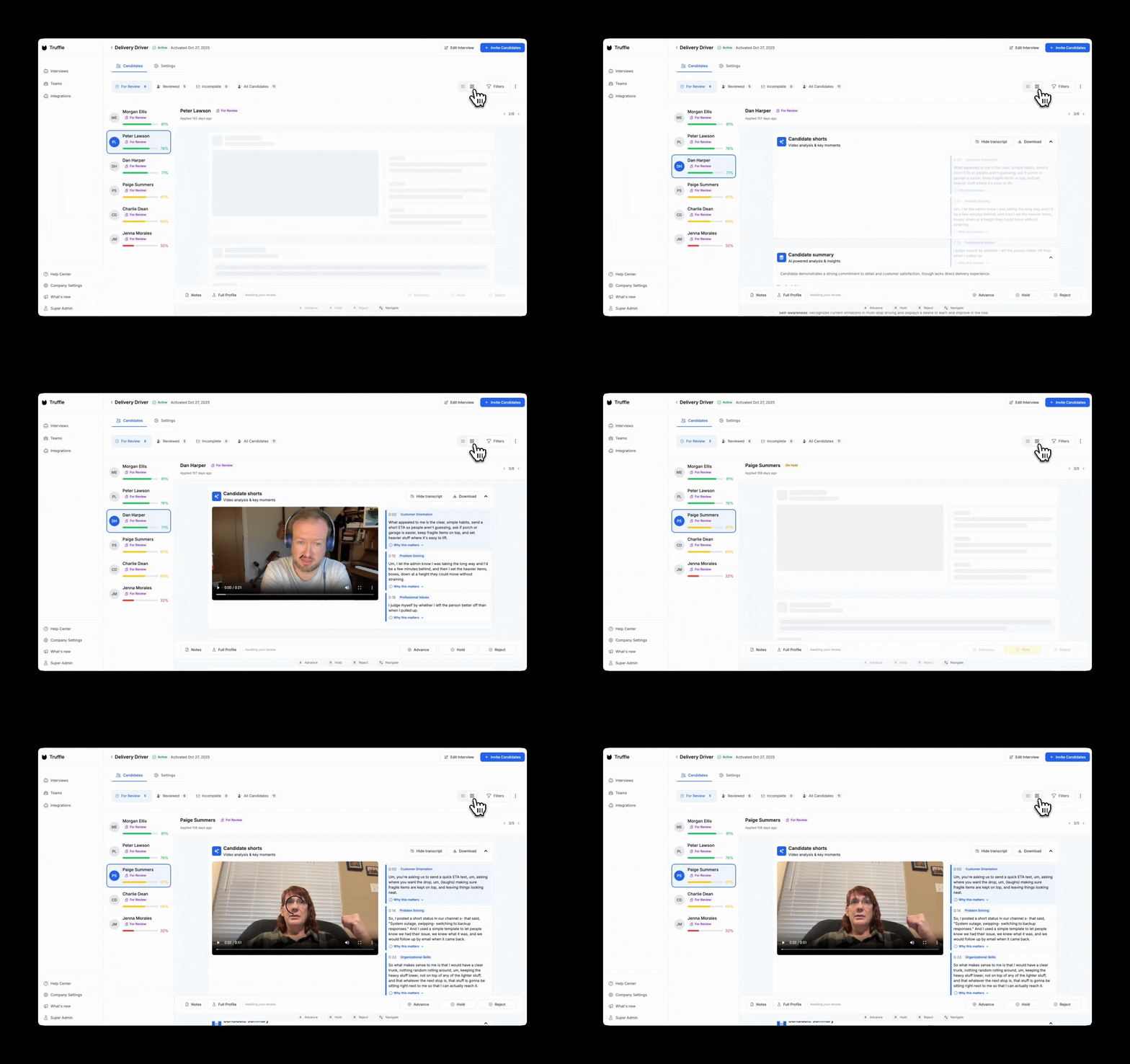
- Candidate Shorts are the fastest way to meet a candidate. AI generates a 30-second highlight reel from each interview, pulling the moments that reveal the most about communication, personality, and fit. You get presence and thinking without watching 10 minutes of video.
- AI summaries give you a written overview before you watch anything. Strengths, concerns, how they compared to your requirements.
- Magic Review is the rapid-fire mode. Side-by-side candidate comparison with keyboard shortcuts: A to advance, H to hold, R to reject. Move through your entire candidate list in minutes.
Add assessments for signal resumes can’t show
Resumes show credentials. Interviews show communication. But neither tells you how someone thinks under pressure, whether their work style fits your team, or how they’d handle the actual scenarios they’ll face in the role.
Truffle’s talent assessments add a third screening layer that captures what the other two can’t:
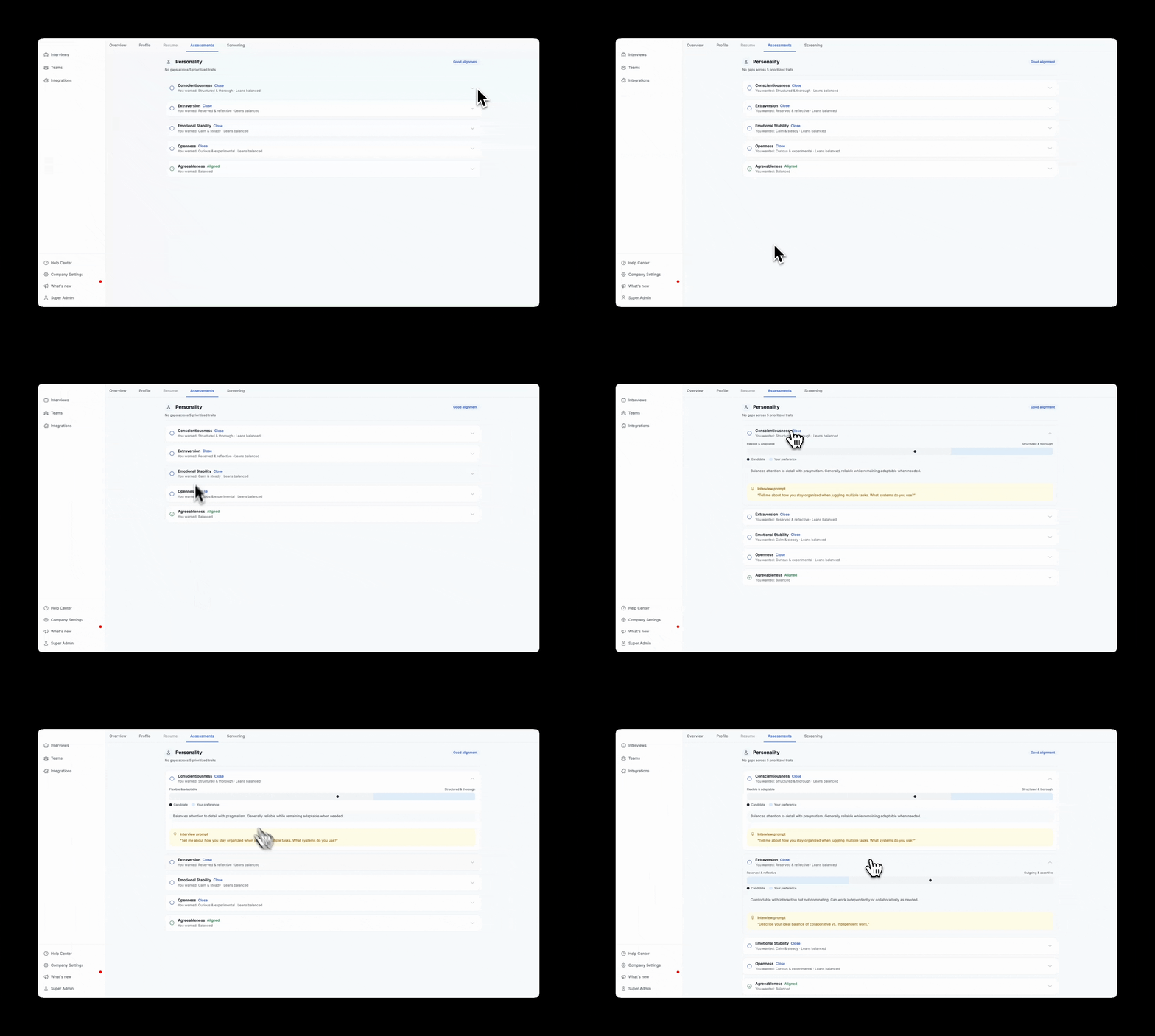
- Personality assessments based on validated Big Five (IPIP) research. Mapped to the traits that matter for the role.
- Situational Judgment Tests built around how your team handles real scenarios. No universal right answer. The “right” response is whatever matches your team’s approach.
- Environment Fit assessments that surface whether a candidate’s preferences (remote vs. in-office, fast-paced vs. methodical) match the actual reality of the role.
One candidate profile, every signal. Assessment results sit next to resume data, match scores, and interview responses in the same view. No switching tools or cross-referencing PDFs.
You choose which layers to use. Resumes and assessments for a high-volume hourly role. All three for a senior hire. Just interviews for a role where communication is the deciding factor. Truffle doesn’t force a sequence. You design the process.
Get your hiring manager on the same page
You review 187 resumes, built a shortlist of 8, and your hiring manager says “actually, I was looking for something different.” Sound familiar?
Truffle builds alignment into the process before review starts, not after.
- Question-level evaluation attaches criteria to every interview question. Each one has a “Why we ask this” and “What we look for” explanation. You and your hiring manager agree on what matters before a single candidate records a response.
- Collaborative evaluation lets multiple team members rate candidates and leave notes independently. No groupthink. Everyone reviews the same evidence and adds their own take.
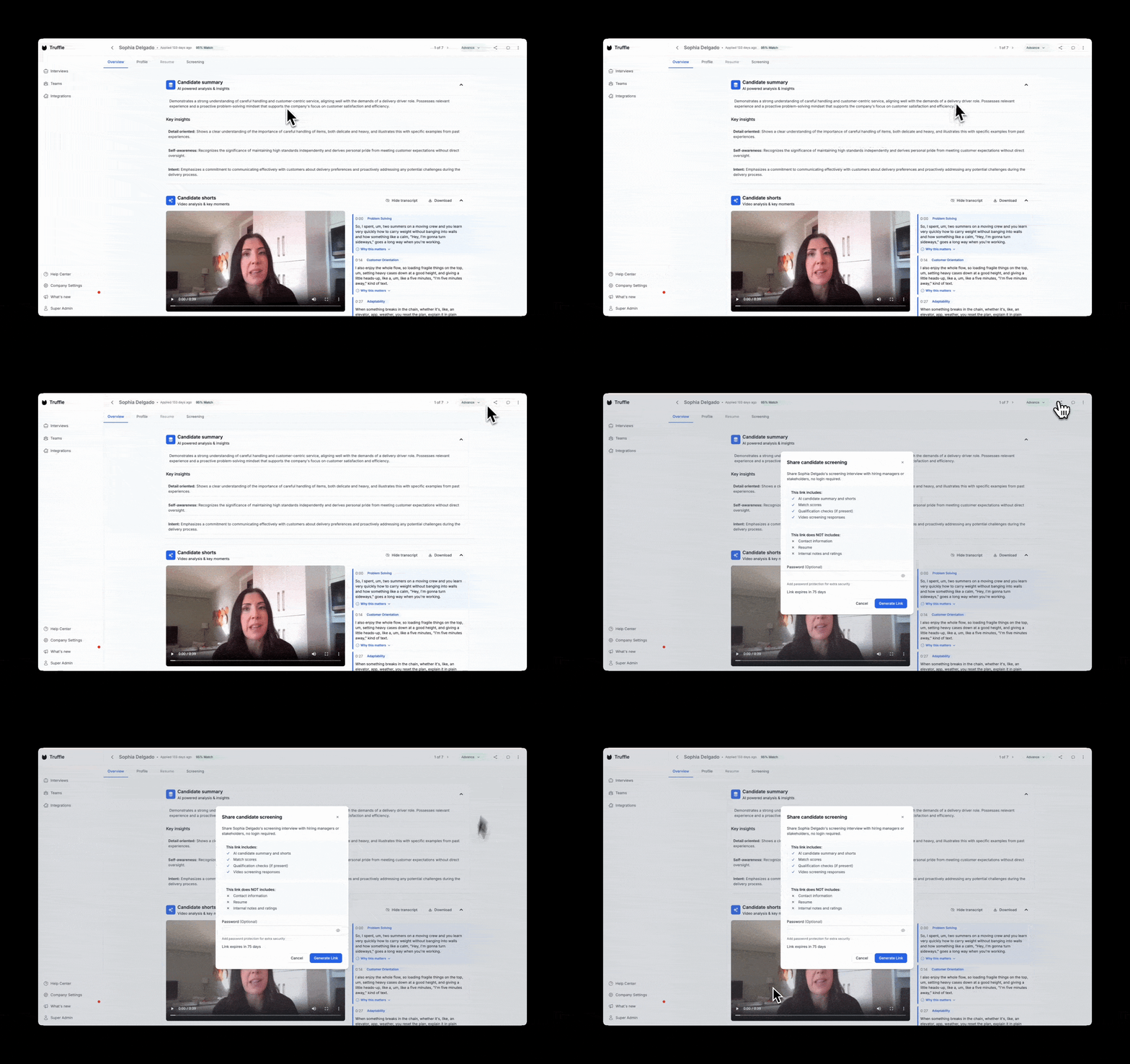
No Truffle account? No problem. Candidate sharing sends a secure, read-only link to hiring managers. They see the profile, the scores, and the Candidate Shorts. No login required.
Fewer rejected shortlists. Fewer “can you forward me that resume” emails. Fewer wasted rounds.
Automate invitations, reminders, and follow-ups
Screening isn’t just about reviewing candidates. It’s also about getting them into the process and keeping them moving through it. That admin work adds up fast.
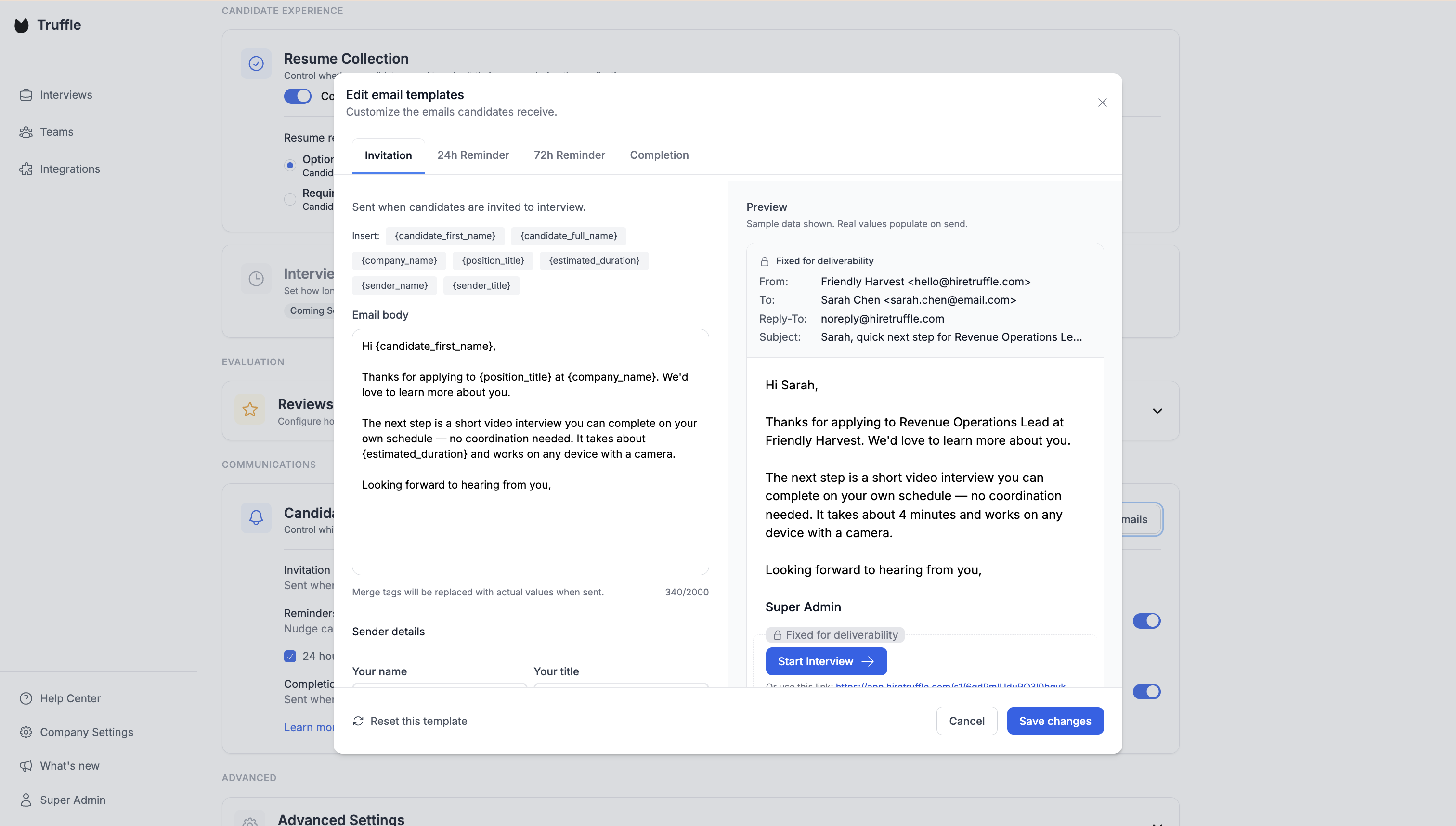
Truffle automates the logistics so you don’t have to manage them manually:
- Automated reminders go out after 1, 3 and 7 days to invited candidates who haven’t started. No manual follow-up needed.
- Direct invitations send branded, tracked emails to specific candidates.
- Paste from spreadsheet lets you paste a list of names and emails and invite up to 50 candidates in one send.
- Automated emails confirm when a candidate finishes, so they aren’t left wondering whether it went through.
Connect to your existing stack. Truffle integrates with your ATS, connects to Zapier, and offers API access and webhooks. Trigger workflows based on candidate status changes, pipe data into your tools, or build custom notification flows.
The goal is to automate everything around the judgment so you spend your hours on decisions, not data entry.
Your screening process, but faster
With the help of AI and automation, even a small recruiting team can get from hundreds of applicants to a confident shortlist without the manual grind.
From analyzing resumes to surfacing 30-second candidate highlights to automating follow-ups, each step in the process gets faster without taking the decision out of your hands.
The AI isn’t making the call. It’s compressing the time between “I don’t know this person” and “I know exactly who to talk to next.”
Frequently asked questions about hiring faster
What’s a good time to hire benchmark?
Time to hire varies by role and industry, but most companies average 30-44 days. The number itself matters less than knowing where your time goes. Track your hiring metrics by stage. If screening takes two weeks but interviews take two days, your bottleneck is screening, not decision-making. Analyze the results stage by stage and you’ll find the actual delay is almost never where you assume it is.
How do I hire faster without sacrificing candidate experience?
Speed and candidate experience aren’t in conflict. Most of what slows hiring down (scheduling phone screens, chasing hiring manager feedback, manual resume review) is invisible to the candidate. Streamline those hiring workflows and the candidate just sees a faster, more responsive process. Where it gets dangerous is cutting corners candidates can feel: skipping communication, rushing interviews, or ghosting people. Structured interviews and pre-screening questions actually improve both speed and experience.
What’s the fastest way to source qualified candidates?
Employee referrals and internal referrals consistently produce qualified candidates faster than any other channel. Proactive sourcing through LinkedIn and building a talent pool before you have an open role is the next best thing. Job boards and social media generate volume, but proactive recruiting from a warm pipeline cuts time to hire dramatically. An employee referral program with even a modest incentive will outperform most paid sourcing channels on speed and quality.
How do I reduce hiring costs while hiring faster?
The biggest hidden cost in hiring is time spent on candidates who were never going to work out. Pre-screening with screening questions and skills assessments before the interview stage eliminates low-fit candidates early. Video interviewing replaces phone screens, saving 5-10 hours per role. Recruiting software that automates administrative tasks like interview scheduling and automated scheduling for reminders removes the manual overhead. The result: fewer hours per hire, lower cost per hire, same (or better) quality.
How do I get hiring managers aligned so they don’t slow things down?
Hiring managers are the most common bottleneck, and it’s usually an alignment problem, not a speed problem. Define screening criteria together before you open the role. Share analytics dashboards or recruiting data that shows how long each stage takes so they can see the impact of delayed feedback. Structured interviews with pre-agreed evaluation criteria prevent the “actually, I was looking for something different” conversation after you’ve already built a shortlist.
What role does employer brand play in hiring speed?
A strong employer brand and clear employee value proposition mean qualified candidates come to you instead of you chasing them. Companies that invest in company culture visibility, workplace flexibility, and a mobile-friendly application process attract more inbound applicants, which shortens sourcing time. Write clear job descriptions that sell the role honestly. Streamline your hiring process so candidates aren’t dropping off mid-application. The faster you attract the right people, the less time you spend screening the wrong ones.